The Department of Political Science and Middle East and Islamic World Studies program co-hosted a panel to discuss the midterm elections in the context of the U.S. conflict with Iran.



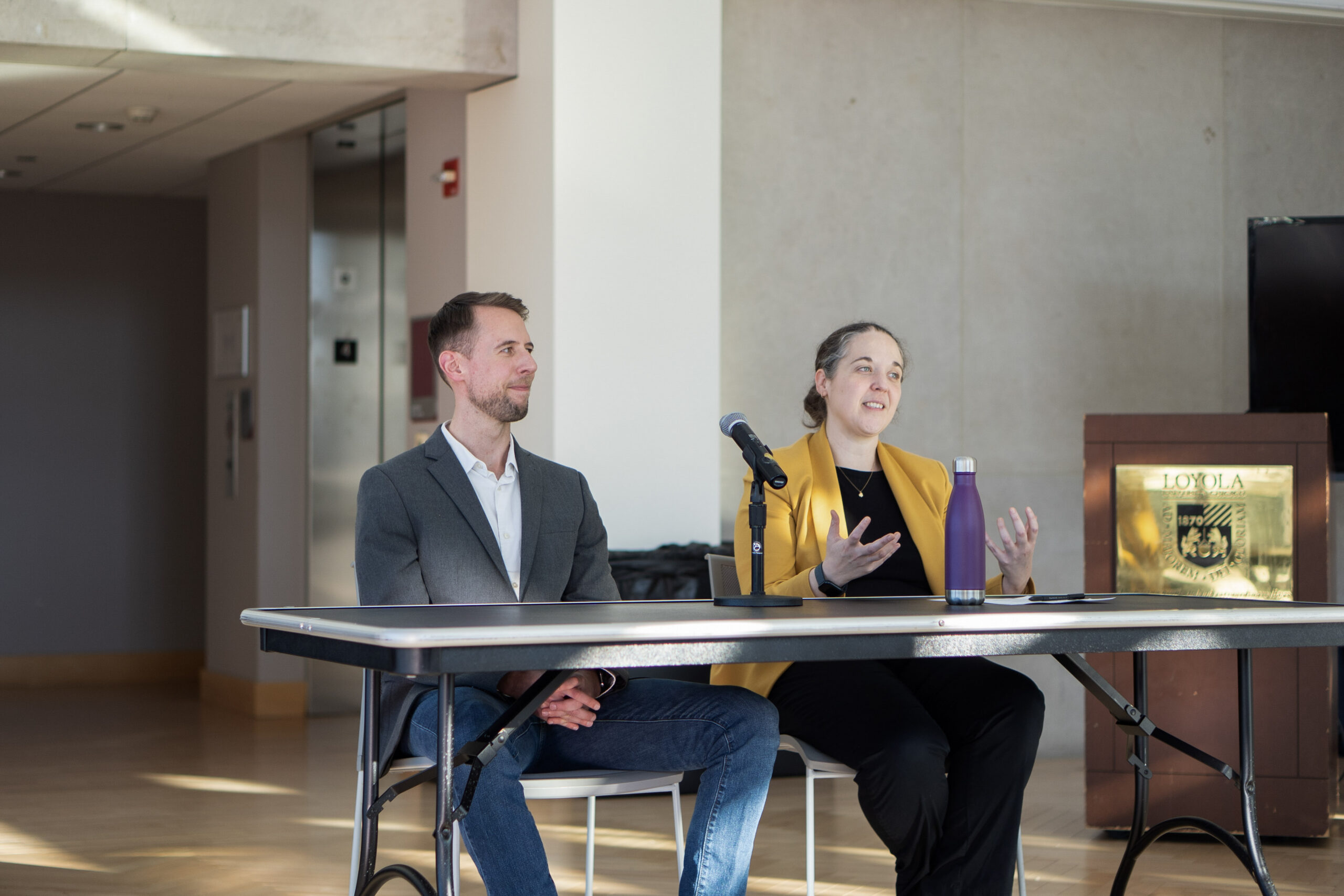
A panel featuring political science professors Sarah Maxey and Eric Hansen took place 4 p.m. Oct. 30 to discuss the upcoming midterm elections in the context of the U.S. war with Iran.
The discussion, co-hosted by the Department of Political Science and the Middle East and Islamic World Studies program, explored how the war’s domestic economic effects could shape election outcomes and congressional oversight of U.S. foreign policy.
The Iran war began with U.S. and Israeli attacks on the Middle Eastern country Feb. 28, The Associated Press reported. The conflict continues ahead of midterm elections which will be held Nov. 3 and include competitive statewide races, according to NPR.
The event began with short opening remarks from Ghazal Nadi, director of Middle East and Islamic world studies. Hansen and Maxey then provided background on midterm elections and the war with Iran before opening the floor to questions from students.
Hansen outlined the possibility of Democrats gaining control of the House of Representatives and Senate. According to models he consulted, Democrats have a 93% chance of gaining a majority in the House and a 77% chance of gaining a majority in the Senate.
While the party holding the presidency usually loses seats in the midterm elections, the competitiveness of Senate seats is very unique, Hansen said. For example, Democrats now seriously contest Republican seats in states like Texas, Alaska, Ohio and Iowa which weren’t previously considered competitive.
Maxey laid out an overview of public opinion on the war, explaining how 65% of those polled disapproved of the war, while 70% disapproved of President Donald Trump’s handling of the conflict. Half said they were paying “a lot of attention” to the war.
Assessing the war’s impact on the outcomes of the upcoming elections is complicated, Maxey said. Voters often give more consideration to key domestic issues like the economy and the cost of living in midterm elections — especially considering the limited role of Congress in foreign policy compared to the executive branch.
In this case, however, Maxey and Hansen said these salient domestic issues are directly tied to the crisis in Iran.
“There is such a clear throughline with what is happening with Iran and the Strait of Hormuz and the economy, especially when it comes to gas prices,” Hansen said.
More significant than gas prices — which are high, but not at historic levels — is the price of diesel, which is “almost unbearable” for those who rely on the fuel source, Hansen said. These costs are likely to affect key races in Midwest and Great Plains states.
Half of Americans are “extremely concerned” about higher fuel and gas prices because of the conflict in Iran, according to the Pew Research Center. Only 8% are “not too concerned” or “not concerned at all.”
Both professors emphasized how voters’ perceptions of the economy could play a significant role in the November elections, even if key economic markers like stock market performance and unemployment rates may not indicate cause for concern.
“The sense that the economy is bad matters as much as what the gas prices actually are,” Maxey said.
Maxey and Hansen also discussed the effects the midterm elections could have on policy in Iran, specifically referencing the investigative and appropriations powers of Congress and the articles of impeachment against the Secretary of Defense introduced by Rep. Thomas Massie from Kentucky.
During the Q&A session, students posed questions to the two professors about various topics, including legislative actions that could be taken by the next Congress, key races to watch, nuclear development in Iran and the role ethical and moral concerns about the war in Iran play in voter choices.
Renee Steinbrook, a third-year studying political science and global studies, said she enjoyed the event and feels that open panels make discussions about complex foreign policy issues easier to have.
Steinbrook said since most of her classes this semester are outside her major, they haven’t focused on the Iran war or midterm elections, so she appreciated the opportunity to learn more about both subjects.
Second-year political science and advertising and public relations major Sydney Dawson said some of her classes, like her states and firms class, have touched on the conflict, but none have dedicated significant time to it. Although she wants to spend more time reading the news independently, she said she’d appreciate professors connecting relevant current events to course material.
“I can obviously do my own research, but I think it’d also be just as helpful if professors are discussing the same things we’re all experiencing right now,” Dawson said.
She said she was particularly interested in the panel’s discussion about Congress’ investigative powers and how lawmakers could use them to examine the conflict after the midterms.
Both Dawson and Steinbrook said they felt conversations about current domestic and foreign policy issues were important to have in an academic setting.
Steinbrook said she also appreciated the insight the event gave her into the upcoming elections.
“I really liked how the panel intertwined talking about American politics and international relations,” Steinbrook said. “It gave me a better understanding to help me make my voting decisions.”