Good weather keeps Loyola students from prioritizing their academics, so instead, the school should opt to make campus weather worse.



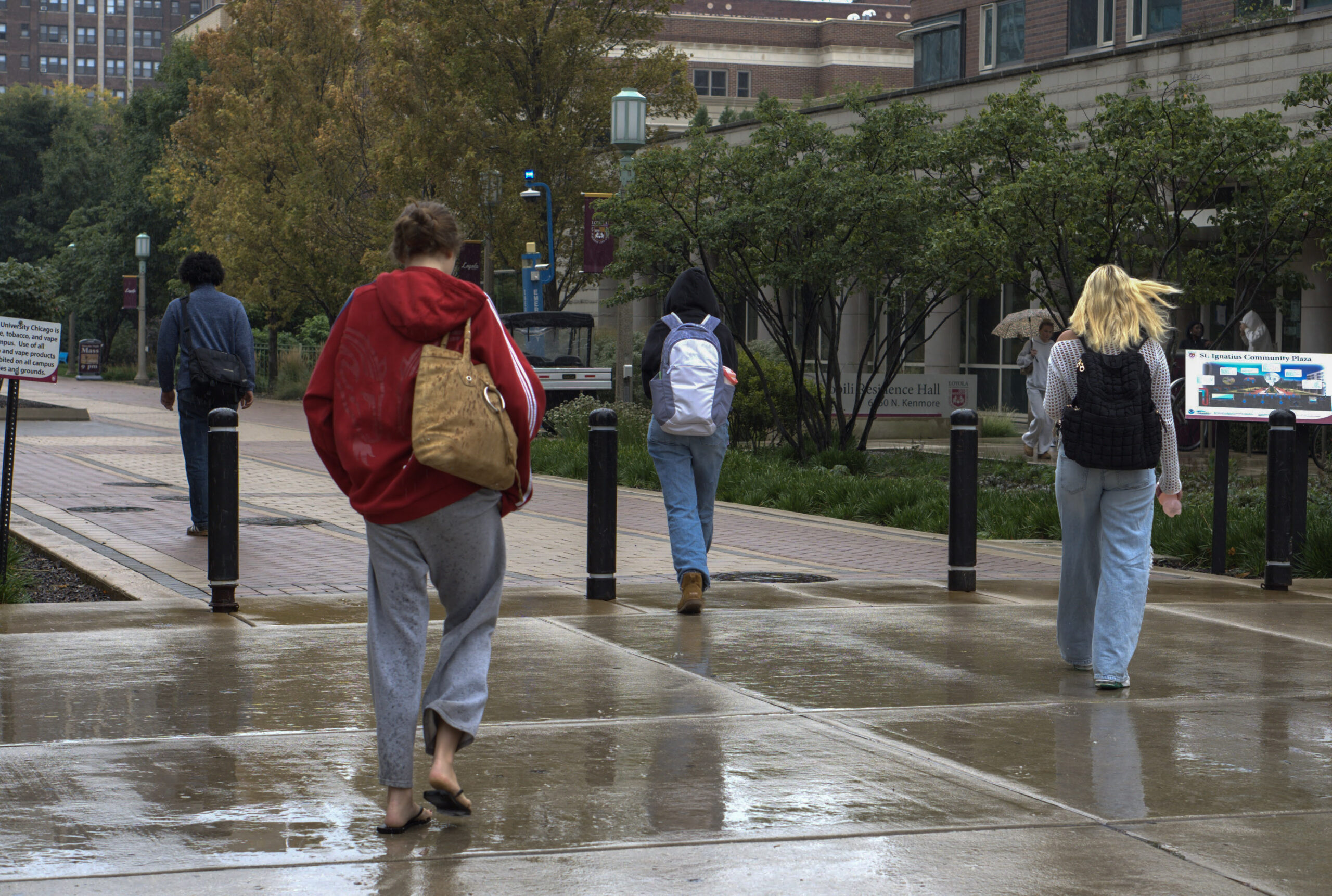
As November nears, the once-lovely city of Chicago is beginning its quick descent into the frigid winter the Midwest is often known for. The sun-soaked streets will be covered in dark slush and hazardous ice, and Loyola students will be forced to scramble from class to class, faces tucked away from the Windy City’s harsh gales.
Across the nation, moms are packing boxes to the brim with thick sweaters and parkas, even paying for overnight shipping, should their child sound miserable enough. For most, the impending terrible weather is a source of dread — but for those who truly care about college and their academics, it’s a blessing in disguise.
Understandably, good weather provides ample cause for distraction in college students everywhere. In a city like Chicago, they may be more inclined to spend time at the lake or sunbathing in the quad than in the Information Commons, studying or completing homework.
Parents paying for tuition are quick to remind their college students that the purpose of school isn’t for doing anything like socializing or hanging out with friends on the weekends. It isn’t to build a strong community of like-minded peers and form lifelong friendships. The purpose of college — and higher education as a whole — is to study.
Once the terrible weather hits, studying begins to seem much more appealing to those hoping to stay warm. Free-yet-distracting trips to the Art Institute fall by the wayside in threat of frozen fingers. After all, why brave the frigid Chicago winds when there’s ample opportunity to sit inside with a mug of hot cocoa and a flashcard deck?
To remedy students straying from this path, what Loyola truly needs is more bad weather, a touch of more misery and increased reason to put their tuition to good use and quit wasting time on non-academic experiences.
It’s also a common sentiment among Loyola students that tuition is too high. With worse weather, there’s more incentive to make the money put toward their education count by spending more time hitting the books.
Once the school notices students holed up and hiding from a rainstorm, will they be tempted to use measures like an artificial storm cloud or even snow machines to keep their students productive and paying attention?
If young adults today are so obsessed with the “Twilight”-esque dark academia aesthetic, why not live it? College students are so fast to romanticize the constant doom and gloom of Forks, Wash., yet they refuse to actually commit to what a life lived in stormy weather entails.
College isn’t meant for frivolous activities like joining non-academic clubs or playing sports. Students have evidently lost sight of the true college experience, not the one fed to high-schoolers to promote so-called community and enjoyment.
So many young adults champion an equal work-life balance, though pursuing higher education means student life should only be work.
In reality, students would benefit from — and even enjoy — more terrible weather when it comes to schoolwork. A thunderstorm may prove the ideal solution to keep them focused on work, staying true to the academic, and certainly not social, focus of university life.
Loyola students should see this winter as a blessing in disguise, a firm hand on their back to continue having a meaningful academic life.