With the closure of many student resources during breaks and weekends, Loyola feels deserted and unhelpful for students unable to go home.



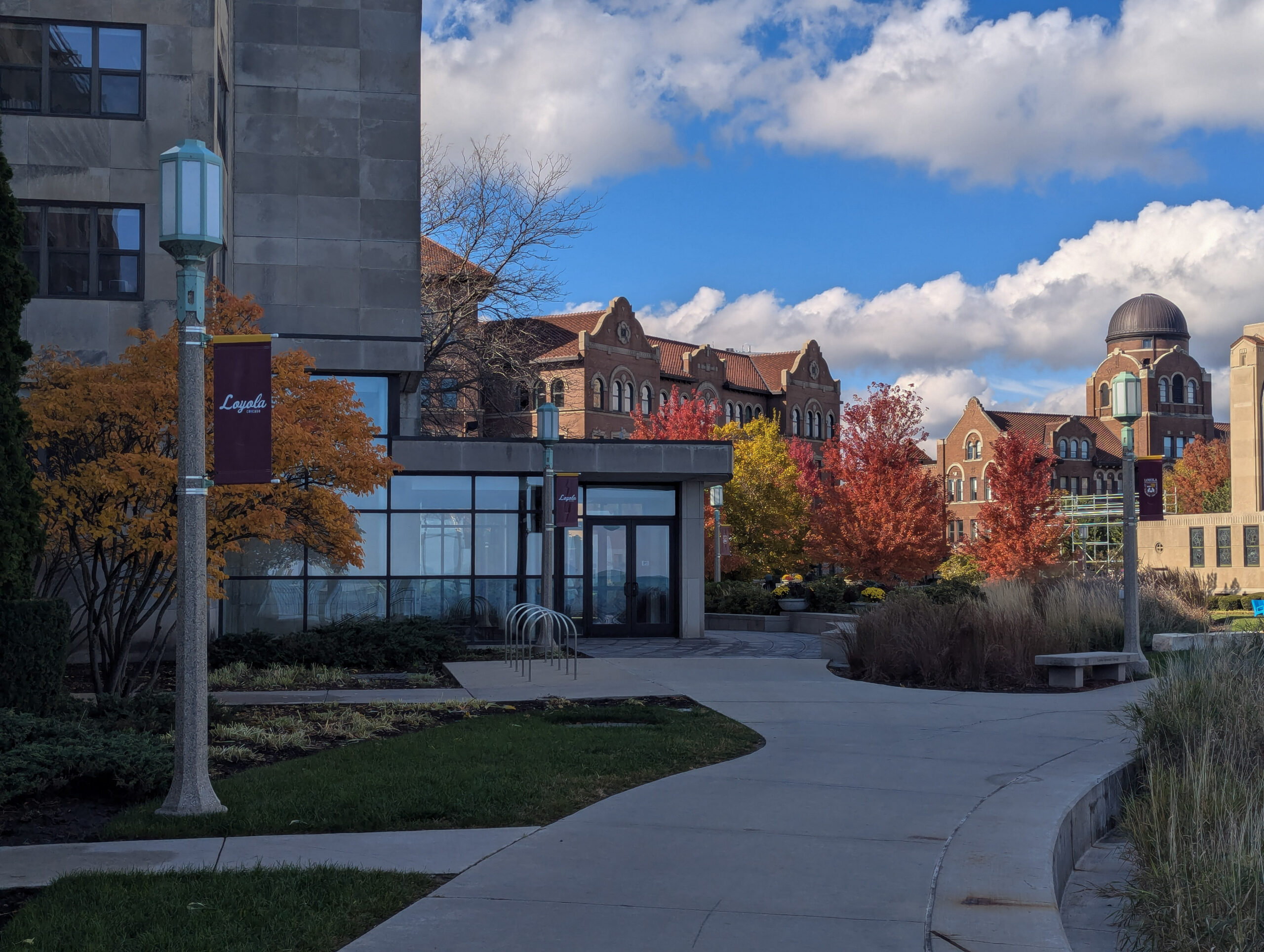
In the 2025-26 school year, 82% of first-year Loyola students lived on campus, and I was one of them. 46% of first-year students were also from out-of-state. I, too, was a part of this statistic.
I studied diligently to get to Loyola, earning merit-based scholarships that allowed my education to become affordable. I know I’m not alone in this experience, as 61% of undergraduate students were awarded need-based financial aid and 59% were awarded academic scholarships in 2025 according to the 2025-2026 Common Data Set.
Life was pretty great in my Francis Hall triple, despite my disdain for sleeping on the top bunk. The building was sparkly and new; there was a kitchen on every floor, and I even had a suite bathroom.
As October rolled around, I watched my suitemates and my entire friend group pack their bags for fall break. I was left alone in my dorm with nothing except a few hoarded dining hall meals and some frozen food from Aldi.
I call Seattle, Wash. home. For students like myself who live further out of state, trying to go home over a four-day break is simply illogical. Round-trip flights cost upward of $800 and, on average, I spend 5 or more hours in a plane per travel day.
When I factor in the time it takes me to actually get to and from the airport — and the obscene delays O’Hare International Airport is notorious for — I’m looking at spending almost half of fall break traveling instead of actually being home.
Consequently, I spent my first break at Loyola largely in my dorm. Many campus buildings were closed, as well as the dining halls, so there wasn’t much of anywhere else to go for a lonely freshman who was still new to the city.
This year’s fall break was much of the same, although I had more places to go off-campus since I’m not quite as new to Chicago.
It seems to me Loyola assumes most of its students either reside a short car or train ride away or can afford the financial burden of traveling a great distance home. This isn’t the case for many students.
In an anonymous poll conducted by The Phoenix with 174 participants, 82% said they felt unsupported by Loyola — in terms of dining halls and campus resources — over weekends and breaks.
It’s almost as if the school doesn’t even want its students on campus when they aren’t in class. One of the three dining halls is closed on weekends, as well as every place students can spend Dining Dollars. Additionally, Loyola’s free food pantry is only open on weekdays.
Seven-day meal plans cost around $3,400 per semester, with unlimited meal swipes and 100 Dining Dollars to spend. It should be common sense for students to be able to access the place they’ve been relying on for food all year if dorms are open and students are paying to access them seven days a week.
Except for events like Parents’ Weekend, Alumni Weekend and arts productions, Loyola hosts practically no events for students outside of days when class is in session. Loyola’s Wellness Center doesn’t allow appointments to be scheduled over the weekends. The Student Accessibility Center and mailroom are closed on weekends, and the intercampus shuttle only runs on weekdays.
When almost half of Loyola’s undergraduate population lives out of state and can’t go home for weekends or breaks, it’s absurd the institution assumes students will be completely fine on their own, despite how they’re paying a small fortune to cover necessities.
When I first toured Loyola the summer before my senior year of high school, I loved it because I could truly see myself living on this campus. I, like so many other students, worked hard to get here — studying steadfastly to gain scholarships to make the financial burden of traveling across the country affordable.
Loyola’s mission integration page states they aim to uphold characteristics of a Jesuit higher education — one of the core characteristics of it being social justice. I see no aspect of social justice in the continued ignorance and neglect of students who rely on Loyola as a source of stability.
It’s disheartening to feel so unsupported at a place that once welcomed me with open arms. If Loyola still aims to maintain its core values of social justice, it should learn to uplift students from all around the country and not just locally.