The unofficial sequel to “The Social Network” lacks everything that made the original successful.



It’s hard to adapt an investigative report into a feature film. It’s hard to keep stakes high when making a film about a real-life event. It’s hard to make a movie about a subject matter changing in real time. And it’s especially hard to make a sequel to one of the best movies of the century.
“The Social Reckoning” certainly has a lot to reckon with.
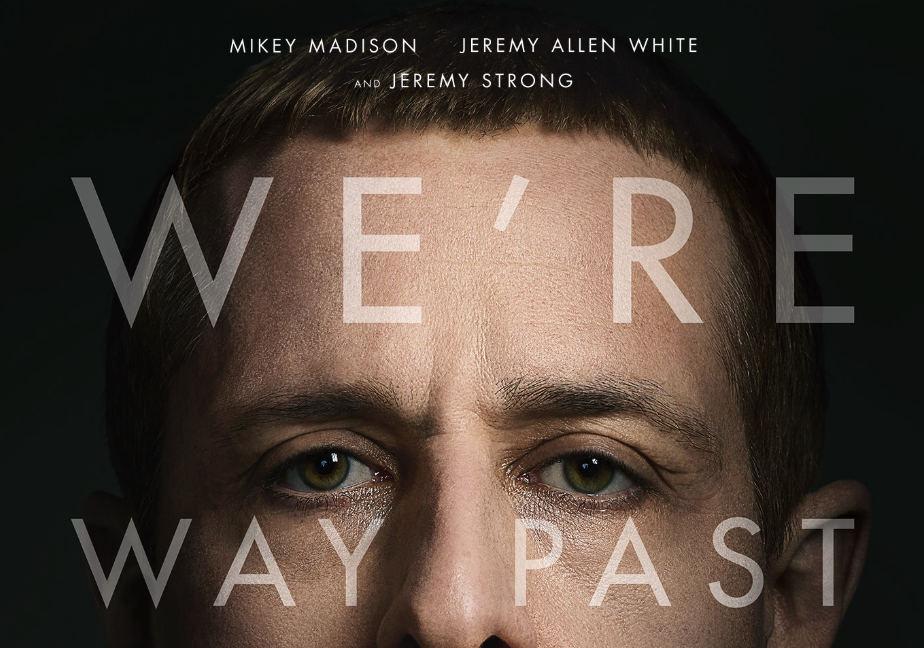
Written and directed by Aaron Sorkin, the film is a bifurcated story. The primary plot follows journalist Jeff Horwitz (Jeremy Allen White) as he tries to crack a story on Facebook’s dangers, guided by an insider engineer, Frances Haugen (Mikey Madison). The other storyline follows Facebook founder Mark Zuckerberg (Jeremy Strong) as he prepares for testimony in front of Congress on Jan. 6, 2021.
An unofficial sequel to the 2010 masterpiece “The Social Network,” the 2026 film features a cast and crew of entirely new faces except for Sorkin (“A Few Good Men,” “The West Wing”), the writer of the original.
Gone is Jesse Eisenberg as Mark Zuckerberg, gone are megastars Andrew Garfield and Justin Timberlake and — perhaps most importantly — gone is the original’s exacting director, David Fincher.
Like its predecessor, the sequel begins with a prologue titled “White Girl Wasted,” which is about as obvious and literal as the rest of the film’s plot goes on to be. The prologue features the titular white girl arguing with police, a woman clearly radicalized by the far right, using racist and anti-immigrant rhetoric.
From then on, the film goes back and forth between its two narratives.
The first narrative with Horwitz and Haugen features a lot of familiar tropes: a journalist trying to crack a case, a guarded source with all the info and the cat-and-mouse game that follows.
Familiar as it may be, Hollywood stars like White (“The Bear,” “The Iron Claw”) and Madison (“Anora,” “Once Upon a Time…in Hollywood”) playing these archetypes delivering classic Aaron Sorkin dialogue is delightful for stretches. Soon, however, the film simply resorts to Haugen explaining to Horwitz facts of the case that we should be seeing on screen.
In writing, they say “show, don’t tell.” Sorkin, one of the most seasoned writers in Hollywood, certainly understands this, right? Right?
Sorkin must’ve forgotten the memo in this film.
“The Social Reckoning” is like a friend telling a story of a friend telling a story. Maybe if you were there for the story being told, or — better yet — saw it play out, it would be interesting. But the second-hand version? Nobody is interested in that.
The message of the film, if one exists, could have simply been gleaned by reading the 2021 Facebook Files for oneself.
As for the film itself, it’s lit strangely as characters speak on unnatural sets, giving it an ugly visual style. The score is obnoxious. The original Wall Street Journal stories’ themes about censorship, political division, cyberbullying and more are obviated and simplified to an annoying degree.
All these struggles were the very strengths of “The Social Network,” and while actor and crew changes play a large part, ultimately these struggles fall on the director. As talented a writer as Sorkin is, he is equally an inept director, desperately in need of guardrails and a collaborator with a different perspective.
Again, the script here isn’t that bad. It’s far from Sorkin’s best, but fairly engaging, structured well enough and features the wisecracks and mile-a-minute dialogue he’s known for.
White and Madison deserve credit for taking that dialogue and serving it well — even if their characters rarely get past caricatures. The actors at least deliver the lines with the necessary timing and gravitas, which more than you can say about Strong (“Succession,” “The Apprentice”).
Strong’s portrayal of Zuckerberg underlines the fundamental flaw of the film. As an imitation of Zuckerberg, Strong wholly succeeds. He has Zuckerberg’s polished haircut, unnaturally straight posture and robotic tonality down.
At a mere glance, the performance works. But after seeing it for more than a few seconds, it falls apart.
Strong’s characterization feels more like an animatronic of Zuckerberg than the real man — on the outside, it looks right, but on the inside, all that can be found is hollow space and air that no emotion can pour out of it.
There is no plot to Zuckerberg’s section. It simply serves as a way to shoehorn Zuckerberg into the movie and connect Facebook’s algorithm to the real world, using the Jan. 6 attacks as the keyhole to doing so.
Zuckerberg’s section of the film is entirely inexplicable. There’s no reason for it to be in this movie. There’s no reason for Zuckerberg to be in this movie. Was there ever a reason for this to be a movie to begin with?
Sorkin doesn’t put forth a convincing case in its favor.
“The Social Reckoning” is in theaters now.