A look inside the architectural stars of Edgewater and Andersonville in the 2026 Open House Chicago.



For the past 16 years, architectural and historical staples of Chicago have unlocked their doors for free tours of the irreplaceable sites on one special October weekend. This year, on Oct. 17 and 18, windows were opened and dust was shaken from over 200 locations in the Chicagoland area.
The Andersonville and Edgewater area had six featured sites ranging from entertaining to educational. The newest Chicago Community Area, Edgewater has quickly proven to be a diverse and lively neighborhood, and its eccentricity is showcased in the selected locations for the weekend.
“You never know who you’re going to meet,” Marieluise Kailing, a volunteer of almost 40 years for the Edgewater Historical Society, said. “And interesting people who’ve lived in the neighborhood will tell you stories.”
The six celebrated locations, filled with surprises and history, could be explored during the weekend of Open House Chicago.
Edgewater History Museum (5358 N. Ashland Ave.)
The classic red-brick walls of the Edgewater History Museum previously held a firehouse, but they now hold an archive of the history of the Edgewater area.
Originally settled by farmers from Sweden, Germany and Luxembourg, Edgewater has grown into a diverse neighborhood revolving around small businesses.
The area was originally shaped by immigrants from Europe, but is now also called home by the over 48% of the population who identifies as “Non-White.” Architecturally it is also very diverse, featuring everything from vintage walk-ups to modern apartments for students.

Founded in 1988, the Edgewater Historical Society owns and curates the valuable Edgewater History Museum. The society was founded to educate and involve the community in current happenings and historical events.
The museum is currently showing an exhibit on the Edgewater theater community and holds a comprehensive collection of physical artifacts including puppets, postcards, tickets, architectural plans and more.
Colvin House (5940 N. Sheridan Rd)
By day, this stunning building acts as a coworking space. But by night, it transforms into a venue for weddings and other events.
The distinguished house was designed by Chicago architect George Maher, known for his motif rhythm theory in which he used a unique combination of a repeating geometric shape and symbol of nature for each of his builds — Maher assigned the symbols of a tulip and triangle to the Colvin House, which are displayed on the lintel of the home.
The exterior is original Prairie-style architecture, but its interior was renovated in the late 1920s and features extravagant pillars, impressive crown moulding and intricate tile work. The decorative accents were likely inspired by movie theaters of the time, according to the OHC tour on Oct. 18.
Today, the building is owned by Creative Coworking founder Angela Valavanis as a coworking and event space. Some renovation was required when she gained ownership of the home, but most of the changes were simply preservation and restoration from years of neglect.
The Colvin House is an immersive time capsule allowing guests to enjoy the house as was intended — to celebrate and gather with friends, family and strangers.

6018|North (6018 N. Kenmore Ave.)
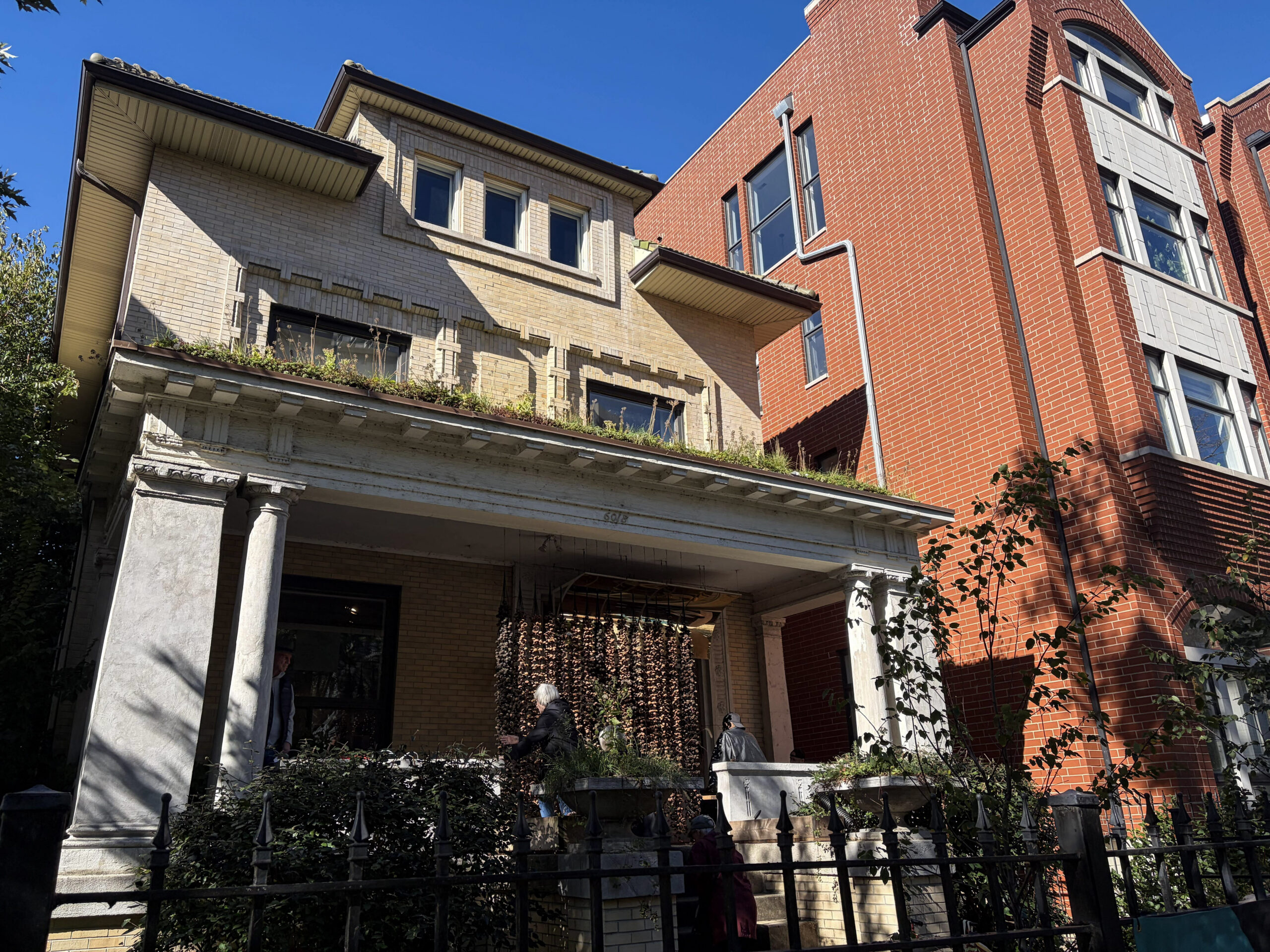
Walking past, this building is unassuming, with its traditional Prairie-style architecture and yard that appears overgrown.
However, walking onto the site, visitors may quickly realize this is no ordinary 1909 mansion. The building at 6018 N. Kenmore Ave. has been transformed into a community event space that regularly hosts interactive and immersive art exhibits.
The house is seemingly never-ending, with each room featuring works by different artists for their upcoming “Hades Redux” experience.
“To share ideas about sustainability, about art, the power of art, the power of sustainability, with people who do not come for that is an amazing opportunity,” Tricia Van Eck, the curator and founder of 6018|North, said.
A recent project at 6018|North introduced a number of sustainability efforts to the site, including green roofs, native plants and a rainwater collecting system. Additionally, the nonprofit works with children’s summer camps from the Ismaili Center and students from Loyola’s School of Environmental Sustainability.
Church of the Atonement Episcopal (5749 N. Kenmore Ave)
This historic building has had many variations since its construction in 1890. Expansions of the chapel itself and onto the parish house ended in 1924 when the building was completed to its current state.
The first architect to take on the project was Henry Ives Cobb, who employed his Gothic Revival style to create a facade that can’t be missed. Cobb also designed buildings for the University of Chicago and other Chicago landmarks such as the Chicago Athletic Association building.
John Edmund Oldaker Pridmore was the mind behind the 1919 expansion and remodel, yet most of his work was in theaters and apartment complexes. The influence of theatrical architecture is visible in the church’s towering ceilings, side rooms and ornate candle sconces.
The interior also features a large organ and a magnificent stained glass window featuring scenes from the Bible.
The Episcopal Church of the Atonement also hosts a wide variety of community events as well as religious services every day.
St. Andrew’s Greek Orthodox Church (5649 N. Sheridan Rd)
Located just south of Lake Shore Campus where North Sheridan Road meets Lake Shore Drive, this church is a regular sight for the students who run, walk and bike on the Lakefront Trail.
Built in 1955, the building has been hosting services for almost 70 years. The congregation itself began in 1926, only two blocks away from their current home. Recognizing the need for a larger space, the group started searching for room to grow in the early 1940s, and the construction of their new limestone-clad chapel began in 1955.
On the inside, the chapel is an impressive piece of architecture and features a massive mosaic of the Virgin Mary, as well as many ornate details on the walls and along the arches, like the highly intricate hanging capitals.
As well as offering Sunday services and occasional community events, the church is most known for hosting the Edgewater Greek Fest, a cultural celebration featuring food, music and dance.
St. Andrew’s Greek Orthodox Church is an Edgewater staple for both practicing and non-religious members of the community.

Chicago Magic Lounge (5050 N. Clark St)
In the heart of Andersonville, a humble laundromat contains more than balls of lint and dryer sheets. Behind its facade of 1940s-era machines and checkered floors, three venues for different types of magic are hidden — speakeasy-style.
With spaces for close-up magic, signature cocktails and “magic literature and memorabilia,” the Chicago Magic Lounge has quickly become an elevated night-out staple since opening in 2018.
The glamorous interior is inspired by Art Deco designs of the 1940s and features glamorous details celebrating the evolution of the art of magic.
The intimate venue was designed for close-up, tableside magic, which is dubbed “Chicago–style magic” by Chicago Magic Lounge co-owner and CEO Joseph Cranford.
For fans of magic or of having a fun time, the Chicago Magic Lounge is an essential and iconic night out in Chicago.
The dust has settled on Open House Chicago 2026, but these landmarks remain imprinted on the minds of community members for years to come and can help small businesses reach new audiences.
“For us, it’s an audience that would not necessarily have come,” Van Eck said.
Open House Chicago 2027 has already been announced to be on Oct. 16 and 17, providing a great opportunity to take a peek into some of Chicago’s most historic and secretive sites, all for free.
“I think in Chicago people will drive by places and go, ‘Oh, that’d be interesting to see,’ and this affords them an opportunity,” Kailing said.