The semiannual time change is an outdated concept that should be replaced with year-round standard time.



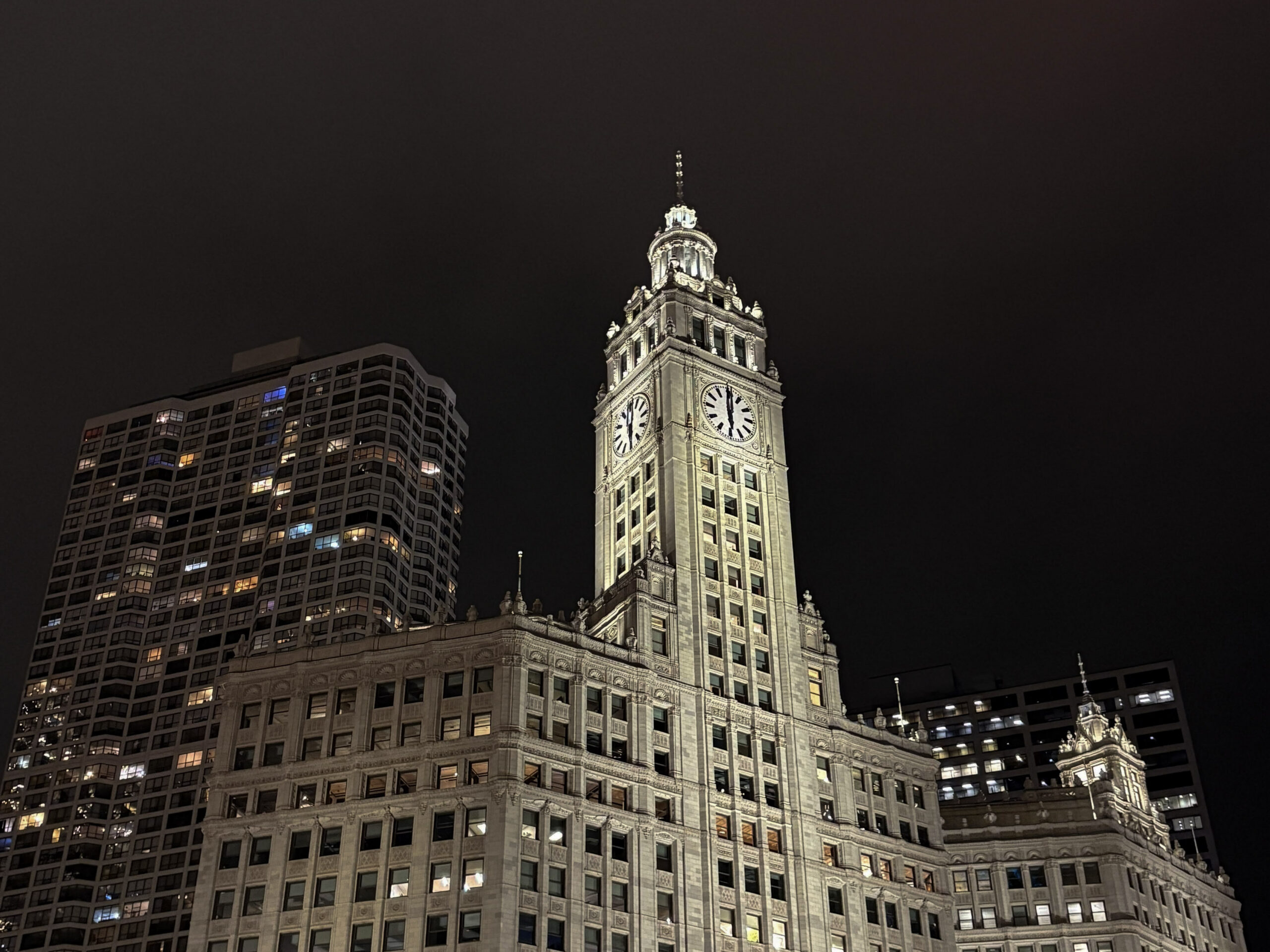
At 2 a.m. Nov. 1, the majority of Americans turned their clocks back an hour, switching from daylight saving time (DST) to standard time, but this semiannual time-change ritual hasn’t always been and shouldn’t be the norm.
Prior to 1918, standard time was the only time. DST only began as a fuel conservation plan during World War I and was abolished by Congress soon after the war ended. Until the 1960s, its observance varied among cities and states, save for a brief nation-wide return during World War II.
The Uniform Time Act of 1966 was signed by President Lyndon B. Johnson April 14 that year, solidifying the twice-annual ritual of changing clocks. The first nationwide time change was on the last Sunday of April 1967, with DST ending on the last Sunday of October that year.
Since 1967, the period in which daylight saving time is observed has been extended twice, once in 1987 and again in 2007, as part of the Energy Policy Act of 2005. DST now begins on the second Sunday of March and ends on the first Sunday of November, allowing later sunsets for Halloween trick-or-treaters.
In recent decades, however, support for the semiannual time change has dwindled, with only 19% of Americans preferring to change their clocks, according to a 2025 poll by Gallup.
In response to this increased opposition, over 30 state legislatures and even the U.S. Congress have proposed bills to stop the biannual shift.
One of the few major federal proposals to end the time change is the Sunshine Protection Act, originally proposed in 2018 by former Sen. Marco Rubio and Rep. Vern Buchanan — both Republicans — in their respective chambers. The original 2018 bill died in committee, but a new version has been reintroduced in every Congress since then, with limited success.
The current Congress’ iteration of the bill, the Sunshine Protection Act of 2025, may have a chance to succeed, though it’s getting more and more unlikely as this Congress ends in less than two months. It passed the House July 14 with a vote of 308 to 117 and was then given to the Senate. Despite President Donald Trump’s adamant support of the bill, the Senate hasn’t yet pursued it any further.
One major flaw with the Sunshine Protection Act is that it would institute year-round daylight saving time, rather than year-round standard time. Year-round DST would mean the sun sets later, which proponents of the bill argue would allow people to spend more time outside in the winter.
However, there may be some financial influence on the congressmen who continually introduce this bill: Buchanan, Rubio and Republican Sen. Rick Scott. These congressmen all hail from Florida, which has 1,100 golf courses, the most of any state. When combined, Florida’s golf courses have a total revenue of $3.6 billion.
Year-round DST would be extremely beneficial to the golf industry, which would see a national increase of $1 billion in direct revenue from 23 million more rounds of golf played annually. This national increase would increase golf revenue in Florida as well.
While more sunlight in the afternoon may be great for golf-playing Floridians, under year-round DST, sunrises in some parts of the country, like Indiana and western Montana, would be as late as 9:20 a.m. In Chicago, the latest sunrise would reach 8:18 a.m.
These late sunrises would mean that children would be starting their school days in the dark, with many morning commutes also being made before sunrise.
More driving in the dark would lead to many more car accidents and deaths, as nighttime driving is much more fatal than driving during the daytime. The National Safety Council states that half of all traffic accidents occur at nighttime, even though only one-quarter of driving is done at night.
Year-round standard time has additionally proven to have a multitude of health advantages over a year-round DST system.
A joint statement to the European Union Commission on DST from the European Sleep Research Society, the European Biological Rhythms Society and the U.S.-based Society for Research on Biological Rhythms provides multiple reasons for a permanent standard time.
In the 2019 statement, the three societies argued standard time improves sleep, psychological health and school and work performance. They also described health benefits for the heart and weight, the decrease in cancer occurrence and reduced consumption of alcohol and tobacco.
A 2025 study by two Stanford University researchers shows under a year-round standard time system, nationwide obesity prevalence would be reduced by 0.78 percentage points and stroke prevalence by 0.09 percentage points. These figures would result in 2.6 million fewer people with obesity and 300,000 fewer stroke cases in the United States.
While year-round DST would also reduce the level of obesity and stroke prevalence, it’s not as sharp a decrease. A year-round DST system would decrease the frequency of obesity by only 0.51 percentage points — 1.7 million people — and stroke prevalence by 0.04 percentage points — 220,000 cases.
Sleep researchers also heavily advise against year-round DST, arguing it’d be unhealthy for one’s circadian rhythm, the roughly 24-hour cycle that controls biological processes.
In an open letter to the provincial government of British Columbia, sleep researchers described the necessity of morning light exposure to the body’s internal biological clock. With less morning sunlight and more evening sunlight, the biological clock drifts later. This makes it harder to wake up and causes sleep deprivation and social jetlag — an increased difference between the body’s clock and local time.
Additionally, Arizona and Hawaii have never observed daylight savings time, since their state governments immediately opted their respective states out from the Uniform Time Act of 1966 using its built-in opt-out clause.
The residents of these two states have lived a time change-free life for nearly six decades, providing the rest of the country with the perfect template for a nationwide standard time system.