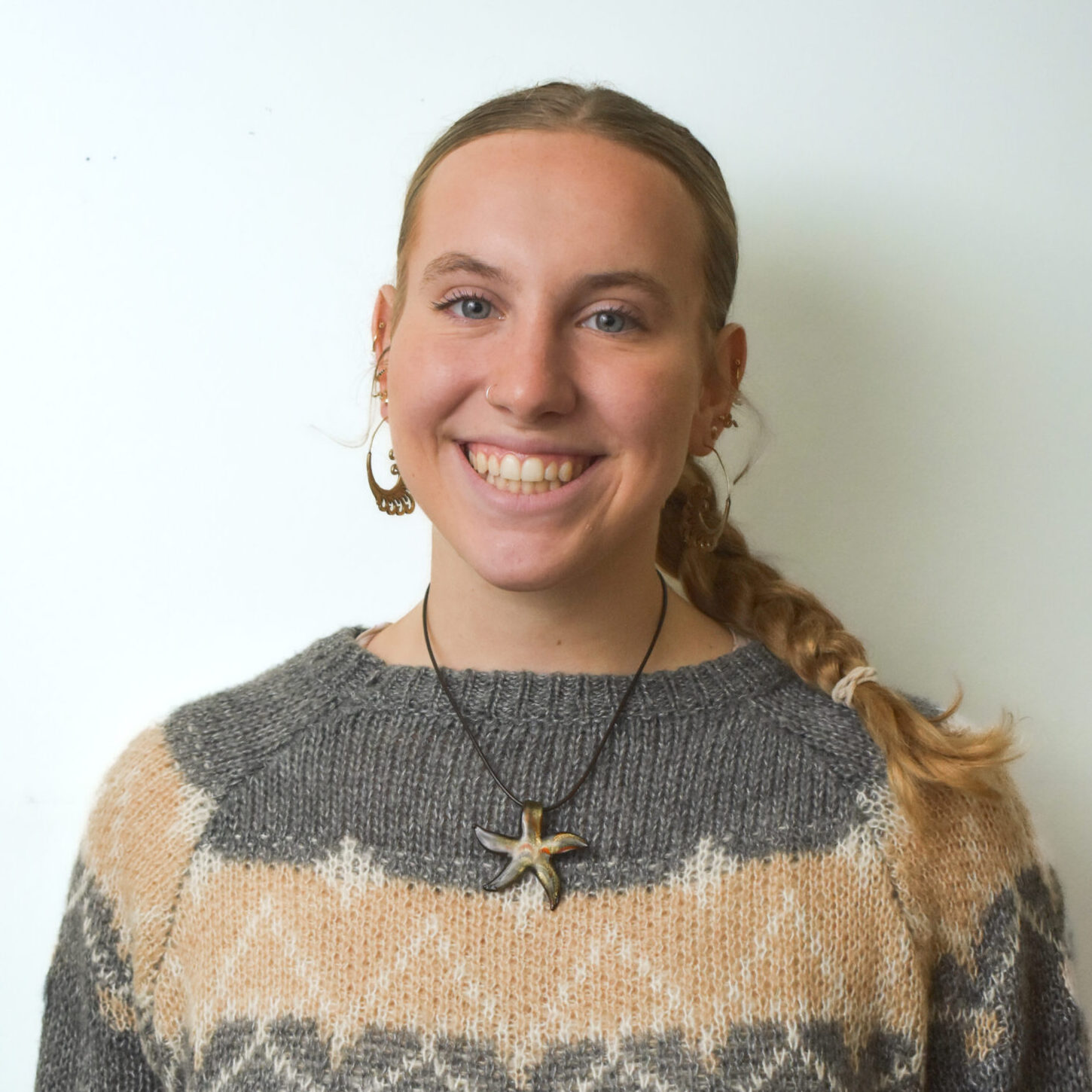
Managing Editor Julia Pentasuglio argues intentionally choosing to grow physically stronger as a woman is an act of political protest.




When I was in middle school, one of my male ballet instructors interrupted the class to ask if I played any other sports besides ballet. Confused, I told him I ran track too, and he shrugged, explaining he thought with my wide shoulders I must’ve started swimming or doing a different sport since he last saw me the previous summer.
Having always been more muscular than the other girls I grew up dancing with, I was horrified and embarrassed that my teacher had talked so flippantly about how my body had changed in front of the entire class. I felt shame and wasn’t able to let the comment go — clearly, since I still remember it almost a decade later.
And while now, as an avid weight lifter for almost six years, I’d be thrilled if someone told me my shoulder muscles looked bigger or stronger than the year before, the incessant sentiment as a woman to always be smaller and avoid growth is hard to evade.
Despite nearly 70% of Loyola students being women, the Halas Recreation Center weight room still seems to be dominated by men while female students seemingly tend to crowd the cardio section.
Under these conditions, the weight room becomes a gender-political space. As a woman, to exist and to train with the intent to not only get stronger, but to potentially grow bigger is the complete opposite of what modern conservatives find acceptable.
Especially under the Trump Administration — where the female body seems to be both a playground for lawmakers and an object to inflict political dominance under the guise of “pro-life” morals — taking ownership of the shape and power embedded in your own body is an act of protest.
After being diagnosed with breast cancer for the second time in 1988, Black queer feminist Audre Lorde published her book “A Burst of Light,” where she argued caring for yourself when the world is hostile to your identity is “an act of political warfare.”
In the same vein, choosing to be stronger and build muscle as a woman is an act of radical disobedience when American popular culture continuously equates femininity with weakness.
Actively filling space in a weight room populated predominantly by men isn’t easy, but the endurance to continue to take up space in a battle for personal autonomy is meaningful, or as Lorde argued, a declaration of radical self-love.
With “skinny” back in style and weight loss drugs overtaking the media, existing in public can feel like a never-ending body scan. So, taking pride in health and strength beyond purely aesthetic ideas of feminine beauty and attractiveness diverges from the constant requirement to repeatedly minimize the female body.
A study published by The Journal of the American College of Cardiology found women who undergo regular resistance training are more likely to live longer than women who don’t. Additionally, strength training resulted in stronger bones, healthier joints, better moods and greater metabolic health.
Women shouldn’t be discouraged from reaping these benefits while men welcome them fruitfully.
It’s no surprise an American population who voted a man with over 20 sexual assault allegations into the president’s seat wants to keep women small. But when the body is a political object, the only question is whether or not women will push back and dare to take pride in their own growth and physical power.
In 2024, 46% of women voters voted for Trump — up 2% from the 2020 election, indicating a shift toward MAGA ideology among women. In practice, these statistics translate to a growing group of women who are okay with the anti-women rhetoric that persists in the White House, evident by threats against legislative protections and the abusive language Trump uses to talk about women, especially regarding their bodies.
Despite this, there are still women, like myself, who aren’t okay with subjugating women for the sake of the conservative party’s success. For every woman — including journalists, congresswomen and political activists — who Trump called ugly, fat or dumb, I will continue to lift weights, get stronger and take pride in my body.
So, I advocate for girls to enter the weight room, to join me in embracing their strength and their bodies with radical confidence and self-respect, and to support one another in the process.