The local coffee shop held a knit-a-long supporting immigrant rights organizations in Minnesota and Illinois.




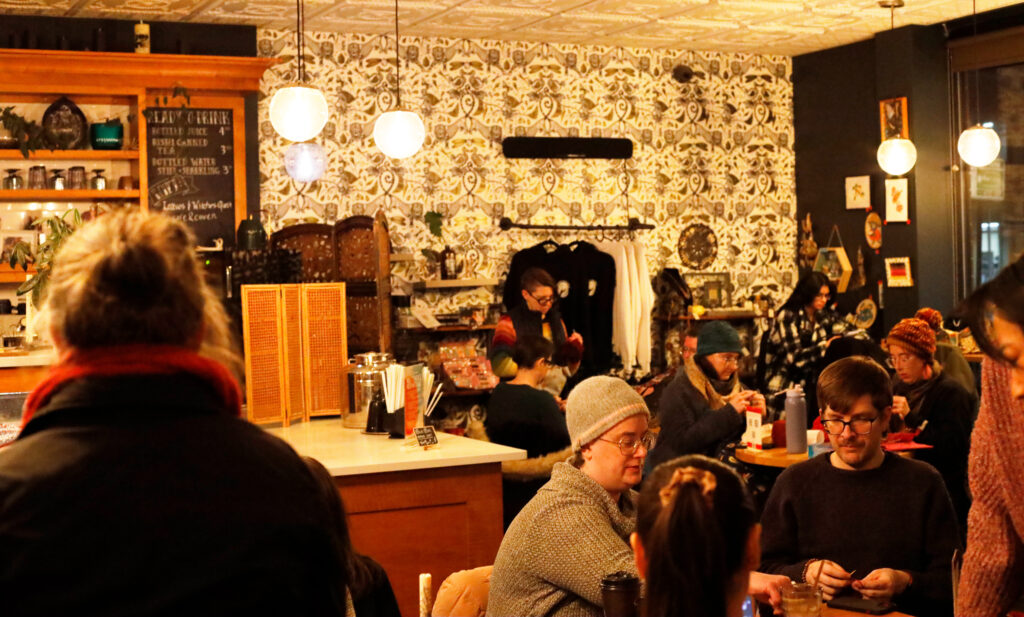
Red stands at the front lines in jumbled balls of yarn. At 6034 N. Broadway, the colorful strands surfaced in flashes on tables, in bins and on laps. Inside Loaves & Witches, the color red gathered people quietly while news from Minnesota continued to circulate — authority hardening, enforcement escalating and fear moving faster than explanation.
What was unfolding in Minneapolis and across Minnesota pressed into the coffee shop’s tight enclave without needing to be narrated. ICE’s presence, marked by unjust arrests, surveillance and child detainment, sparked a call-to-action initiative.
Melt the ICE, a community knit-a-long hosted at Loaves & Witches Jan. 31, was conceived by organizer Maggie Bonetti. Bonetti is the owner of The Dropped Stitch, a small business teaching knitting. She created the event as a direct response to the escalation of immigration enforcement in Minnesota and the detainment of five-year-old Liam Ramos.
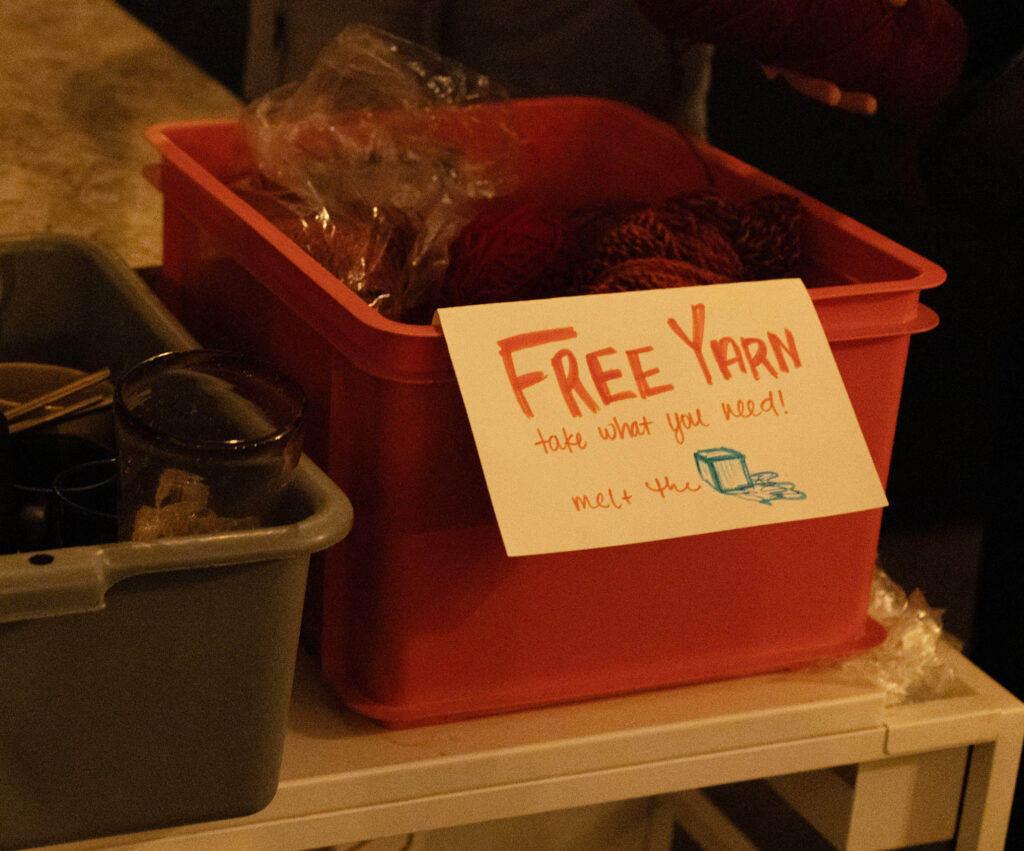
The event centered around knitting red hats as both a fundraiser and a call-to-action, directing proceeds to Community Aid Network MN and ICIRR, or the Illinois Coalition for Immigrant and Refugee Rights, while placing something soft and human in dialogue with a system built on force.
Twenty percent of yarn and tool sales from The Dropped Stitch and a portion of café sales were donated, while additional contributions went directly to the two immigration-rights organizations, according to Bonetti. A raffle for a knitting class rounded out the fundraising, keeping the structure informal and accessible. Rather than centering speeches or formal programming, the event allowed the space, the symbol and the conversations to do the work.
Bonetti said she organized the event after a resistance hat video she made on the importance of solidarity gained traction online. For her, the goal was to move attention toward local, sustained support. The small business owner said knit-a-longs are a familiar format within crafting communities, but this one was intentionally tied to fundraising and relationship-building.
For Bonetti, she said wanted to redirect the viral attention she got into material support.
“I thought, ‘I could just be a mom with a reel that goes viral on Instagram, or I could take this small bit of attention that I have right now and I could turn this into some really positive work,’” Bonetti said.
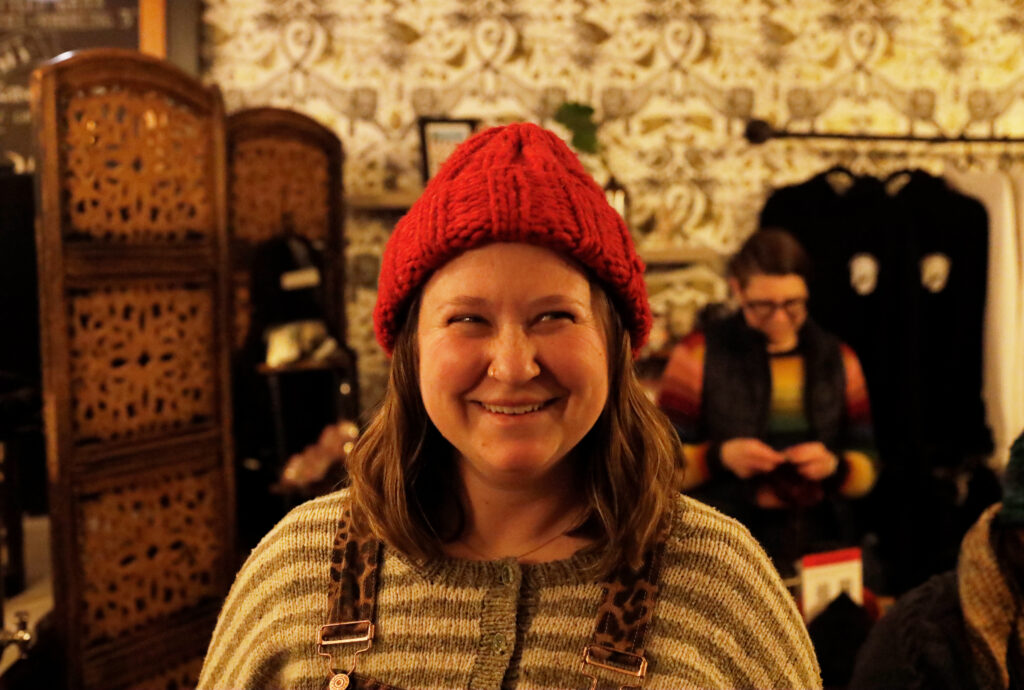
The red resistance hat anchoring the gathering carries a specific lineage. Taking inspiration from hats worn during Norway’s World War II resistance, Bonetti said this pattern has reemerged in response to ICE’s presence in Minnesota, where proceeds from the design support communities directly impacted.
“The hat is a great symbol of what our community can do, but it’s really just a symbol,” Bonetti said. “If we’re not doing the work behind the hat to show up for our community, to show up for our neighbors, then it’s really just a hat.”
Alexa Karczmar, a regular at Loaves & Witches and friend to the owners, said the choice of the venue reinforced the framing of the event. Loaves & Witches, a queer-owned café, has shown vocal support of marginalized communities, according to Karczmar. For her, queer spaces offer a place for solidarity and unity.
Shannon Tratnyek, an Uptown resident, said the historical throughline was part of the draw. For her, knitting together not only stirs up resistance but brings people closer together in divided times.
“Those bonds are important and the more that we know that we’re all connected and in this together, the harder it is to drive a wedge between people,” Tratnyek said.
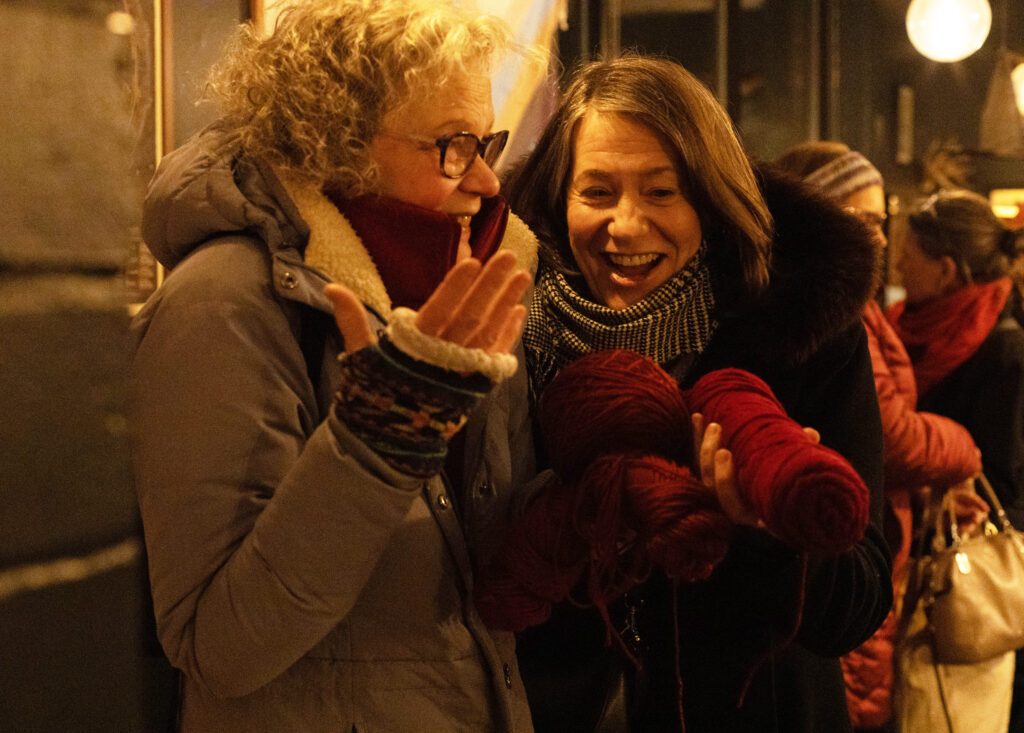
Tratnyek said this event serves as a reminder that cultural practices can sustain collective attention over time, particularly when political fatigue sets in. The experienced knitter said the moments of joy doing hobbies with and for others is what keeps the resistance going.
For her, joy wasn’t an escape from urgency but something allowing people to remain engaged.
“If we’re all just sitting here thinking about how hard it is and how miserable we are, and we’re not looking for that joy and that connection then that is how we lose,” Tratnyek said.
Karczmar said protests and other acts of resistance center around community. However, she finds them restricting in their emotional aspect.
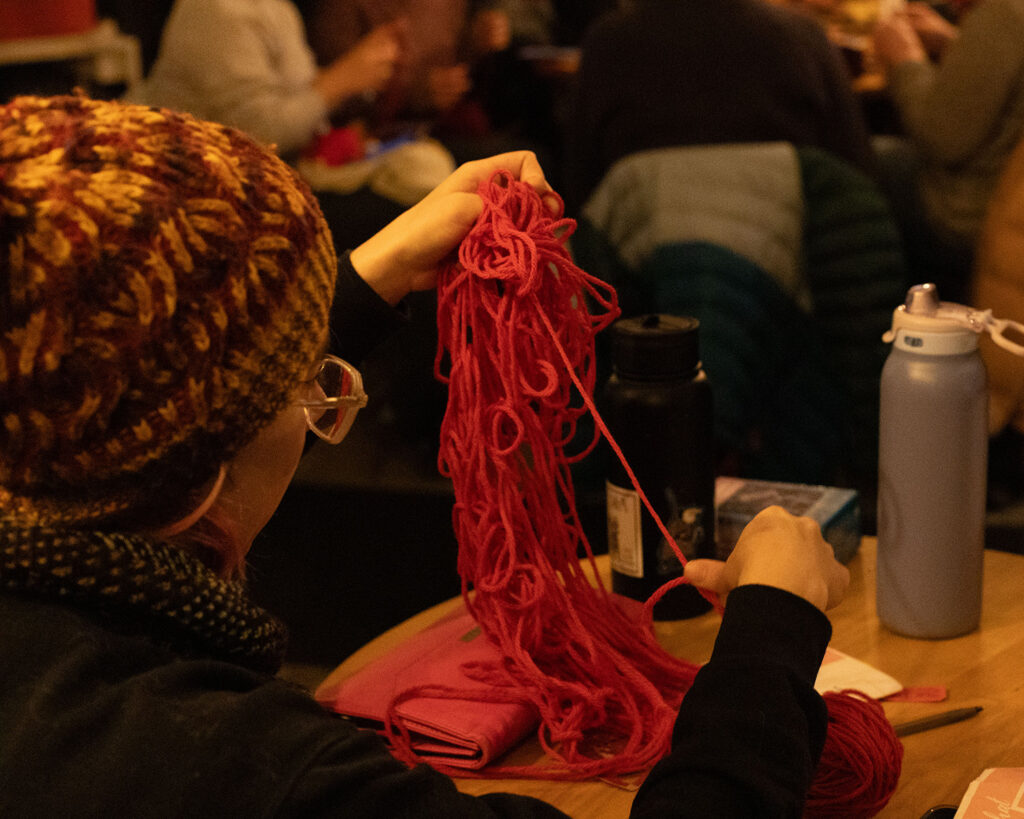
“What drew me to this event was that it’s so explicitly joy and play focused,” Karczmar said. “I feel a lot of the other work is joyous because we’re in community but can be really grinding.”
Destiny Powers-Zarcone, one of the volunteers for the event, said the act of knitting serves as an approachable entry point — something lowering the barrier to participation while still contributing to border efforts.
“Knitting is truly just the brain-Dorito-hobbification of resistance,” Powers-Zacrone said. “It’s just the easy part.”
Bonetti said the event’s appeal extended to parents and caregivers, many of whom spoke to her about how its structure allowed them to participate without stepping outside daily life. Powers-Zarcone said the simplicity of the format made engagement feel possible rather than overwhelming.
Powers-Zarcone said she saw Liam Ramos’ picture with his bunny hat and felt her heart break as she imagined her own child. For her, volunteering at this event allows her to do her hobby while also protecting her own kid and others.
As a semi-retired social worker, Powers-Zarcone said protesting gets hard at times due to its inaccessibility. According to her, political action shouldn’t look a single way. Instead, she said there are multiple revenues to show strength and prove “not every line needs to be the front line.”
“At the end of the day, I’m just a semi-retired social worker,” Powers-Zacrone said. “I’m just a mommy, but there’s a lot of power in just being a mommy. I can just sit incognito and knit with my kids, all while helping my neighbors, reporting on ICE sightings and doing anything I can to keep my neighbors safe.”
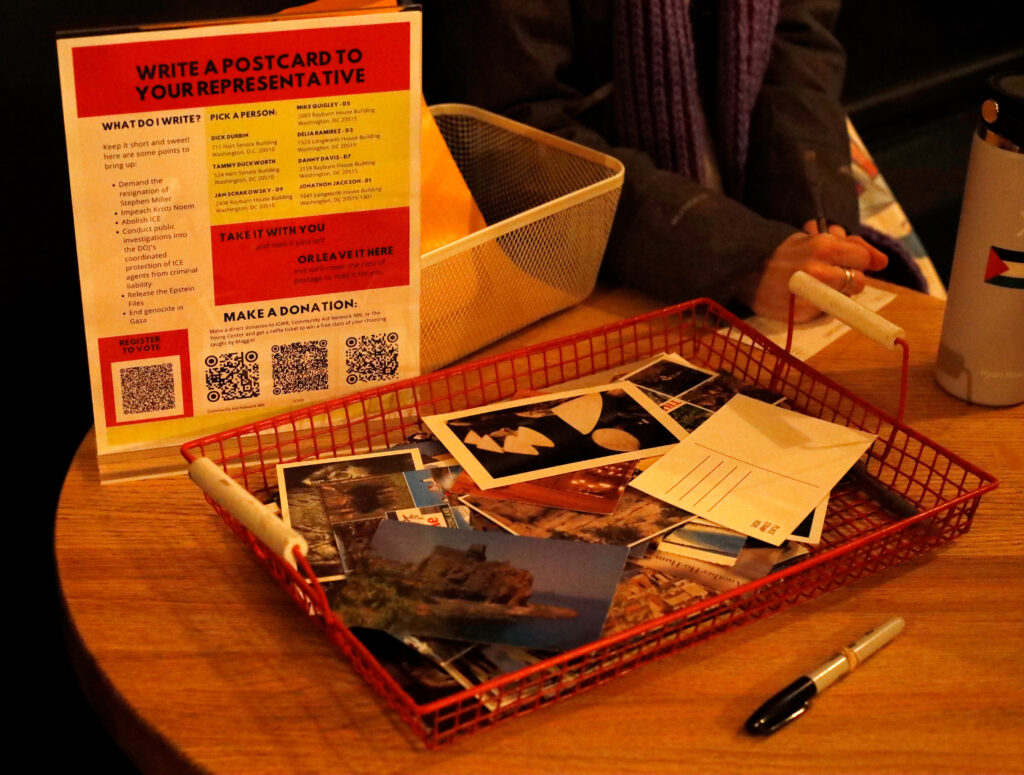
Amy Jo Albinak, an ICE patrol volunteer in Uptown and senior philanthropy officer for the Young Center for Immigrant Children’s Rights, attended on behalf of the Young Center. The organization is the only nonprofit in the United States appointing independent, bilingual child advocates to unaccompanied and separated immigrant children in federal detention facilities, according to their website.
Bonetti said she didn’t know about the Young Center until the day of the event. For her, Albinak’s speech and call-to-action about supporting kids and asking for volunteers opened more ways the Rogers Park and Edgewater area could help.
“We need to fortify our community, we need to meet our neighbors, we need to make these connections, so that if and when they come back, we already have those connections in place to share information with each other to help support impacted neighborhoods, impacted communities and to show up for people when it really matters the most,” Bonetti said.
As a white woman, Bonetti said she often feels out of place talking about immigration rights. The mom of two said she’s careful to distinguish her role as a facilitator rather than a spokesperson.
“I feel like I’m not necessarily the right person to do this because I’m not the voice that needs to be amplified,” Bonetti said. “I am the voice to help amplify, but it’s not about me. It’s about the neighbors that it’s happening to.”
Bonetti said she’ll keep the fight and resistance moving because to her, the sense that art, when placed in the right setting, can function as a meeting place — one where support, conversation and care move together.
“I hope that my boys grow up in a city and in an environment where they feel safe and loved and comfortable to be themselves,” Bonetti said. “I think that it’s the bare minimum of what every single child deserves.”