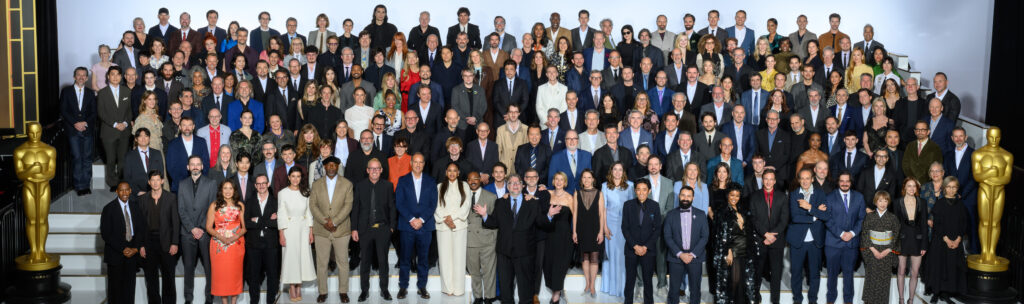
The Phoenix’s staff pulls the curtains back on nominees in major categories at the 98th Academy Awards.




Celebrating the best way cinephiles know how — jammed shoulder to shoulder in theater seats — the Hollywood elite will shuffle into the Dolby Theatre at Ovation Hollywood in Los Angeles March 15 for the 98th Oscars.
Concluding a wildly unpredictable awards season, the names read aloud from gilded cards are sure to shock with any outcome — much to the benefit of notoriously uninhibited host Conan O’Brien.
The Phoenix’s staff proclaimed their predictions and opinions on the top categories of show business’s most prestigious night. Be the first to watch tear-filled acceptance speeches on ABC at 6 p.m. CST, or stream live on Hulu, YouTubeTV and Fubo TV.
Discussed by staff writer Xavier Barrios
“Bugonia”
“F1”
“Frankenstein”
“Hamnet”
“Marty Supreme”
“One Battle After Another”
“The Secret Agent”
“Sentimental Value”
“Sinners”
“Train Dreams”
What will win: “One Battle After Another”
With 14 Oscar nominations under his belt, it’s about time Paul Thomas Anderson achieves the highest award in filmmaking for “One Battle After Another.” A masterclass in storytelling, cinematography and filmmaking, “One Battle” has very minimal competition this awards season for winning Best Picture, with “Sinners” and “Hamnet” trailing close behind.
What should win: “Hamnet” or “Sentimental Value”
Two of the best films of the last decade were released in 2025, making “Hamnet” and “Sentimental Value” seminal films in the cinema canon. Chloe Zhao’s “Hamnet” and Joachim Trier’s “Sentimental Value” both follow the story of familial turmoil and grief in strikingly human ways.
What should’ve been nominated: “Sorry, Baby”
It’s unfortunate for movie lovers that one of the best films of 2025 wasn’t nominated for Best Picture. Eva Victor’s “Sorry, Baby” is cinema at its truest form. Victor dissects a moment within their character’s life and extrapolates it into a coming-of-age masterpiece. With simplicity in set work and costume, the film is forced to focus on the story — and what’s film if not an exercise in storytelling and connection?
Discussed by staff writer Kevin Stovich
Timothée Chalamet — “Marty Supreme”
Leonardo DiCaprio — “One Battle After Another”
Ethan Hawke — “Blue Moon”
Michael B. Jordan — “Sinners”
Wagner Moura — “The Secret Agent”
Who will win: Michael B. Jordan — “Sinners”
Less than a month ago, Michael B. Jordan had no shot at winning the Oscar. Yes, Jordan’s ability to play a pair of multifaceted twin brothers is nothing short of impressive, but it seemed from the get-go that another actor would sweep the season. However, as a certain paddle-wielding protagonist started to stumble and a vampire horror picks up steam — including an important Lead Actor win at The Actor Awards — it seems more likely than not that Jordan will lead “Sinners” to their celebratory afterparty, gold trophy in hand.
Who should win: Timothée Chalamet — “Marty Supreme”
Just as the film’s name implies, Timothée Chalamet is the whole movie. In fact, there’s no Chalamet — just Marty Mauser, a purely pompous pingpong player protagonist. There isn’t a second of the two and a half hour runtime where his charisma — for better or worse — isn’t seeping into the scene, not only captivating his scene partners but enveloping the audience as well. Chalamet’s work shouldn’t be written off as just another role, but rather celebrated as a triumphant feat of screen acting.
Who should’ve been nominated: Jesse Plemons — “Bugonia”
In the year 2026, the last person anyone wants to hear from is a conspiracy theorist. Yet, Jesse Plemons’ portrayal of Teddy Gatz, a paranoid, self-proclaimed “extraterrestrial expert,” is deeply human. It’s easy to make a buffoon out of a conspiracist, but through a portrait of a grief-stricken, desperate bachelor, Plemons allows the audience to sympathize with the erratic, radical behavior of a deeply troubled man.
Discussed by Will Nichols
Benicio del Toro — “One Battle After Another”
Jacob Elordi — “Frankenstein”
Delroy Lindo — “Sinners”
Sean Penn — “One Battle After Another”
Stellan Skarsgård — “Sentimental Value”
Who will win: Stellan Skarsgård — “Sentimental Value”
Sean Penn, Stellan Skarsgård and Delroy Lindo all feel very plausible as winners in this category, but it looks likely Skarsgård takes the crown. He’s a Hollywood legend nearing the end of his career, and this would be an apt chance to award both him and his movie, “Sentimental Value,” with an Oscar.
Who should win: Sean Penn — “One Battle After Another”
In a stacked category, Sean Penn deserves the win for playing the already iconic Col. Steven J. Lockjaw in “One Battle After Another.” If Penn won, it would be his third Oscar win, making him only the eighth actor ever to have three or more golden statues. While it’s up for debate whether Penn’s career warrants this accomplishment, his performance undeniably deserves recognition.
Who should’ve been nominated: Austin Abrams – “Weapons”
Horror movies rarely get recognized at the Oscars, but Austin Abrams’ impressive performance deserved a nomination at this year’s show. While Josh Brolin and Alden Ehrenreich both turn in impressive performances in “Weapons,” Abrams stands above them both, playing a paranoid, nervy character with subtle sympathy and sincerity.
Discussed by staff writer Xavier Barrios
Jessie Buckley — “Hamnet”
Rose Byrne — “If I Had Legs I’d Kick You”
Kate Hudson — “Song Sung Blue”
Renate Reinsve — “Sentimental Value”
Emma Stone — “Bugonia”
Who will win: Jessie Buckley — “Hamnet”
Moving subtly with extreme control of her facial expressions, Jessie Buckley isn’t only set to win Actress in a Leading Role, but to become a prime example of superb dramatic acting. Buckley’s performance in “Hamnet,” echoed by that of her co-star Paul Mescal, is meant to be studied in drama classes for decades to come.
Who should win: Jessie Buckley — “Hamnet”
In “Hamnet,” Buckley slowly reaches her hand out to Hamlet. In that moment, with tears welling in her eyes, she’s not reaching for one of Shakespeare’s players, but for her son. This small moment without dialogue is where Buckley shines, she commands the narrative — and therefore the film — with emotive body language and acting prowess.
Who should’ve been nominated: Eva Victor — “Sorry, Baby”
Completely overlooked by the Academy, Eva Victor is compelling as Agnes Ward in their film “Sorry, Baby.” Victor inhabits Agnes. While the film jumps around a timeline and delivers key information variously throughout, Victor’s acting easily informs the viewer where they’re at in the narrative.
Discussed by arts editor Faith Hug
Elle Fanning — “Sentimental Value”
Inga Ibsdotter Lilleaas — “Sentimental Value”
Amy Madigan — “Weapons”
Wunmi Mosaku — “Sinners”
Teyana Taylor — “One Battle After Another”
Who will win: Teyana Taylor — “One Battle After Another”
Predictably a contentious category, the supporting actress race has yielded somewhat unpredictable results with Amy Madigan, Wunmi Mosaku and Teyana Taylor all clinching major trophies. Taylor, however, stands out most assuredly. Powered by raw rage, her magnetic, cutting performance as revolutionary Perfidia Beverly Hills in “One Battle After Another” will likely push her across the finish line to snag her first Academy Award.
Who should win: Inga Ibsdotter Lilleaas — “Sentimental Value”
Inga Ibsdotter Lilleaas’ steady and subdued performance in “Sentimental Value” has struggled to break the surface in awards circuits, likely stunted by the noise of powerhouse competitors. Her portrayal of quiet strife and unconditional love transcends language barriers as Lilleaas disappears into her sisterly role — perhaps too seamlessly to make an impression on Academy voters.
Who should’ve been nominated: Naomi Acke — “Sorry, Baby”
Naomi Acke is a warm shelter in the dreary New England of Eva Victor’s woefully overlooked “Sorry, Baby.” With humor and honesty, Acke sheds brilliant light on all sides of Lydie, whose nurturing tendencies could easily have pigeonholed her into the flat best friend archetype in the hands of a less-skilled actor.
Discussed by Will Nichols
Chloé Zhao — “Hamnet”
Josh Safdie — “Marty Supreme”
Paul Thomas Anderson — “One Battle After Another”
Joachim Trier — “Sentimental Value”
Ryan Coogler — “Sinners”
Who will win: Paul Thomas Anderson — “One Battle After Another”
Despite some pushes throughout awards season by Chloe Zhao and Ryan Coogler, Paul Thomas Anderson has been the heavy favorite throughout and is widely expected to take home his first Oscar for Best Director. If Coogler or Zhao picks up the trophy, expect to see surprise wins from their films in other categories as well.
Who should win: Paul Thomas Anderson — “One Battle After Another”
“One Battle After Another” is arguably the best movie of the decade, and much of that is due to Anderson’s expert direction. Although Anderson has had a significant career as a signature American auteur, he’s rarely been recognized by the Academy, and it would be nice to see that change this year.
Who should’ve been nominated: Lynne Ramsay — “Die My Love”
Few movies have a more clear, singular vision than Ramsay’s “Die My Love,” and she deserves credit for that accomplishment. Though a flawed film, the clarity and fearlessness of the film’s direction deserved more appreciation throughout awards season.
Discussed by staff writer Kevin Stovich
“Bugonia” — Jerskin Fendrix
“Frankenstein” — Alexandre Desplat
“Hamnet” — Max Richter
“One Battle After Another” — Jonny Greenwood
“Sinners” — Ludwig Göransson
What will win: “Sinners” — Ludwig Göransson
With two Original Score Academy Awards under his belt and a sweep of every major televised awards show this year, it’s Göransson’s Oscar to lose. Drawing inspiration from 1930s blues music, Göransson provides an integral sonic base from which the rest of the musicality of “Sinners” can follow.
What should win: “Bugonia” — Jerskin Fendrix
In his third consecutive collaboration with filmmaker Yorgos Lanthimos, Jerskin Fendrix composed the “Bugonia” score with only three words for reference: bees, basement and spaceship. The result is an eerily sparse yet grandly cacophonic orchestral score whose detached creation complements the bizarre sci-fi aesthetics of the film.
What should’ve been nominated: “The Plague” — Johan Lenox
In “The Plague,” a movie full of toxic teen boy masculinity, frantic chanting and a chorus of drone-like moans are juxtaposed by vibrant instrumentation, exhibiting how unpredictable — and frankly unsettling — puberty can be. With euphoric triumphs and queasy unease, Lenox’s score not only underscores a thrilling film, but it pushes it to its limits, making even the most self-assured squirm in their seats.
Discussed by arts editor Faith Hug
“Blue Moon” — Robert Kaplow
“It Was Just an Accident” — Jafar Panahi, script collaborators: Nader Saïvar, Shadmehr Rastin, Mehdi Mahmoudian
“Marty Supreme” — Ronald Bronstein and Josh Safdie
“Sentimental Value” — Eskil Vogt, Joachim Trier
“Sinners” — Ryan Coogler
What will win: “Sinners” — Ryan Coogler
Ryan Coogler has the rare ability to write films that transcend initial release relevance to become cultural phenomenons — the lasting impact of his original feature “Sinners” especially proving this. While unpredictable and endlessly entertaining, the “Sinners” story doesn’t overwhelm, instead inspiring introspective interaction with its themes of systemic oppression and cultural survival.
What should win: “Sentimental Value” — Eskil Vogt, Joachim Trier
In a film where much emotion is read in between the lines, every word in “Sentimental Value” is placed with intention and care. The Norwegian film’s writers, Eskil Vogt and Joachim Trier, excelled in crafting familial frictions whose causes never reveal themselves too openly. It’s likely, however, that much of the nuanced screenplay will have been lost in translation before reaching Academy voters’ ballots.
What should’ve been nominated: “Sorry, Baby” — Eva Victor
“Sorry, Baby,” the feature debut of writer, director and star Eva Victor, was surprisingly snubbed from all Oscars consideration. With a script that blends the sardonic, depressive and hopeful without ever tipping melodramatically into any, the opportunity to award the “Sorry, Baby” screenplay is one sorely missed by the Academy — and one that’s sure to sting as Victor’s bright future in film progresses.