James McBride’s murder mystery shows how communities find connection across racial and cultural divides.



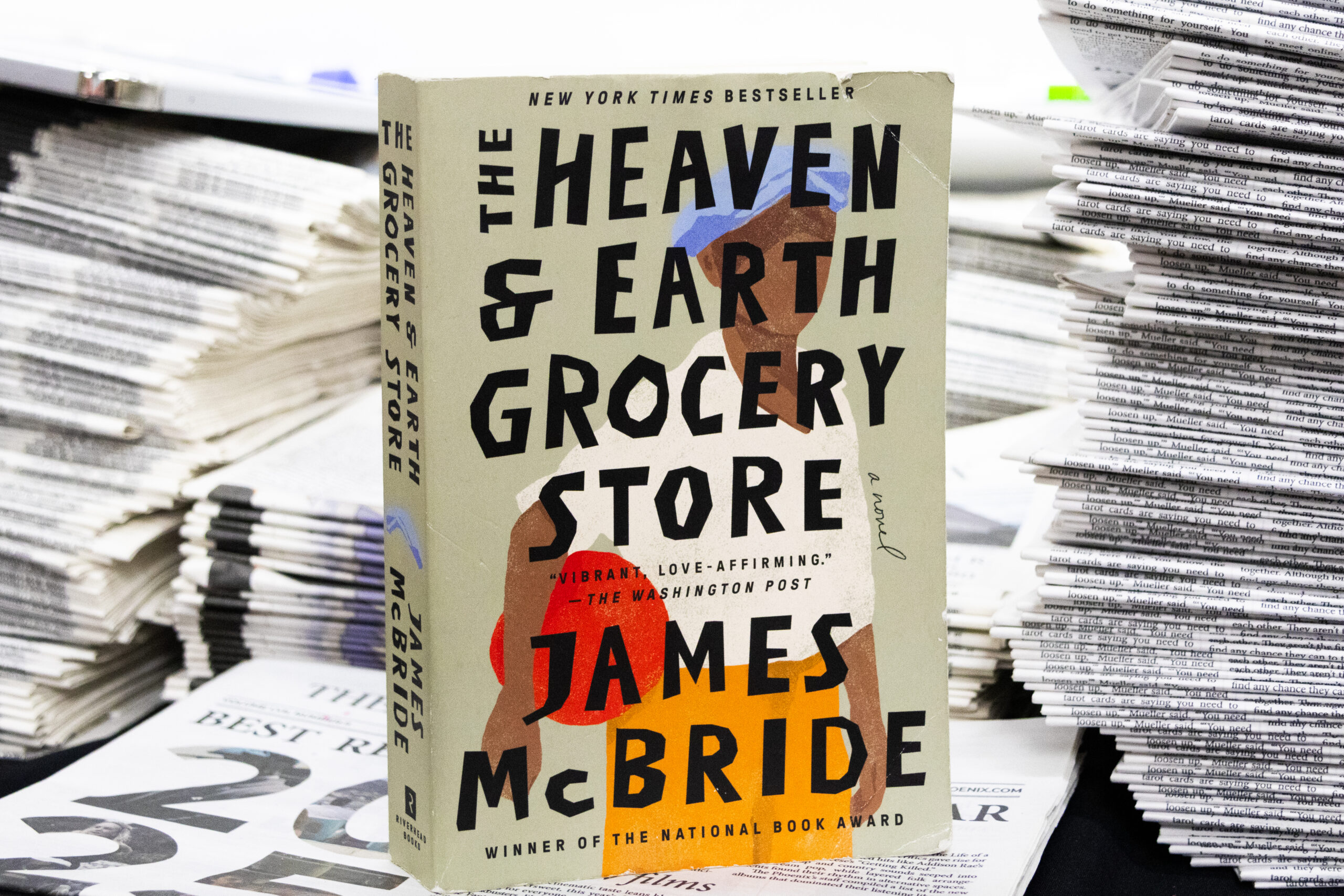
Despite being set a century ago, “The Heaven and Earth Grocery Store” still helps readers understand modern American communities and tensions.
Wrapped in a whodunit mystery, James McBride’s 2023 historical fiction novel examines race, community and what it means to be human. Through brilliant prose and detailed descriptions, McBride shows how marginalized communities survive in America -– and in the world.
A skeleton is found at the bottom of a well in Pottstown, Pennsylvania in 1972. Authorities question a Jewish man who lives at the top of Chicken Hill, the remnant of a formerly thriving Jewish community. Gripping readers in a true crime fashion, McBride subverts expectations by keeping the skeleton a mystery as he jumps to the 1920s and follows the diverse community that once populated Chicken Hill.
The Hill is home to a community of people from different backgrounds and of various walks of life who find themselves intertwined in unexpected ways.
Moshe, a Jewish immigrant who runs a theater, marries the American-born Jew Chona who works at a grocery store. The store bleeds money, as Chona provides for the immigrant and Black individuals of the Hill.
When Nate, a Black worker at Moshe’s theater, needs the orphaned and deaf Dodo to be hidden, the righteous Chona and residents of the Hill commit themselves to help him — at a perilous cost.
McBride was born to a Black minister and Polish immigrant who owned a grocery store. “The Heaven and Earth Grocery Store” characters are intentionally portrayed and developed, yet McBride’s biases are not apparent. He allows no details, no matter how uncomfortable, to remain unseen so readers deeply understand each character in their own way.
The immigrant and Black residents of the Hill are bound together by being neglected from the American dream. The white people from below the Hill flaunt their privilege and disdain for the people of the Hill. They celebrate their history in parades while condemning the immigrant and Black backgrounds. How or why the Hill’s community came to America didn’t matter to the white folks, because they aren’t as American to the white residents.
“It wasn’t no them and us. It was we. We was together on this Hill,” McBride writes.
McBride closed many doors and answered many questions throughout the winding plot and its derivatives. While following the mystery of the skeleton and the fate of young Dodo, the reader is also compelled to confront their assumptions of power, humanity and what is evil or good.
The story of 1920s Pennsylvania doesn’t seem to be fiction at all. As McBride guides readers through this story, they’re brought to question who America protects and who America abandons.
The community’s solidarity speaks to America today. McBride’s characters illustrate how people participate in a society that works hard to oppress them. Despite their differences in race and cultural backgrounds, the Hill’s community unites to protect each other, not in spite of the white people who look down upon it but despite them. Their resilience is reflected in current marginalized communities under America’s attack, who show what it means to survive and rise up with graceful unity.
“The Heaven and Earth Grocery Store” is available wherever books are sold.