Deputy Opinion Editor Carlos Soto-Angulo recognizes three important figures in jazz and blues history and writes about their contribution to the broader music atmosphere.



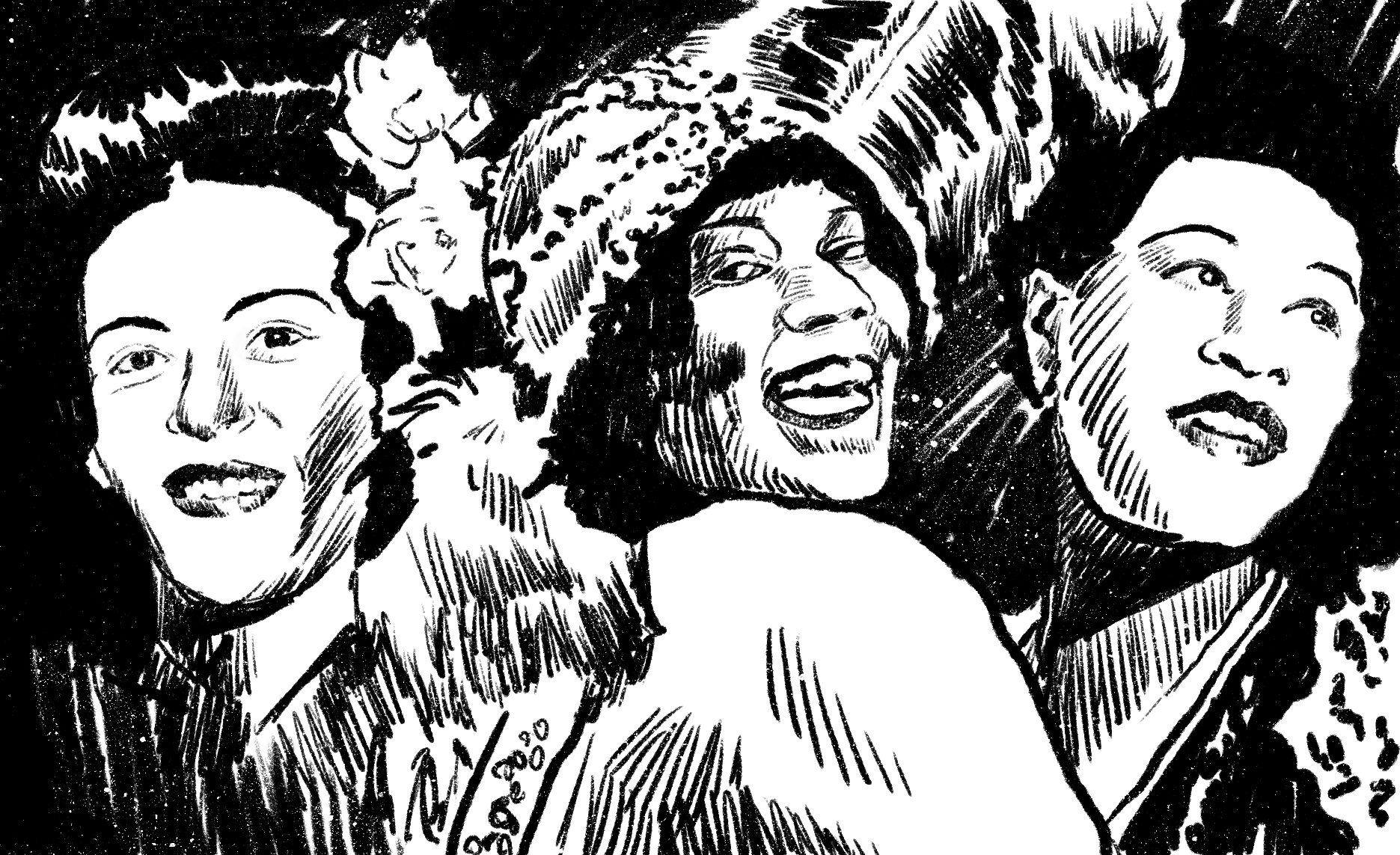
Jazz and blues seem to be woven into the Chicago streets. During Women’s History Month, it’s worth pausing to listen, not only to the legends of those genres, but to the women whose voices, skill and excellence moved them forward.
Ella Fitzgerald, Billie Holiday and Bessie Smith’s names appear in history books, museum exhibits and liner notes, but too often their influence is lost in the echoes of their male counterparts.
Ella Fitzgerald’s voice seemed to arrive as pure light. She rose to prominence during the era of big bands and smoky ballrooms. She greeted skepticism with a voice which seemingly slipped around every corner of rhythm and melody. Her scat singing took fragments of sound and made them conversational, playful and deliberate.
As an artist, she insisted on presence, making way for Black women to speak unapologetically, bending every measure into something personally expressive, communally resounding and could seem to be universally felt.
Billie Holiday didn’t redefine music by expressing pain; this was already embedded in the genre. What set her apart was how she controlled it. She approached phrasing with precision, often bending timing behind the beat by stretching or compressing lines in ways which shifted the emotional weight of a song without changing its structure.
The result felt intimate, almost conversational, as if the performance existed outside the arrangement surrounding it. Her influence reshaped how singers approached interpretation.
A song became less about technical delivery and more about perspective. She treated lyrics as something to inhabit rather than recite, an approach which continues to shape modern music, where phrasing and delivery often carry as much meaning as the words themselves.
Bessie Smith appeared to embody the spirit of blues. Her voice seemed capable of carrying hardship and triumph across crowded dance halls and dusty backroads. Known as the “Empress of the Blues,” she refused to shrink in a world expecting Black women and women of all backgrounds to remain small and submissive.
She sang of heartache and survival, and audiences responded with recognition of themselves in her sound. Smith continues to influence female artists like Beyoncé and Solange Knowles through her groundbreaking explorations of emotional states and personal challenges.
Furthermore, these singers’ influence reached prominent writers and civil rights activists like Angela Davis.
In her book, “Blues Legacies and Black Feminism: Gertrude ‘Ma’ Rainey, Bessie Smith, and Billie Holiday,” Davis writes about Black female blues singers using their lyrics to address themes of love, sexuality and oppression. In this work, she draws on the impact of three prominent figures who functioned as a force against middle-class respectability and racism.
These women didn’t exist in a vacuum. Each song became part of cultural conversations about race, gender, personal agency and the America they inhabited. Their recordings survive because they sounded wholly honest. They reached beyond catchy hooks and into emotional truth, where each chord pulled at a heartstring from within.
During Women’s History Month, the instinct can be to celebrate icons as paragons. Yet their real power lies in their humanity.
What makes these women’s legacy endure is their ability to disrupt their environment. They entered industries structured to minimize them and refused to shrink into the roles available.
There’s also a discomfort in their work which feels distant from today’s landscape. Much of contemporary media leans towards comfort and ease, rewarding what can circulate quickly and without friction. Their music seems to push against this idea, slowing things down and asking listeners to sit with unresolved emotions.
In this sense, clarity’s found in their lasting cultural presence.
Perhaps let these last few days of Chicago March serve as a reminder of how these and countless other women across history pushed boundaries in music which still shape the soundscape today.