Residents debate the future of Edgewater and Rogers Park as the city pushes for increased housing density.



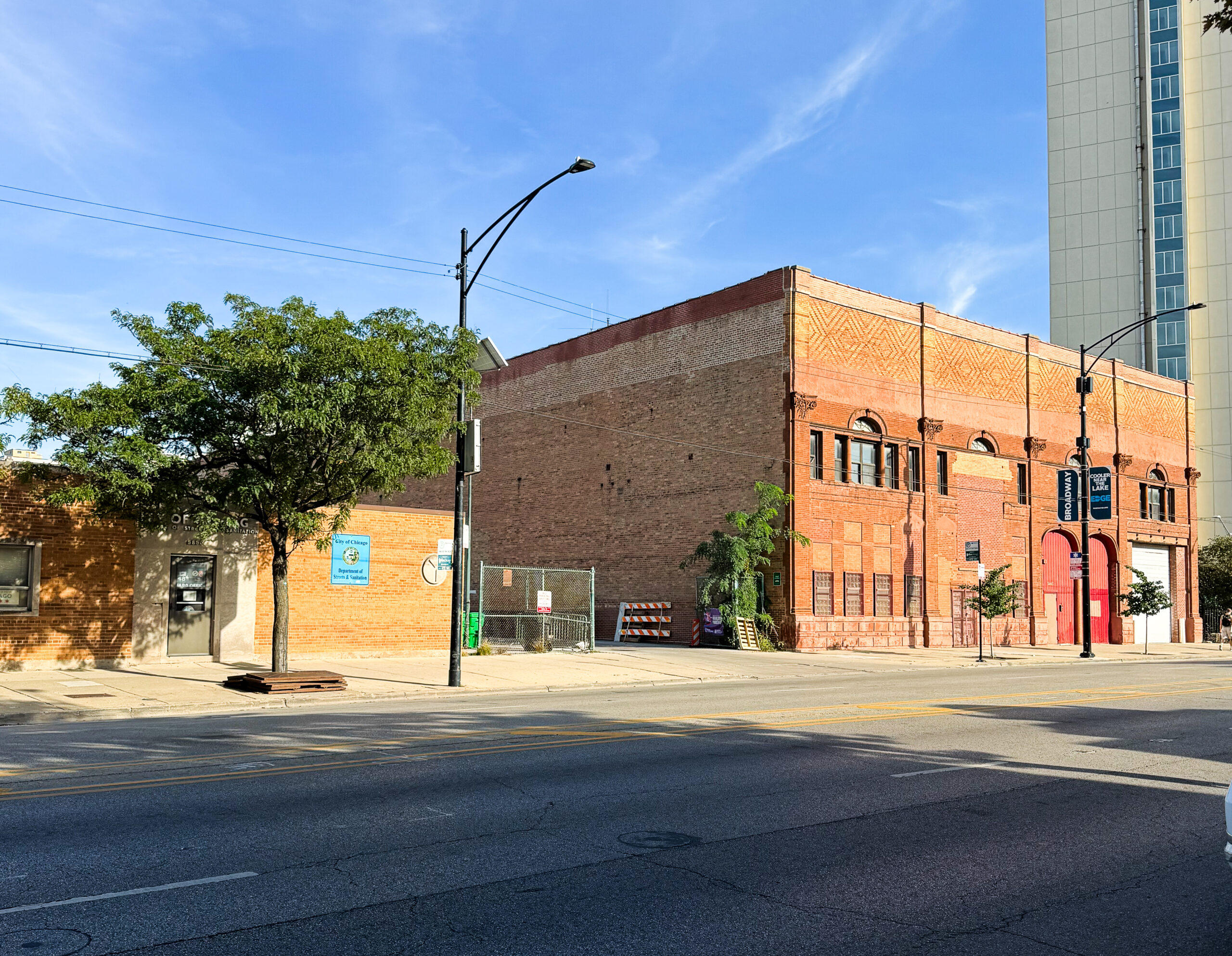
On a stretch of Broadway where antique shops, small businesses and low-rise apartment buildings line the corridor, City Council chambers are debating the future of Edgewater and Rogers Park in zoning maps.
A recent decision to upzone portions of the area would allow buildings up to seven stories tall, doubling previous height limits and significantly increasing the number of residential units permitted.
City officials say the changes are necessary to expand housing supply and address affordability, but some neighborhood block clubs argue the plan was rushed, threatens small businesses and could reshape the character of the community without guaranteeing lower rents.
According to the U.S. Census Bureau’s American Community Survey, the Edgewater, Uptown and Rogers Park area has about 164,646 residents living within 5.9 square miles, making it one of Chicago’s densest areas. The median household income is around $63,000, with nearly 20% of residents living below the poverty line.
Alderwoman Leni Manaa-Hoppenworth (48th) released a statement Dec. 3, supporting the zoning proposal from B1-2 to B3-5. Under this change, buildings are now able to go up to seven stories tall, more than twice as high as the current zoning allowed. The owner of the current property planned to reconvert the vacant lot into a six-story, 20-unit, mix-use building with commercial business and residences.
Despite the plan being scrapped due to high construction costs, the issue of affordability within the ward remains at high priority as rent increases and upzone initiatives continue.
“We want our institutions, including our neighborhoods, packed with people, especially if we live in the third largest city in the United States,” Manaa-Hoppenworth said. “Edgewater is a very desirable neighborhood with so many public amenities. But the fact is that people are getting shut out or they’re being displaced because they can’t afford to stay.”
Nearly 20 years ago, zoning changes along Broadway between Foster Ave. and Devon Ave. effectively halted the construction of buildings taller than one or two stories, preventing new housing development steps away from the Red Line.
The rezoning comes as the Chicago Transit Authority is working to complete its $2.1 billion Red and Purple Modernization project, which has so far rebuilt and reopened four North Side Red Line stations between Lawrence and Bryn Mawr, according to The Chicago Transit Authority’s Capital Improvement Program report.
Manaa-Hoppenworth said major public transit investments should be paired with additional housing density to maximize economic activity and use of transportation.
“Right now we have an artificial barrier,” Manaa-Hoppenworth said. “We’re just not allowing the possibility of more housing to be built on Broadway.”
Supporters of increased density point to Chicago’s Transit-Oriented Development ordinance, expanded by the 2022 Connected Communities Ordinance which allowed for increased density next to transit. The ordinance works to create jobs and allow for more homes near transit, improving safety of streets and sidewalks near transit and increasing housing accessibly near transit, according to the city of Chicago website.
In effort to create more housing, the Affordable Requirements Ordinance from 2015 was overhauled in 2021, and now requires 20% of units be set aside as affordable on site. Medium income requirements are now around 30-80% in Edgewater, according to Leslie Perkins, spokesperson for the 49th Ward.
“If you want all your affordable units at 30% median income, then you might not have to set aside exactly 20% because you’re offering a deeper subsidy,” Perkins said.
Neighborhood block clubs argue the plan prioritizes density over preservation.
President of Edgewater Residents for Responsible Development (ERRD) Patricia Sharkey said ERRD functions as a group of residents and business owners who work to inform locals and oppose city proposals of radical upzoning.
Sharkey, along with 13 Edgewater residents, filed a lawsuit against the city Jan. 12, arguing the rezoning to allow for denser development violated their due process rights and failed to notify them of zoning changes, according to Sharkey.
“[Manaa-Hoppenworth] proposed the plan in October of 2024, and it had no community input whatsoever,” Sharkey said. “By Dec. 3, she’s already supporting it.”
Along with the lawsuit, ERRD and ten other Chicago block clubs wrote a letter addressing the ward’s inconsistencies to recognize community concerns. Manaa-Hoppenworth declined to give input, according to Sharkey.
Although the upzoning ordinance was halted due to high construction costs, the issue of affordable housing remains a crisis on the North Side.
Sharkey explained how redevelopment works to tear down small, historical buildings and replace them with affordable units. As a result, business owners are displaced and rent is increased.
“It is not going to produce more affordable housing,” Sharkey said. “In fact, it increases rent across Broadway and drives out the small businesses, as well as takes down the character of the street.”
Sharkey said the money should be allocated toward preserving and improving existing buildings instead of creating more affordable housing.
Norm Cratty, president of North Edgewater Beach Association (NEBA), said he had similar concerns.
Cratty, along with other block clubs, drafted a five-point “Win-Win” proposal, advocating for a parcel-by-parcel approach rather than a corridor-wide upzoning.
The plan suggests preserving historic buildings in the Bryn Mawr district, concentrating taller buildings on the east side of Broadway near the Red Line’s deeper lots and limiting building heights on the west side, where developments abut single-family homes.
“That is more conducive to high density, higher stories for development, whereas, opposed to the west side of Broadway, it abuts low rise residential,” Cratty said.
The proposal also outlines the preservation of 45 heritage buildings and avoiding a B3 designation, which would allow for 37 new “permitted” and “special use” businesses without community input.
“We really don’t want to lose the significant small businesses like Patio Beef or the antique shops,” Cratty said.
Cratty said the ward needs to slow down their upzoning processes and review changes parcel-by-parcel, alongside community input.
“They need to do an outreach presentation so that residents can honestly see the impact that this is going to have and be receptive to constituent responses,” Cratty said. “And I’m not talking about putting post it notes on a presentation board, I’m talking about sitting down and having a rational, logical conversation about what needs to be done block by block.”
Manaa-Hoppenworth said she emphasizes how zoning changes go through multiple public stages — ward-level meetings, City Council introduction, zoning committee review and final council approval.
“Transparency and predictability are two of the things we’re striving for,” Manaa-Hoppenworth said. “When you take politics out of development, it’s better for the whole neighborhood and the city.”
The debate also highlights the longstanding practice of aldermanic prerogative, which allows for alderpeople to have significant control over zoning decisions, according to Perkins.
Perkins said the 49th ward requires developers to go through community meetings, use benefits scorecards and conduct constituent surveys before supporting zoning changes. She said she hopes future planning efforts will rely more on citywide planning expertise rather than case-by-case political approvals.
“We can get consultation from our Department of Planning and Development, but ultimately, it is a legislative process in order to get a zoning change,” Perkins said.
Spokesperson for the 49th ward Zach Joseph said the ward wants to ensure no locals feel pushed out of their homes because of issues such as construction or financial issues. The ward is working with developers to incentivize a variety of housing options for residents, regardless of their income.
“We have a lot of people in Rogers Park who want to stay in Rogers Park, but just can’t afford it anymore,” Joseph said. “And we have a lot of people who want to move here, but can’t because there’s just not enough housing.”
Opponents like Sharkey argue Edgewater is already one of the densest neighborhoods in Chicago and question whether taller buildings will solve affordability issues.
“If density is the answer to make our community more vibrant and liveable, we should be the model,” Sharkey said.
As the lawsuit proceeds and zoning proposals continue, the question remains of whether Broadway’s future lies in taller buildings and expanded housing, or preserving the history and scale which has previously defined the corridor.
“Broadway is our spine,” Manaa-Hoppenworth said. “It’s the connector for all of our neighborhoods, and it’s been neglected for far too long.”