Students gathered March 16 to celebrate Women’s History Month through faculty-led community discussions.



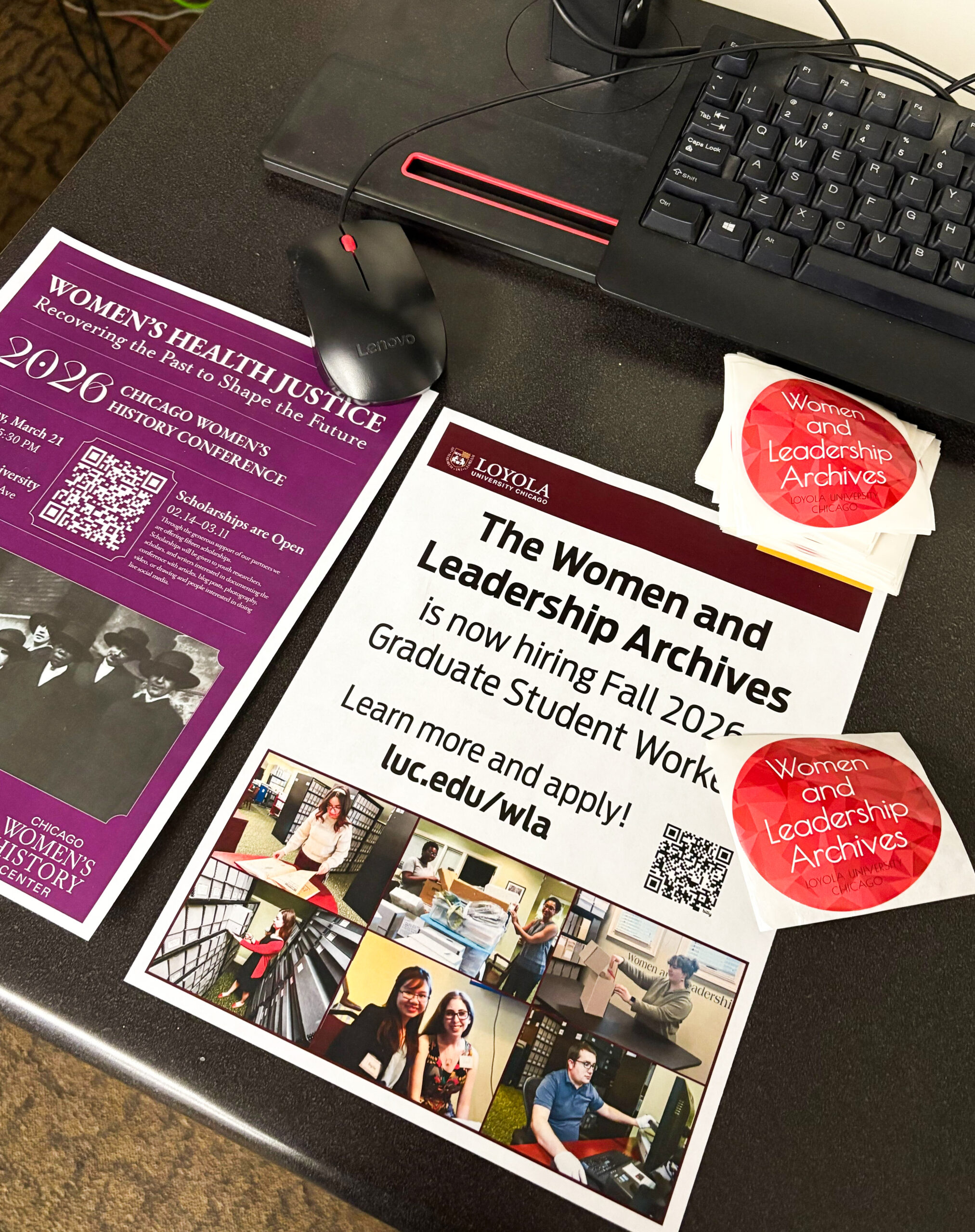
For the Director of Loyola’s Women and Leadership Archives, Emily Reiher, women’s history hits close to home – in fact, she’s dedicated her career to celebrating and preserving its legacy for all of Loyola’s community through her work in making records of women’s organizations easily accessible to all.
In celebration of Women’s History Month, Loyola’s History Club and Phi Alpha Theta fraternity hosted a panel at 7 p.m. March 16 intended to foster a connection between students and the women of Loyola’s faculty to bring the significance of Women’s History Month into dialogue. About 20 students attended the event.
From History Professor Tanya Stabler’s experience of misogyny faced when entering grad school to wrestling with the possibility of records being lost due to last name changes, the panelists and students alike discussed difficulties and positive experiences associated with entering education as a woman.
The event transitioned from an hour-long Q&A to a tote bag decorating event, where students could discuss their takeaways from the panel while connecting with other students.
A key point highlighted in these conversations was Loyola’s emphasis on educating its students about women’s rights as well as Women’s History Month as a whole.
Many individuals, including fourth-year history major Grace Polak attended the event with friends, fostering a sense of camaraderie and collective interest in women’s history.
“I’m in a core theology class titled ‘Trans Religion in Film’ that’s counting towards my theology credit and Women and Gender Studies credit,” she said. “I really appreciate that it’s something that individuals of all majors can partake in to get more educated on.”
Polak mentioned the student body’s reception to women’s history month as a whole.
“I think celebrating women’s history month is something that people are interested in, even if they’re not particularly showing any firm expressions of celebrating it,” Polak said. “It’s definitely something that people have an interest in, especially as a school that’s 70% women.”
The students gathered to celebrate the wins of women in education through the experiences shared by the panelists about their own experiences navigating challenges through education and their fields. One of such was Reiher’s story about a woman whose name wasn’t included in records until years after her husband’s due to the changing of her last name when she got married.
Fourth-year psychology major Angelina Tenuta said she’s taken courses like Women and Gender Studies 101 and American Pluralism, both of which she said highlight Loyola’s mission to educate students on women’s roles in history. She’s also noticed, however, a lack of scholastic drive on campus toward women’s history.
“I haven’t come across many history or women and gender studies majors, and while I would definitely say that the respect of women and our history is valued in many students, I don’t know how academically prioritized it is, in both the choices of courses taken and the number of courses offered under this topic as a whole,” Tenuta said.
While Loyola does support events such as the panel and education about women’s topics, Tenuta admits it’s unclear how much students feel an academic drive into learning about women’s history in a broader scope among all classes.
Reiher said she stresses the importance of celebrating women’s history, especially at a school like Loyola.
“The women and leadership archives really align with that Jesuit mission,” Reiher said. “In our different areas of collecting focus, you can see that streamlined story of things related to activism, the dignity of all people — all of which are related to the Jesuit mission. We really excel here” she said.
Reiher explained while Loyola may potentially lack in its broader teachings of women’s history, it excels in providing a space for students, faculty and community alike to educate themselves on and celebrate women’s history. She specifically touched on how the WLA is dedicated to providing a safe space for open collaboration between individuals.
“We are always open to new collaborations — students who want to educate themselves on women’s archives, who want to learn more about the profession, who want to do more research and also collaborate with faculty,” Reiher said.
Students like Tenuta advocate for further education on women’s history.
“I hope that people don’t feel discouraged to pursue women’s history and to generally educate themselves on it,” Tenuta said. “Getting a firsthand account of women’s experiences, especially those of different races, socioeconomic classes and intersectional identities as a whole is so important today.”