Deputy Opinion Editor Carlos Soto-Angulo examines the hidden waste and quiet destruction behind modern retail’s endless demand for novelty.



Lining any fluorescent-lit, run-down American mall are windows of desolate corporate storefronts. Many of these stores sell fast-fashion and cheaply made, superfluous items.
Destruction among corporate retail companies has become a common business practice.
Conglomerates like URBN — which houses Urban Outfitters, Anthropologie and Free People — for example, sell low-quality clothing, cameras, music players and lamps.
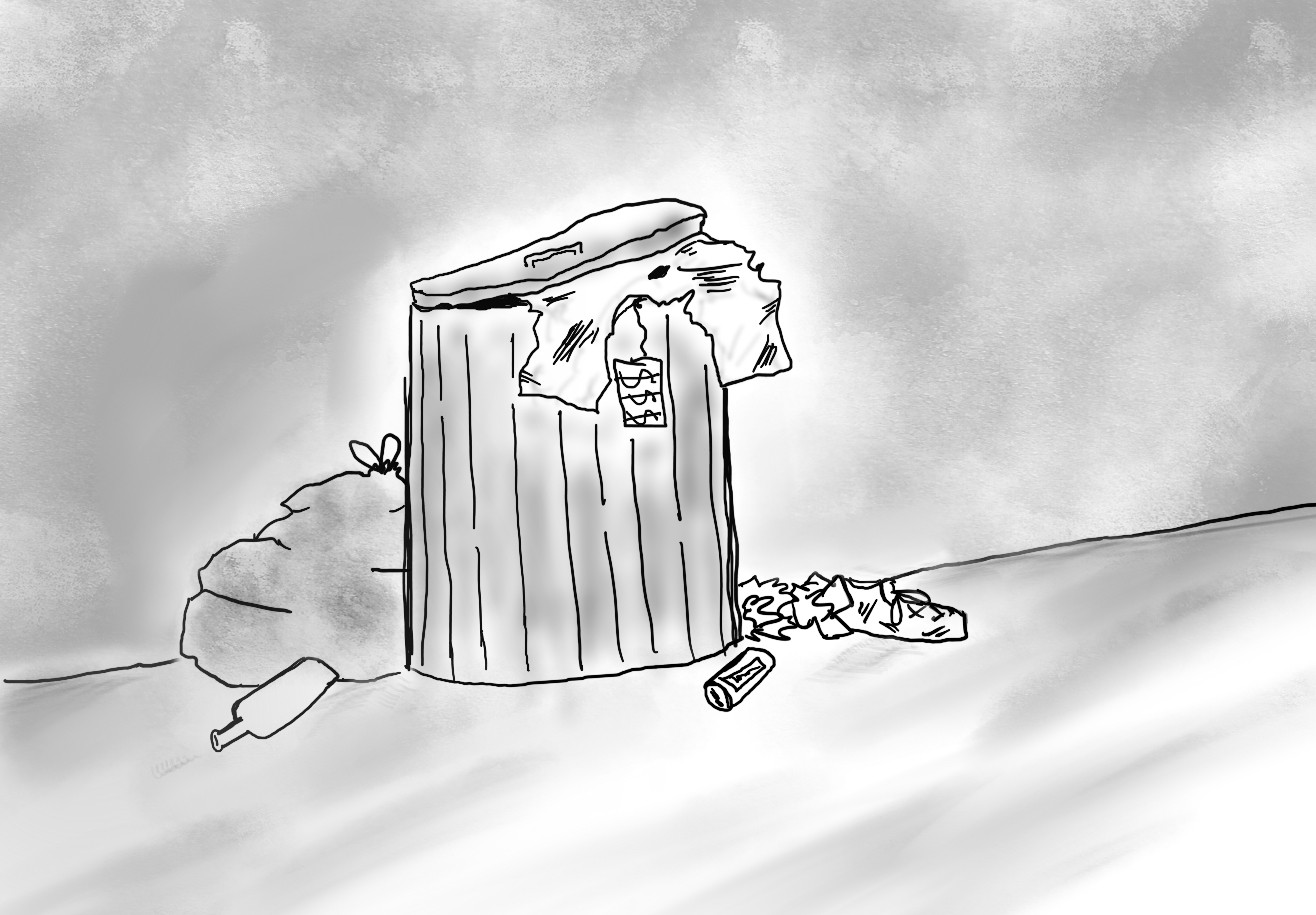
All of these products are — as reported by URBN whistleblowers — “damaged out,” meaning workers are instructed to physically destroy unsold products at the request of their management.
In 2021, URBN began a collaboration with FabScrap, a commercial fabric recycling service. Since then, URBN has been using the service’s reported impact as its own, stating, “As of August 2025, [we] recycled or reused over 52,000 lbs of pre-consumer material waste through partnership with FabScrap. The equivalent of over 5,750 trees planted.”
This essentially means FabScrap collected 52,000 lbs of textile waste from URBN to recycle and reuse.
Today, this level of wastefulness is typical in the corporate world.
Consumer expectations have shifted toward constant novelty and rock-bottom prices, pressuring smaller brands to compete on speed rather than quality.
What appears to be abundance on the sales floor is often the result of carefully managed scarcity behind the scenes. Unsold goods can’t linger on racks forever. Their continued presence threatens the illusion of constant trend newness. To maintain this façade, inventory must move quickly, even if movement leads directly to dumpsters or shredders.
Retail operates on a cycle of rapid turnover. Trends are introduced, exhausted and replaced within weeks. Garments are produced cheaply enough so replacing them costs less than repairing or preserving them.
In this system, durability becomes an obstacle rather than a virtue.
More than a century ago, communist writer Karl Marx described a similar dynamic in his critique of capitalism.
Production, he argued, isn’t organized around human need but around the accumulation of profit. Goods are created primarily as commodities — objects whose value lies in their ability to be sold. When those commodities can’t be sold fast enough, they cease to hold value in the system, so their physical usefulness becomes irrelevant.
This, in turn, creates a cycle of commodity fetishism, or the perception of the social and economic value of goods as inherent to the objects themselves, rather than the result of the labor and social relations producing them.
In modern retail, this logic produces a strange paradox.
Perfectly usable goods are destroyed because they can’t be sold at the right time or place. A shirt which fails to move during a season’s trend cycle is treated as waste, even if it’s brand new. The labor, materials and energy that produced it now vanish in a moment of routine disposal.
Brands justify these practices as necessary to protect their image. Excess inventory sold at below-cost prices risks diluting a brand’s perceived value. Destroying, by contrast, maintains the illusion of exclusivity and control. Profit margins remain intact, even if the products themselves aren’t.
But corporations aren’t the only actors sustaining this cycle of wastefulness.
The consumer’s demand for novelty encourages brands to release new collections more quickly and at lower costs. Clothing’s purchased with the expectation it will be worn briefly and replaced quickly. Social media amplifies the pressure, turning outfits into temporary content rather than lasting possessions.
The logic of manufactured desire has expanded beyond clothing and into novelty collectibles.
Blind-box toys — small minifigures sold in sealed packages, so buyers can’t see which variation they’re purchasing — have become a staple of modern retail. Brands like Sonny Angel sell small collectible figures packaged in identical boxes, each containing one of many possible characters.
The appeal lies in uncertainty. Consumers are encouraged to buy repeatedly in pursuit of a specific figure, even though duplicates are inevitable.
The model turns chance into a sales strategy. Instead of buying a single product and feeling satisfied, consumers are drawn into cycles of repeat purchasing, hoping the next box contains the one they desired.
It’s the typical gambler’s fallacy; if someone doesn’t get the figure they wanted, they buy one more, and so on, until they finally “hit big.”
From a broader perspective, this system produces a steady stream of small plastic commodities designed primarily for circulation. Each figure is manufactured, shipped, packaged and marketed solely to elicit a few seconds of anticipation. In this sense, companies like Sonny Angel are preying on an addictive chemical release —similar to gambling addictions — to further improve sales.
In a retail culture already built on rapid turnover and vapid consumerism, blind boxes further compress the process, transforming consumption into a game of chance where the reward’s another object soon to lose its novelty.
The result’s a culture where ownership is fleeting. Products aren’t meant to age with their users but to be worn down and replaced, ever-sustaining the market.
The neatly folded displays inside storefronts convey order and abundance while the destruction required to maintain this appearance remains invisible to passing shoppers.
What appears to be a thriving retail environment is, in many ways, a system built on destruction.
In this sense, the fluorescent-lit mall becomes a kind of stage set — a place where endless novelty’s performed, even if the backstage’s filled with items which may never find a buyer.