A choreography project fourth-year Kara Hoag started last spring will be one of her last with the Dance Department as she graduates in May.



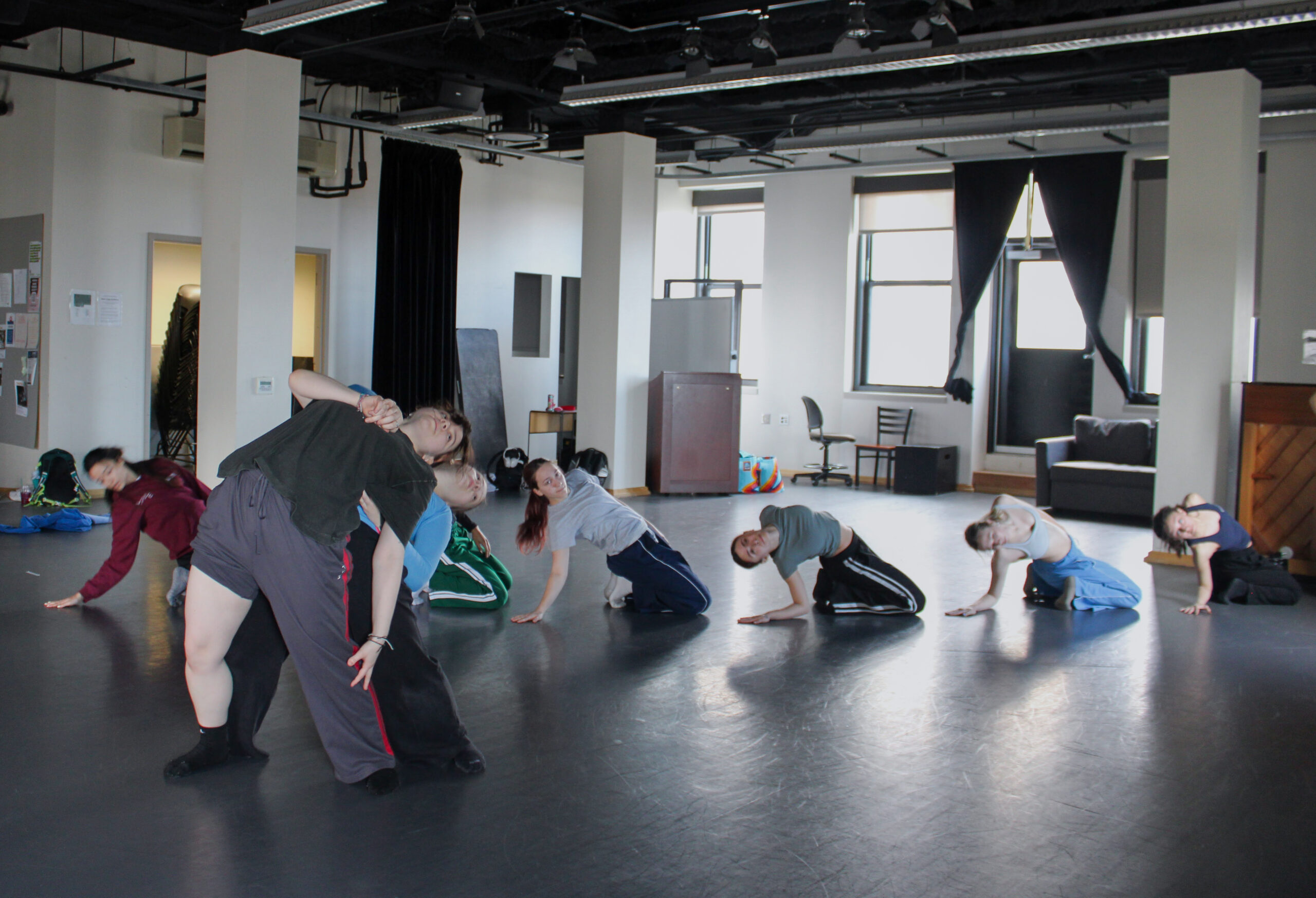
Third-year dance majors wait in anticipation to take dance composition — their chance to be the ones creating choreography after years of bringing to others’ artistic vision to life.
But for one student, the dance composition showcase — which comes at the end of each spring semester — won’t be the last time their piece is performed.
This year, fourth-year dance and advertising and public relations double major Kara Hoag got to take the dance she created last spring, “Tethered Then Torn,” on an epic adventure to make her last year at Loyola one to remember.
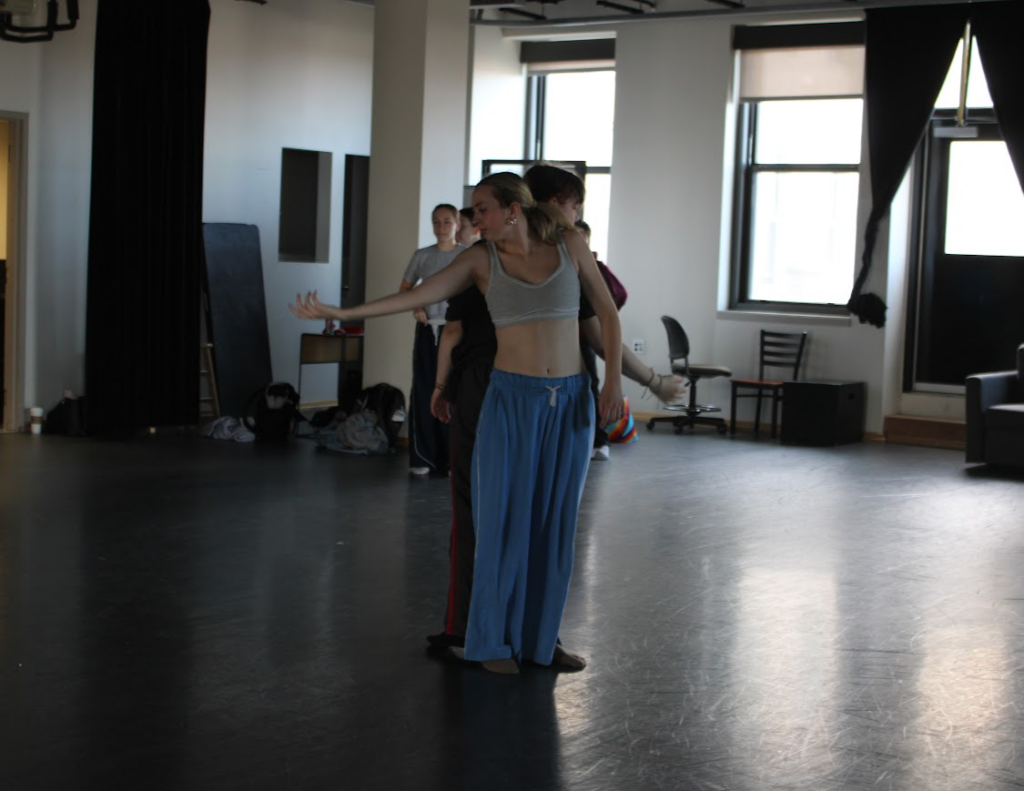
At the Department of Fine and Performing Arts Awards ceremony in May 2025, Hoag was presented with the Outstanding Achievement in Choreography for “Tethered Then Torn,” the piece selected to be brought to the Main Stage Dance Concert the following fall.
However, receiving the opportunity to honor a dancer’s hard work and dedication to their craft wasn’t Hoag’s goal in taking dance composition.
“I didn’t want to focus on it because I didn’t want to have that outside validation before feeling good about my own work,” Hoag said. “I’m just going to enjoy this and take it as I can and dance with these people that I’m not going to dance with again.”
The Boston native believes this approach to her art allowed her piece to be well-received by audience members and faculty alike.
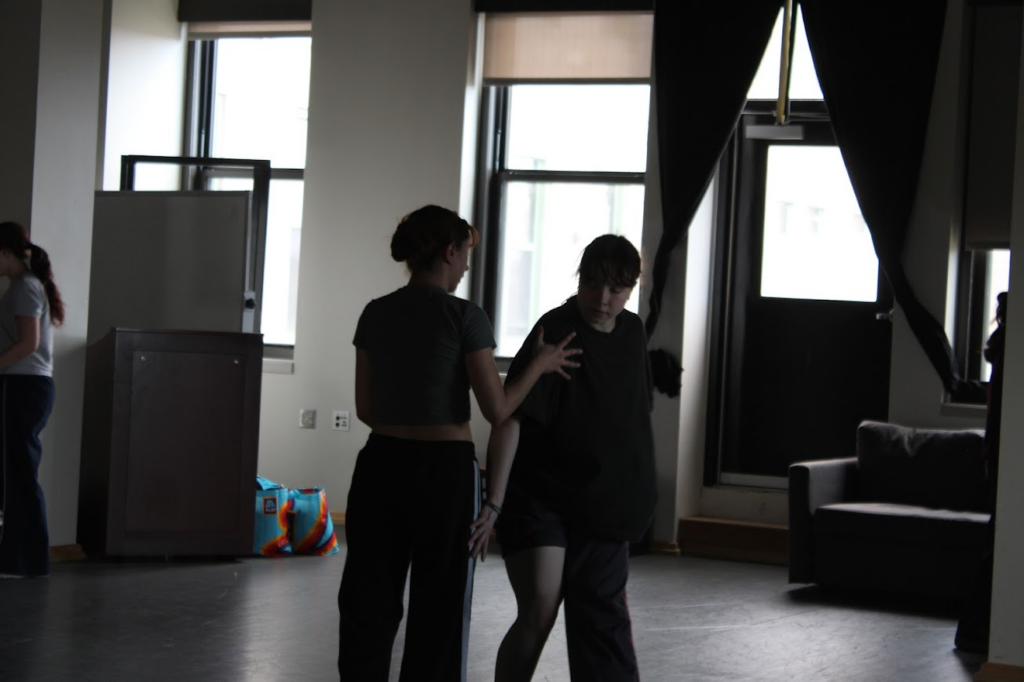
Intense partnerwork opens the piece, Hoag’s cast forced to trust each other not only for intricate physicality, but balancing the emotional demands of the dance.
This is an integral technique to the message of Hoag piece and was developed through changing dynamics and intent with each new partnership.
However, it was important to Hoag each dancer felt comfortable with the movement placed on them. Consent from the dancers with each tactile step is what she said allowed this piece to blossom with the performers knowing they had a safe space to explore.
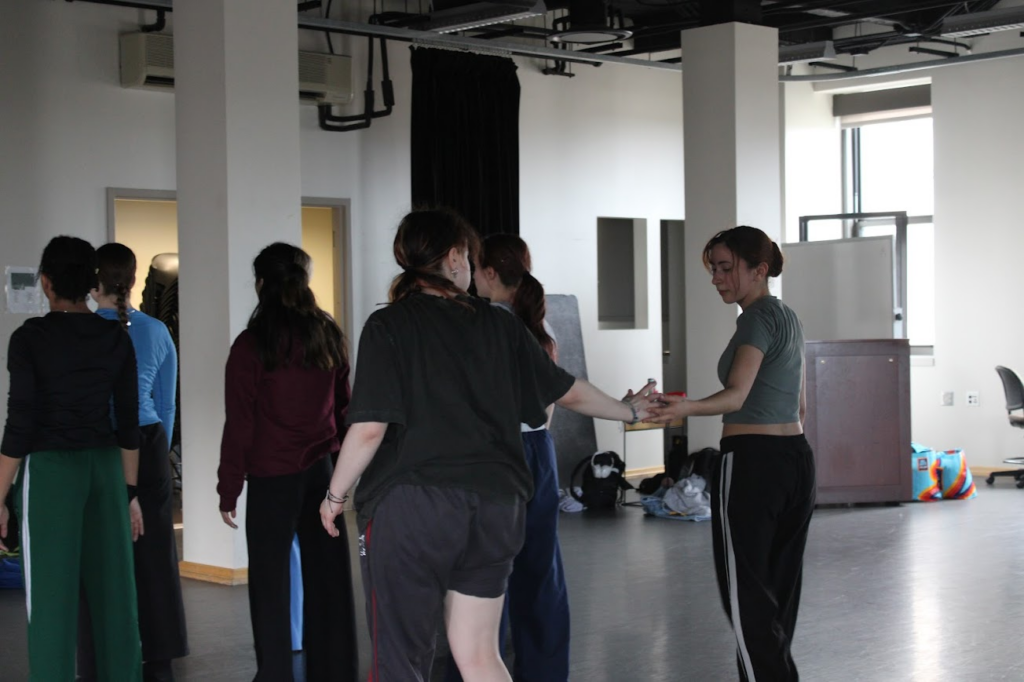
The complexity of relationships, how no two are the same and learning to find oneself while in an intimate experience with another person are the themes guiding Hoag’s piece.
“Each little pair, because different pairs come on stage, they have different relationships with one another,” Hoag said. “So some are more separate from each other and more like, ‘Oh, I feel you’re there, but I don’t trust you,’ and others are like, ‘Oh, I really trust you. This is going to grow into something.’”
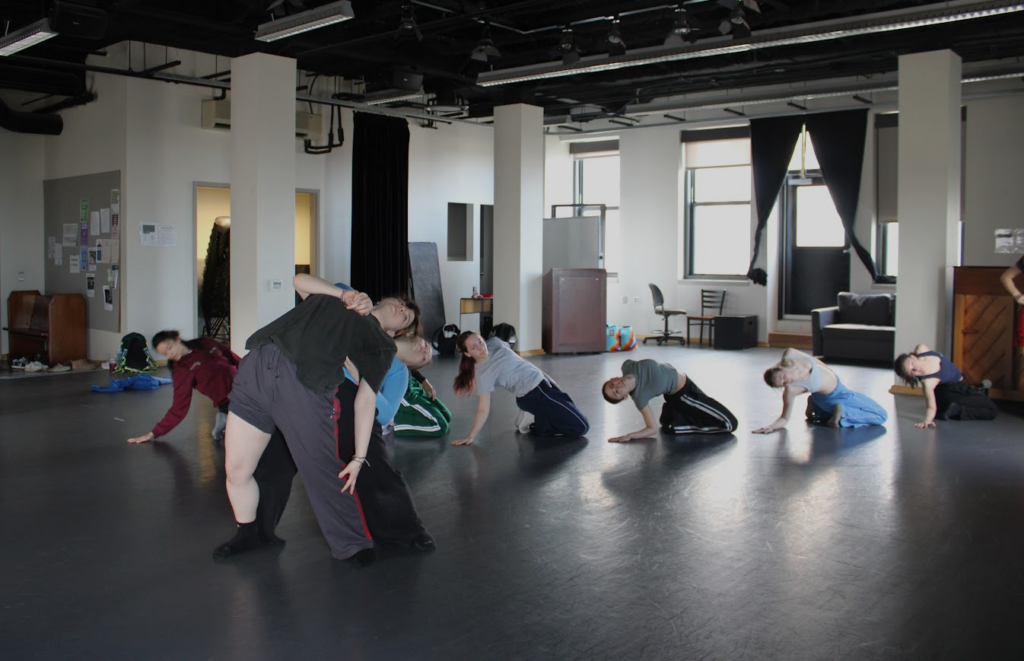
In the fall of 2025, she was tasked with not only expanding the length of the piece from four minutes to nine after taking three months away for summer break and recasting the piece.
With members of the original cast from spring 2025 having graduated the same semester, Hoag had to find new dancers who she trusted to share a story personal to her.
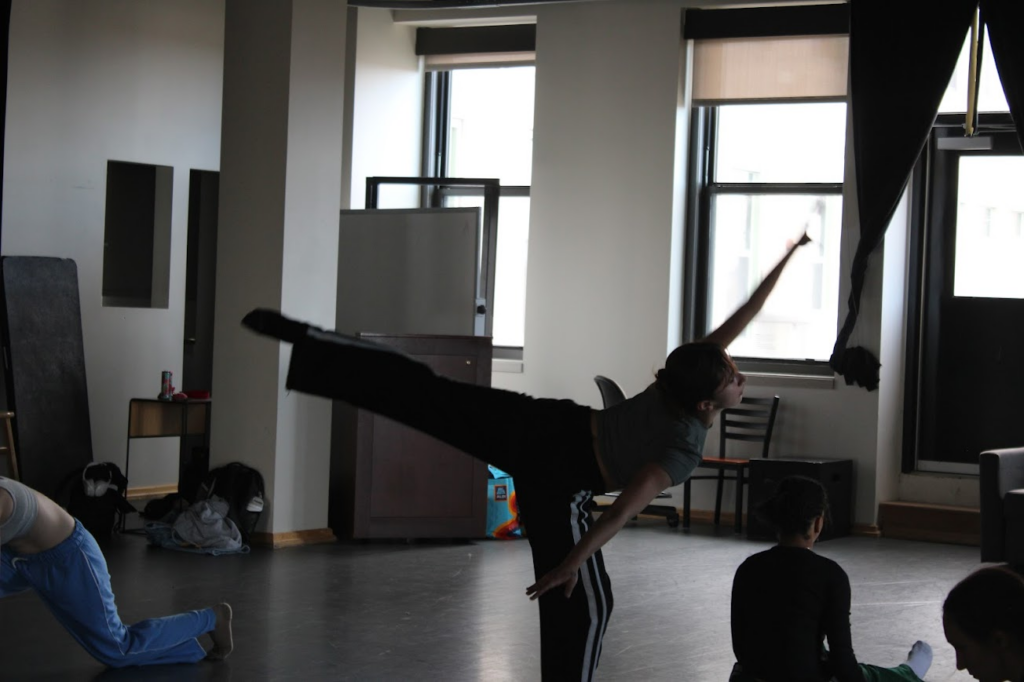
Growing up in a divorced household was a key influence in the formation of this story and how Hoag feels about relationships.
While wanting each dancer to form their own connection with the central storyline of the dance, Hoag opened up to her casts about the deep ties to her personal life.
This decision, Hoag believed, is what allowed the dancer to form their own stories and be vulnerable during this process.
Partnering isn’t the only important aspect of this piece. Wanting to play with the concept of coming into one’s self during a relationship, Hoag included moments for the dancers to be showcased as individuals.
“Ultimately in life, in dating, you never end up with that person, unless it’s like one in a million,” Hoag said. “So throughout the piece, you see them come together into their own identity.”
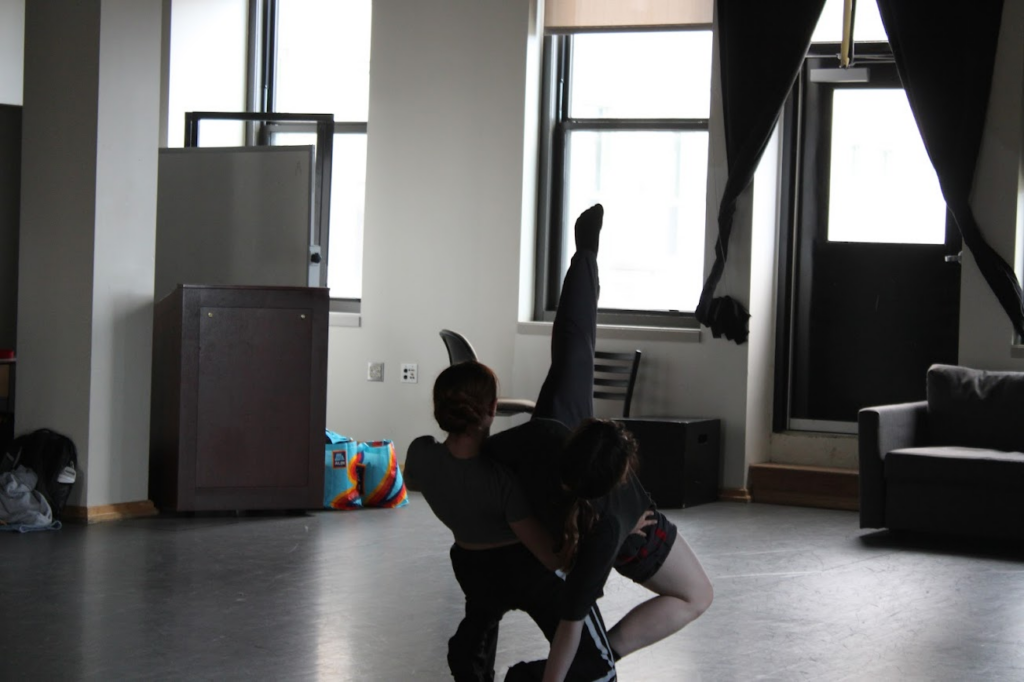
While other partnerships are more fickle and fleeting, third-years Crystal Ornelas (left) and Ellie Slowiak (right) embody the desire to dive fully into someone else while being afraid of the fallout opening up could entail.
“It goes into a duet, which is a new transformation that happens of really learning what it means to be vulnerable with someone,” Hoag said.
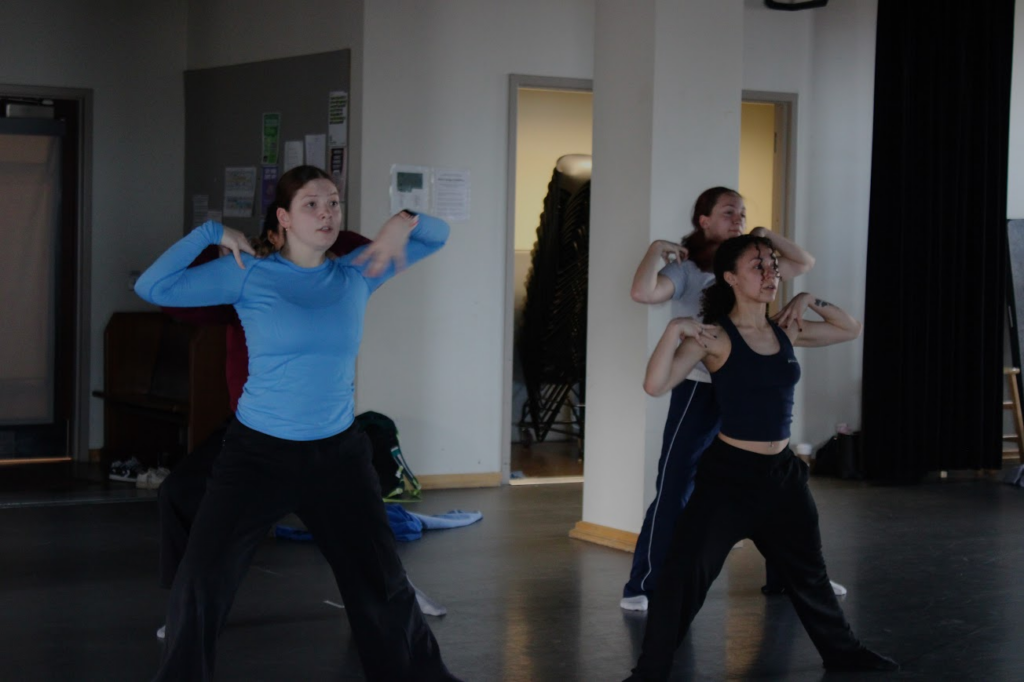
As they search each other for the answers, requiring the utmost trust as they lend one another their bodies, they must decide how far they are willing to intertwine their lives to form an unbreakable bond.
For the rest of the dancers, they find peace in their stories beyond the relationships which defined them at the beginning of the piece.
“They come together and they realize, ‘This might not be my person, but I’m okay with that because I’m okay in my own skin,’” Hoag said. “I’m okay with that independence. I don’t need that codependency.”
As other dancers leave the stage, Slowiak and Ornelas continue to circle each other, moving in between the negative space made by the other’s body.
“There’s never really an ending, which I wanted to really emphasize because there’s not really an ending to our life,” Hoag said.
Her piece doesn’t come to a complete stop. It’s a breathtaking metaphor of both deciding the other is worth more than a chapter in their lives, but the whole story.
Fortunately, the story of this piece has continued to grace the stage throughout the 2025-2026 academic year.
With guidance from Senior Lecturer of Dance Amy Wilkinson, who taught Hoag’s dance composition class last spring, and Director of Dance Sandra Kaufman in evolving her piece for Main Stage, Hoag was invited to bring it to the American College Dance Association Central Conference in March 2026.
“Tehered Then Torn” has followed Hoag throughout her last semesters at Loyola and will be performed for a final time on Saturday, April 18, at the Mundelein Center for Fine and Performing Arts during the Undergraduate Research and Engagement Symposium.