Arts editor Faith Hug, deputy news editor Ava Witherite and writer Envia Daniel debate the best online platform for sharing thoughts with friends.



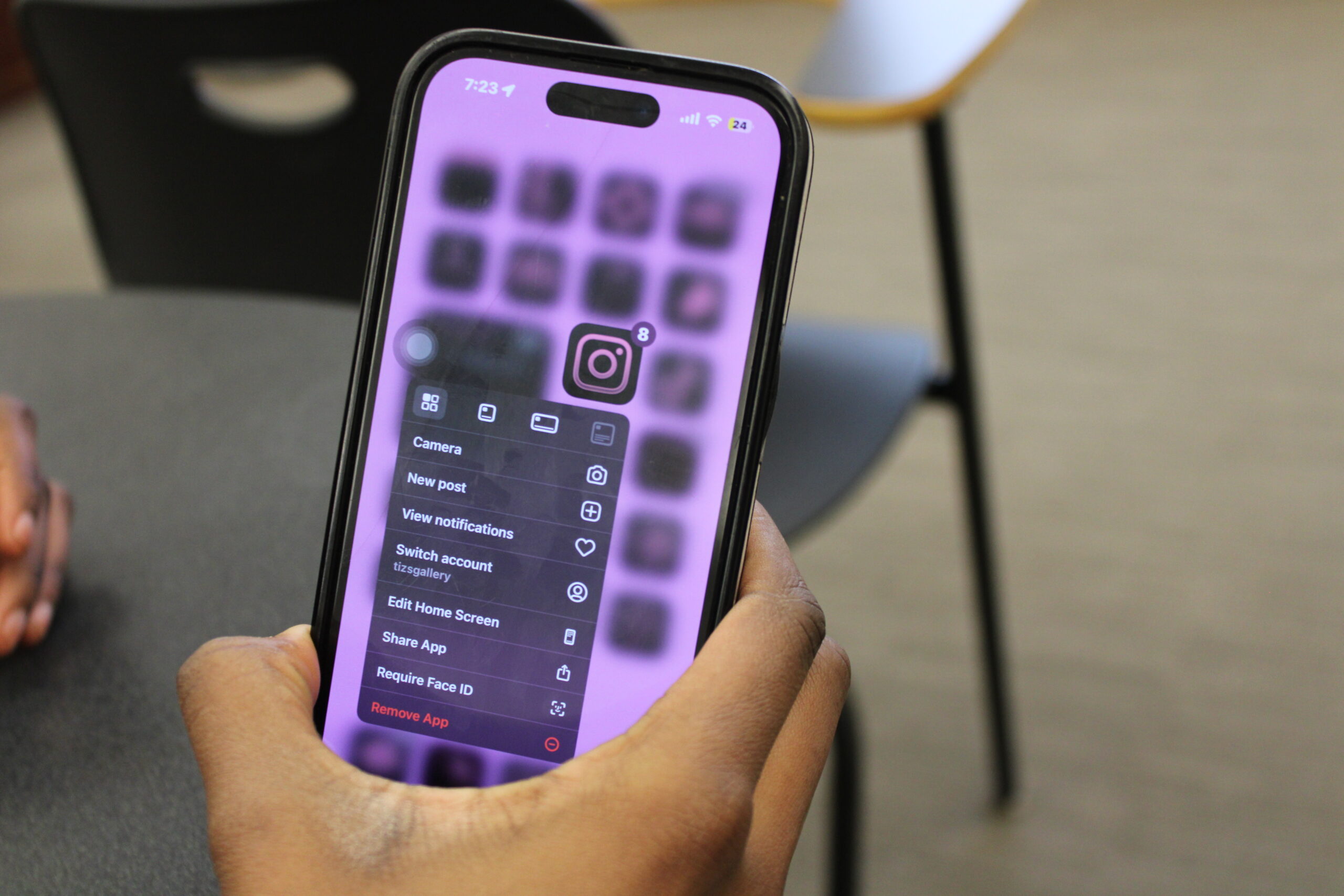
Instagram Close Friends:
By Faith Hug
One can imagine a carefully curated set of friends sitting together in a circle on a bed of green grass. A blue-purple sky fades behind them. Music softly lilts as the community’s organizer tells a story. Confined to this green circle and at the whim of their storyteller, the friends are left to enjoy the narrative being carefully illustrated.
This is the beautiful reality of an Instagram Close Friends story — figuratively, of course.
Giving users an array of multimedia tools to express themselves, Instagram Close Friends is the greatest way to share thoughts online with a hand-selected group of people.
The feature, launched in 2018, lets Instagram users create a list of accounts to share private stories, Reels and posts with. Incorporating beloved features of Snapchat private and spam or finsta accounts, Close Friends is an upgraded alternative for both.
While Instagram stories are a direct rip-off of Snapchat’s vertical post equivalent, they improve upon the original immensely.
Keeping the attractive impermanence and impulse of the Snapchat story, Instagram stories similarly disappear from view 24 hours after their posting, existing beyond only in a private archive. The multimedia tools available as Snapchat story additions — music, polls, Q&A functions and drawing pens, to name a few — are available on Instagram stories with greater customizable opportunities.
Instagram stories also make it convenient to reshare and comment on any content posted on the app. Whether it’s recommending a funny Reel or expressing horror at a high school peer’s shocking engagement announcement, reposting onto a Close Friends story invites friendly interaction.
Unlike spam accounts, which anyone can discover and request to follow, Close Friends viewers are chosen entirely by the poster. This cuts down on dicey membership monitoring, allowing the addition and removal of members to go largely unnoticed.
With 80% of adults ages 18-29 reporting use of Instagram and only 58% percent reporting Snapchat use, according to a 2025 study by the Pew Research Center, Instagram emerges as the preeminent social frontier for young adults. It’s time to leave behind the “Can I have your snap?” of yore and embrace the mature platform of today.
No matter what one posts on Close Friends stories, users develop distinctive visual identities through the medium. I’ve become so accustomed to posting jokes with standard white text over the blue-purple ombré Create Mode background that I’ve genuinely begun to visualize thoughts in that format.
While this is concerning for my mental well-being, it’s also indicative of the greatest part of Instagram Close Friends — it allows posters to express to a thoughtfully organized group of friends an authentic and creatively unique online identity.
Snapchat Stories:
By Ava Witherite
Since its launch in 2011, Snapchat has been a defining part of growing up online, especially for teens and young adults during the mid-2010s. Around the 2016 era, Snapchat became the go-to platform for casual, in-the-moment posting, offering space that redefined the traditional posting process and felt more personal than other platforms.
Snapchat stories thrive under its no-pressure digital environment. There’s no need to overthink what to post or pick the perfect image — users can upload a blurry selfie, a chaotic video or any random thoughts they have without worrying about long-term judgment.
Unlike Instagram, where posts feel permanent, and people strive to make curated feeds, Snapchat embraces spur-of-the-moment posting.
One of the key factors of Snapchat is the idea of private stories, where users can control exactly who sees their content. The app created a digital safe-haven, offering a space to rant, joke or share unfiltered moments with a select group of friends.
The app’s format is simple, yet efficient. With one tap, Snapchatters can catch up on someone’s entire day — no endless scrolling needed. Adding in filters, captions, location tags, music and Bitmojis makes even the most dry posts feel entertaining and impressive.
For those who overthink their digital presence, Snapchat deletes stories after 24 hours. This “built-in” expiration date makes people feel more comfortable posting, knowing their content won’t stick around forever.
The app also functions to be interactive for all of its users. Posters’ use of polls, questions, and quick swipe-up replies makes the app feel less performative and more casual.
For users who want deeper insights into what they post, Snapchat allows posters to see who viewed or screenshotted their stories. Snapchat+, a subscription add-on, offers additional perks such as seeing who replayed a story and customizing how long it stays up.
However, Snapchat stories aren’t perfect. The fleeting nature of story posts can make content feel temporary or even forgettable, making it harder to revisit meaningful moments later on.
The app may also blur digital boundaries, sometimes encouraging overposting or making it easier to miss important updates. Still, these flaws are ultimately what makes Snapchat appealing. Its temporary, low-pressure format is exactly what makes users feel comfortable in the first place.
At its core, Snapchat stories are the easiest way to share life as it happens without overthinking. In an era of over-curated feeds and private alternative accounts, Snapchat remains one of the most timeless and authentic ways to stay connected.
Spam Accounts:
By Envia Daniel
Instagram advertises itself as a way to share what you love with the ones you love. This can be perfectly done with an entire account dedicated to you and your closest friends attached to a whimsical username.
Spam Instagram accounts foster a comfortable space to make posts across a variety of mediums. Not only the stories feature, but grid posts and notes are practically the users’ empty canvases. Creating a slideshow grid post of the most recent week or month can be quite a creative process, but perfect for keeping an exciting archive. Posting on a Snapchat private story or an Instagram Close Friends story only lasts 24 hours, while spam account posts are however long the user decides.
Of course, users may have their own main account, but having a spam account is an amusing way to perfectly curate the Instagram experience. Main accounts often consist of attractive, calm, maybe even professional content, while spam accounts are happily free reign. Many have heard of the movement “Make Instagram Casual Again,” and there’s no better way to do this than with a spam account.
Users may find themselves prioritizing an aesthetic or particular curation with their main account, while spam accounts give space to do whatever makes sense to them.
Spam accounts erase many of the unspoken rules of social media. Imagine posting a photo slideshow of the iced coffee you just dropped to the song “I Love It” by Icona Pop and Charli xcx. It’s perfect.
Making a full grid post leaves quite an experience for friends who can frequent the post as often or little as they’d like. Grid posts give space for followers and the user to leave comments and carry witty conversations.
Oftentimes a close friend leaves a comment that brings a new perspective to the month, week or day that had just been posted about. This could bring the user to a new song, idea or perhaps even a meme. These views can only be seen with the enhanced features that come with a dedicated Instagram account.
When one is deciding how to document an event, trip or chapter in life, creating an entirely new Instagram account is a splendid consideration. A spam account is the perfect digital archive of plenty of young experiences, especially those throughout college.