The Aramark food service employees fought for livable wages, continued healthcare coverage and stronger pension.



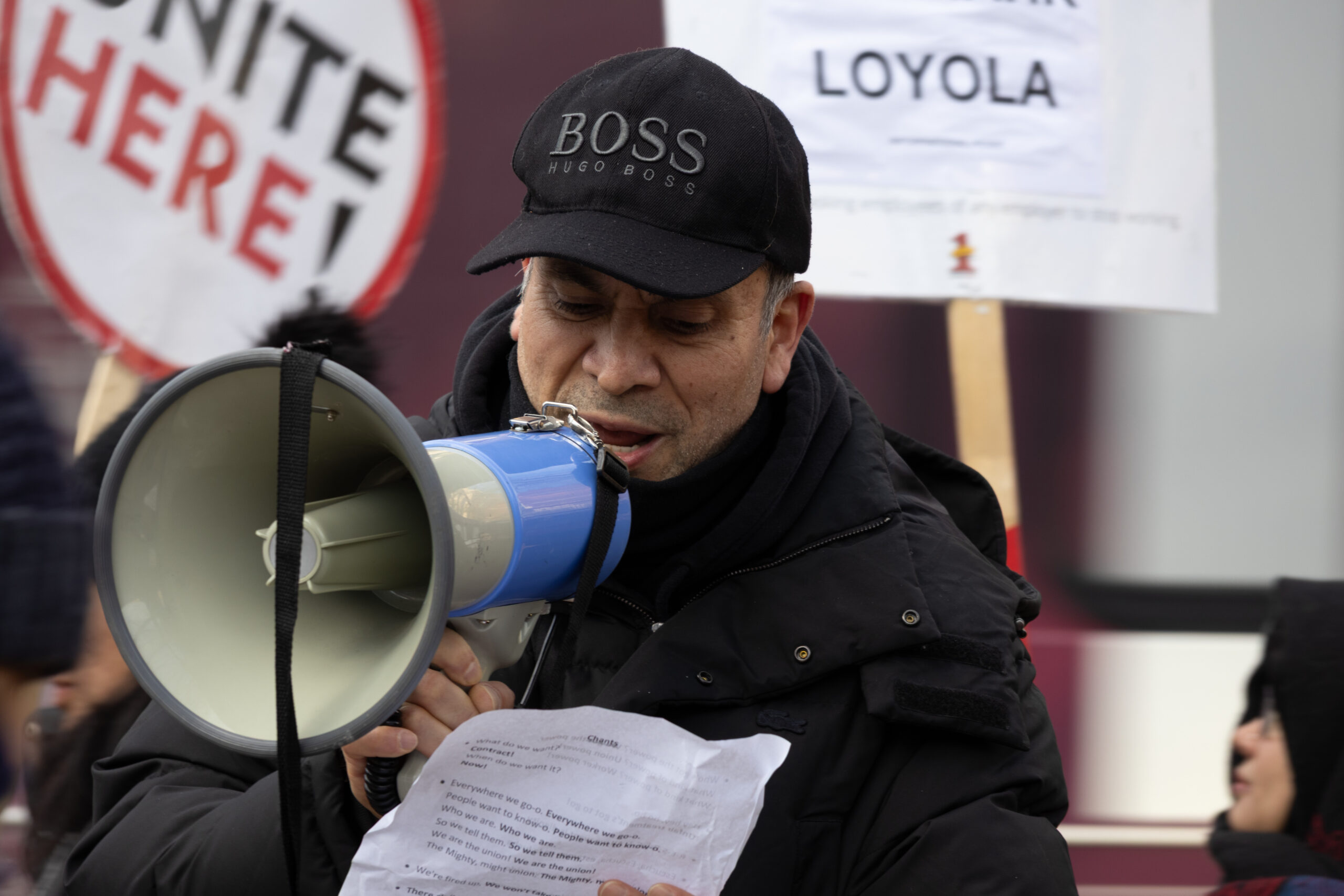
After months fighting to renegotiate their contract with Aramark, Loyola dining hall workers came to an agreement on a new union contract April 10.
Over 250 Loyola Aramark food service employees fought for nearly six months with Aramark, pushing for a contract which would provide liveable wages, continued healthcare coverage and stronger pension so workers can comfortably retire, communications director for UNITE HERE Local 1 Sarah Lyons sent in an email to The Phoenix.
Workers participated in a picket line outside of Simpson Dining Hall Feb. 12, where around 150 workers attended, The Phoenix reported. A month later, dining hall workers voted to authorize a strike March 13, according to Lyons.
Before the new contract was agreed upon, 59% of Aramark food service workers at Loyola made less than $23 dollars hourly, a wage that didn’t meet the demands of living for many workers, according to Lyons.
Under the new contract, workers received an immediate hourly increase in their wages by $4. By the end of the contract in October 2028, workers will have received a total increase of $7 in their hourly wages.
As requested by workers, the new contract includes increased pension contributions and maintains workers’ access to affordable healthcare, according to Lyons.
At Loyola, the majority of the food service workers are people of color and immigrants, with 46% of staff identifying as Black or African American, 16% identifying as Asian and 12% identifying as Latinx or Hispanic, according to Lyons.
Much of the staff have served the university for years, with over 30% of Aramark workers having 10 or more years of service on Loyola’s campus.
Food service worker in Connections Café Samar Mesleh has worked for Aramark for over nine years. Mesleh said she felt proud of herself and her coworkers for standing up for what they deserve.
“Before, I was making $22.05 per hour and had to visit a food pantry to feed my family,” Mesleh said. “Today, I make over $26 per hour which will allow me to buy groceries and hopefully save for my children’s future. I’m grateful for all the students who supported us in this fight.”
Aramark didn’t respond to The Phoenix’s request for comment by the time of publication.