Chicagoans participated in the third nationwide “No Kings” protest March 28.



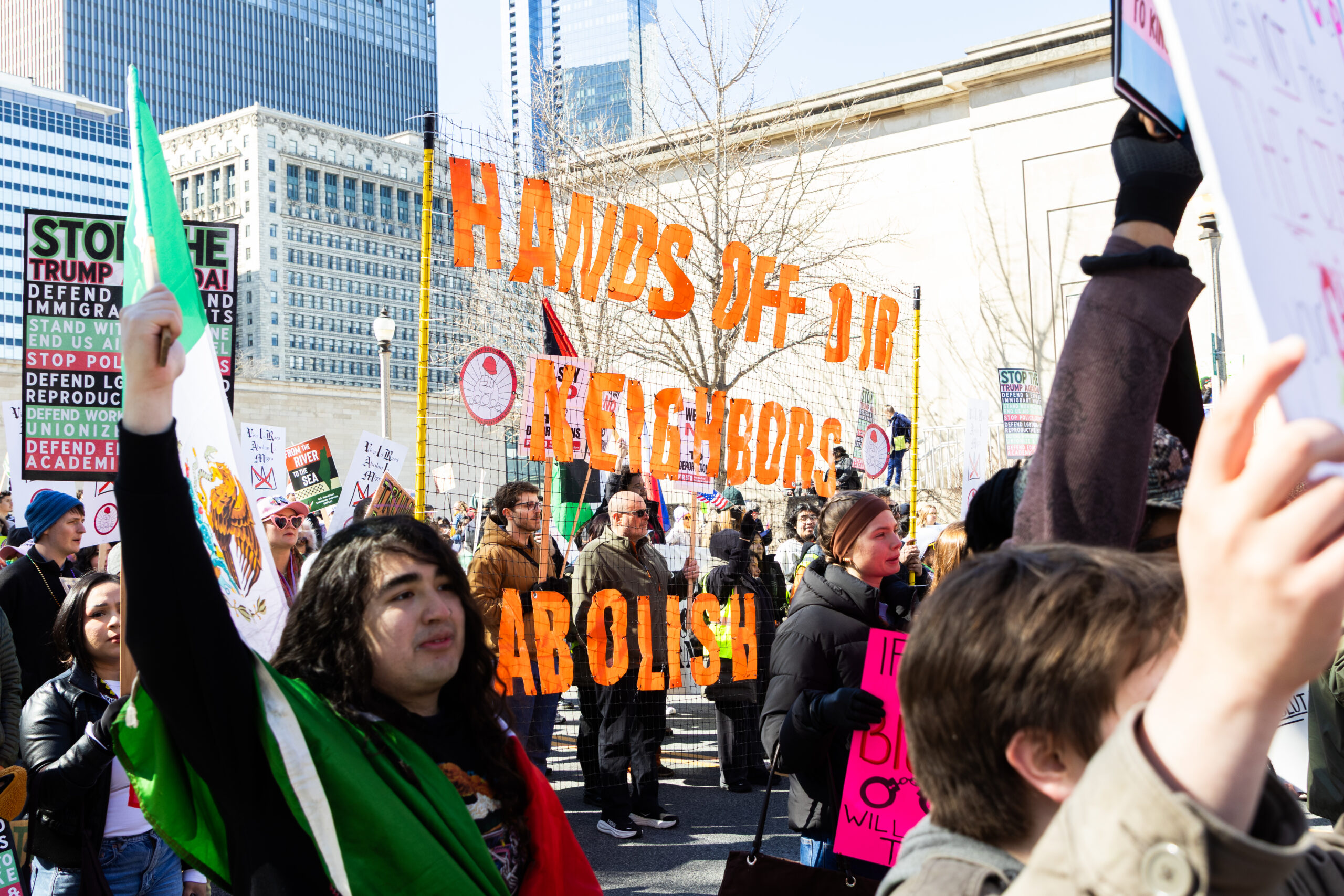
The latest “No Kings” protest brought together a wide variety of organizers and activists in its third appearance throughout the city of Chicago. The protests were part of a nationwide wave of demonstrations held March 28 in retaliation against the Trump administration’s policies.
The demonstration served as a rejection of President Donald Trump’s latest policies, while also exemplifying as an approachable introduction towards generating civic action.
The protest was one of the largest coordinated anti-Trump mobilizations this year, unfolding across all 50 states with nearly 8 million participants in over 3,100 demonstrations, the Associated Press reported.
Amongst the Chicago-based organizations who made their appearance in the protest was Indivisible Chicago, a progressive organization of activists and coalition of neighborhood chapters throughout the Chicagoland area, representing nearly 40,000 members.
Board Member of Indivisible Chicago and co-leader of its communications team Laura Tanner explained how most of the organizing efforts were related to the Hands Off Chicago Coalition.
Formed in the fall of 2025, Hands Off Chicago is a grassroots effort which opposes threatening military occupation in Chicago initiated by the Trump administration.
Tanner said other groups such as the Sierra Club, the Chicago Federation of Labor, the Illinois Coalition for Immigrant and Refugee Rights (ICIIR) and Equality Illinois were responsible for handling some of the protests’ logistics, such as coordinating with volunteers to ensure accessibility accommodations.
The March 28 protest reflected a growing coalition of visible advocacy participation, especially as peaceful protesting functions as a low-pressure entry point for people who may have little experience with organized activism, according to Tanner.
“I think people, after seeing that the October protest was so big and so peaceful nationwide, that encouraged more people to come out,” Tanner said.
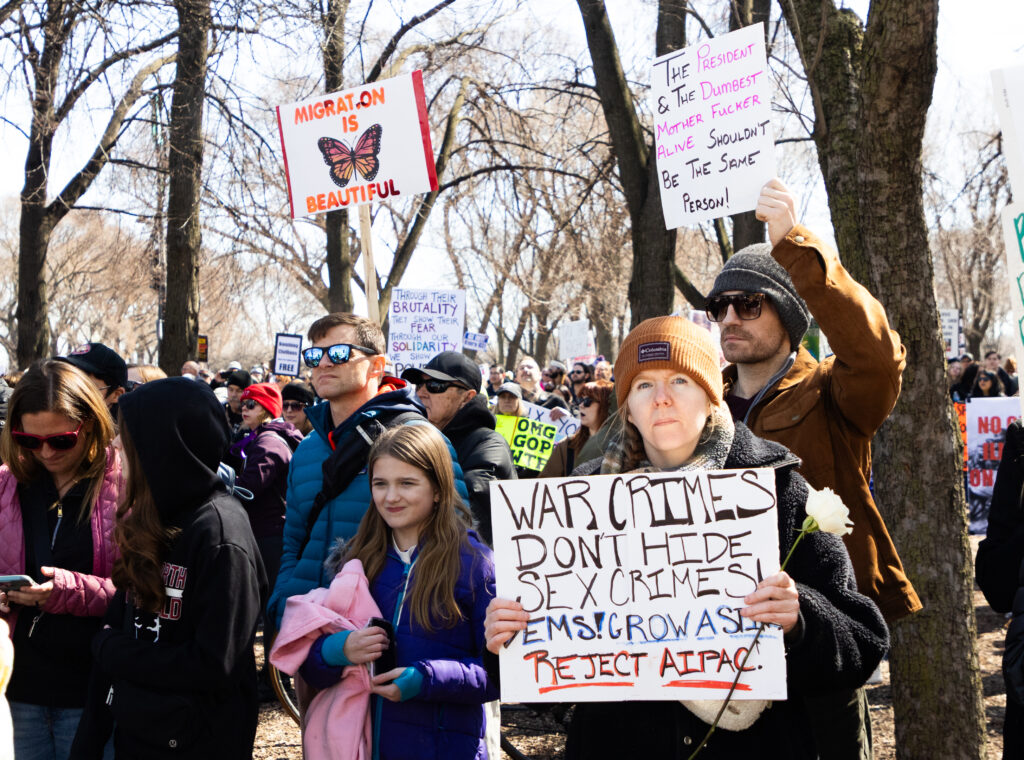
Protest attendee Mike Misiak joined the march with his friends. He said the protest felt different compared to previous demonstrations he’s attended due to the broader ideologies of the crowd itself, in part due to the inclusion of people who may have been newer to public protesting.
“I think if you just go there with an open mind a couple of times, you’ll start to meet people and really break into those spaces if that’s something that you’re interested in,” Misiak said. “Worst case, what are you doing? You’re going for a nice walk on a beautiful day and being out with like-minded people.”
Protest attendee Elyas Perry said he’s attended numerous protests in recent years. He described the recent “No Kings” demonstration as a part of a newer phase in anti-Trump organization efforts, as the event included participants who were motivated to show up for a wide variety of issues.
Still, Perry said he felt the overlapping ideologies amongst the present activist communities, suggesting the movement was evolving.
“There is a little bit less of a clear message as to what exactly people are out here protesting,” Perry said. “I think these are all growing pains.”

Rather than “reinventing the wheel” by creating completely new movements and organizations, Tanner said he encourages students to learn about existing groups who focus on topics which spark their interest such as abortion rights, climate change or voting rights.
Tanner said he recognized how lower-barrier forms of engagement such as phone or text banking may appear especially appealing to college students balancing a busy schedule.
“There is something really powerful and special and energizing about going to these mass protests,” Tanner said. “But it’s also really important to find a way that doesn’t have to be a massive amount of time. For students who are really busy, maybe focus on something small once a week.”
The same idea of doing small things for the movement resurfaced when discussing student involvement with the representative of Indivisible’s Edgewater Chapter Mahesh N. Alur.
Alur said building community through neighborhood-based organization can have similar impacts as utilizing political energy. Finding outlets for residents to exchange ideas and learn from one another outside of mobilizing people for occasional large singular gatherings is just as much of a concrete path towards action, according to Alur.
Alur also said the focus toward local attention explains why there was a strong turnout of attendees and organizers outside of downtown, which reflects how smaller group activity can better accommodate participants with busier schedules.
“The idea was to get as many people out in the streets,” Alur said. “When you go downtown, that’s basically saying that you’re reserving the whole day for this. And when you go to something in your neighborhood, you can make dinner for yourself, or have brunch with your friends and then go.”
Alur said accessibility is especially relevant for students like those at Loyola, who tend to live further from downtown and often balance many different commitments.
In terms of creating a less intimidating atmosphere, Misiak said engaging in activism alongside friends can help younger people or first-time participants.
“There’s a little bit of social anxiety being in a crowd of people that you don’t know, and yelling stuff,” Misiak said. “If you go with friends and you treat it as a moment of support while also viewing it as a walk and hanging out with friends and maybe meeting some people — that’s a really approachable way to kind of get into activism.”
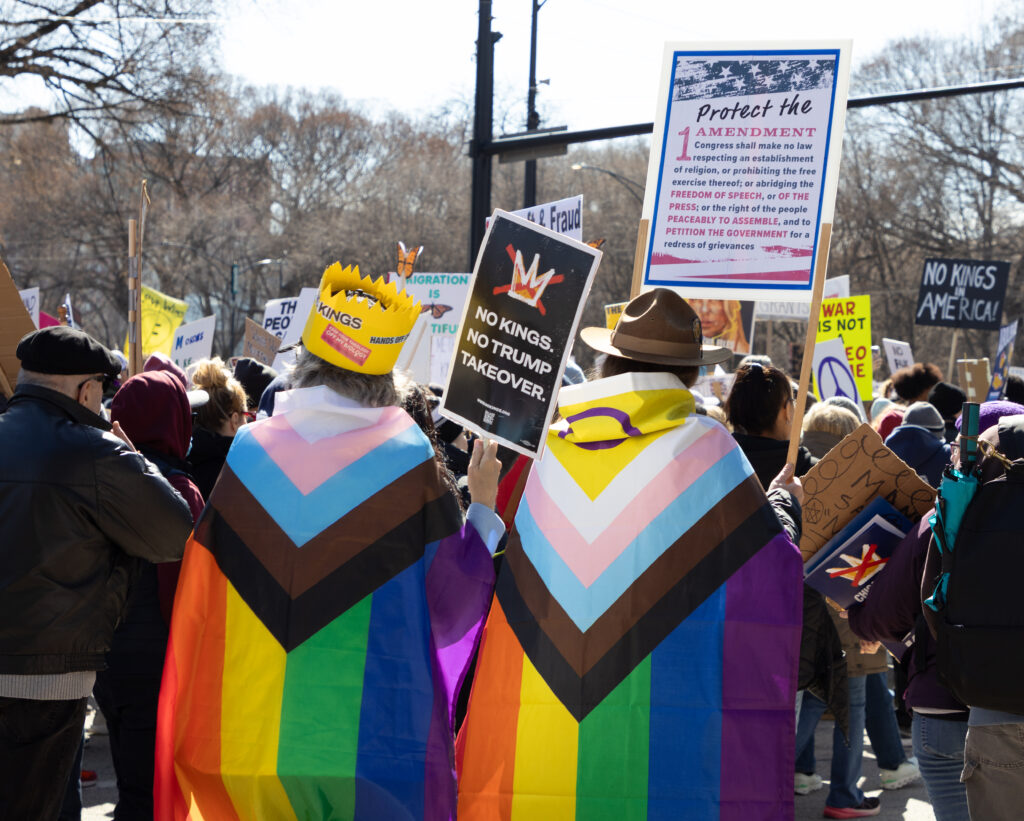
Similarly, Perry said students should continue to consider how campus communities can collectively organize beyond just attendance, listing out graduate workers, campus unions and faculty as potential allies in student-involved movements.
“Getting them involved in the fight, I think, is massive. Getting them to support you is massive,” Perry said.
Tanner said the protest showed how large demonstrations can reflect the efforts of organizers outside of presenting itself as a spectacle. Moving forward, she said it’s imperative for more young people to continue to get involved.
“I don’t know if in my lifetime, I will see a lot of these things fixed,” Tanner said. “I am doing it now so that in my children’s lifetime, we will live in a country where everybody has equal rights and freedoms.”