Explore how the misunderstood furry fandom builds safe spaces across Chicago and Rogers Park.



On March 12, 2025, Texas state Rep. Stan Gerdes unveiled the Forbidding Unlawful Representation of Roleplaying in Education Act.
The bill aimed to prohibit all acts of animal behavior in public schools, motivated by conservative activist Lisa Hansen’s 2021 testimony of litterboxes in Michigan public school bathrooms.
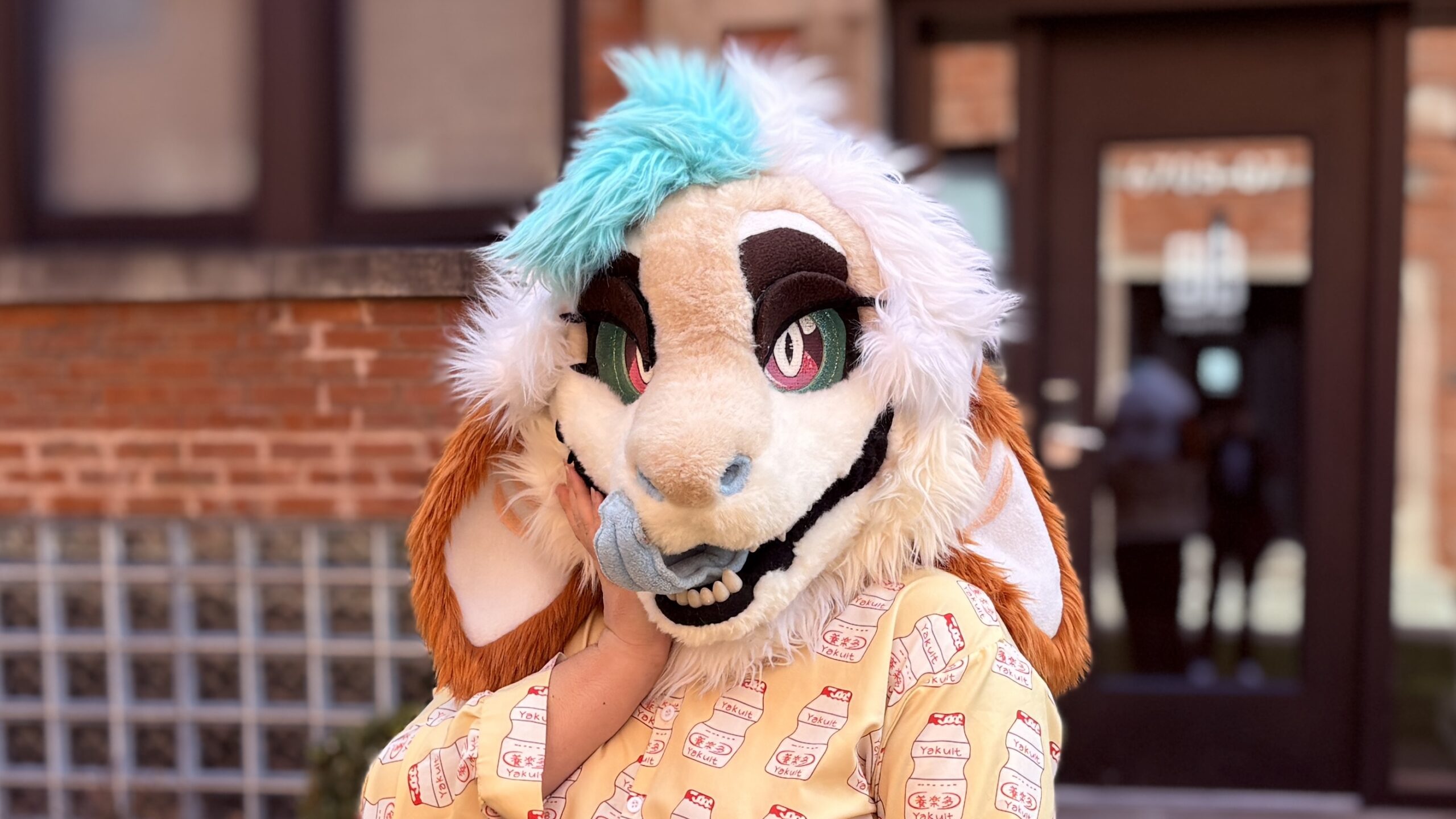
If the backronym wasn’t obvious enough, the bill mainly targeted the furry fandom, a subculture in which individuals dress as or draw anthropomorphic characters, often ones representing themselves.
Republicans would later retract the false litterbox claim, but not before the already stigmatized group took center stage as yet another conservative talking point.
“I’m from a sundown town that was a pretty conservative, rough place to grow up in,” Evanston furry artist Nick Hathaway said. “Now as an adult living here, I’m realizing that people who are so aggressive towards others because they’re experiencing joy, and because of some form of misinformation they may have read, you really just have to ignore it.”
Misinformed media portrayals on shows like “CSI: Crime Scene Investigation” have long convinced the public that furries are nothing more than sexual deviants, ignoring the subculture’s storied past as a refuge for self expression.
The furry fandom spawned as an offshoot of mid-‘80s science fiction circles, focusing on humanlike animals. By 1989, the first dedicated furry convention, ConFurence 0, commenced in Costa Mesa, California.
In 2000, Rosemont’s Midwest FurFest — then hosted in Arlington Heights — kicked off with 473 attendees. Nearing 17,000 guests in 2025, Midwest FurFest has become one of the largest furry conventions in the United States.
Hathaway immediately felt Chicago’s kindness and acceptance of diverse communities when they moved to Chicagoland from Connecticut in 2024.
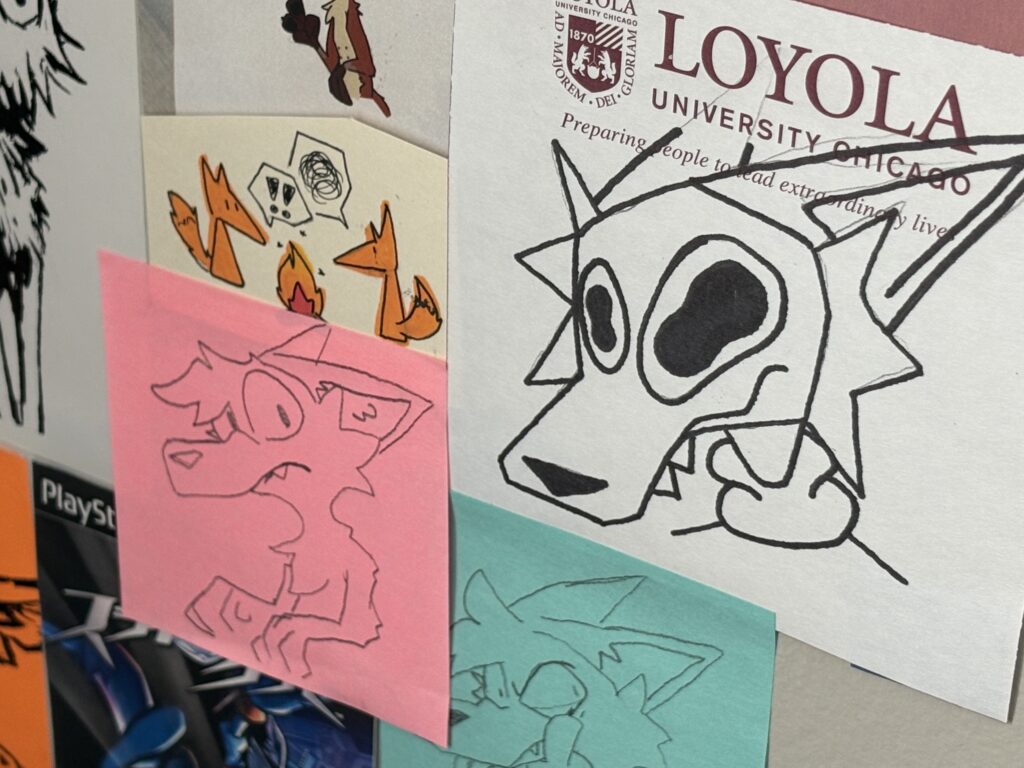
“It took me a while to get over the shock of ‘I’m not the only one anymore,’” Hathaway said. “I’ve been here two-and-a-half years now, and at this point, I can very comfortably say that I am the happiest I’ve ever been.”
Despite the furry community’s rapid growth, the hobby is still widely misunderstood, according to CNN.
Fourth-year sociology major Spuma Khyari said for a majority of the community, being a furry means a person has a heightened interest in anthropomorphic animals, although there’s no specific criteria beyond self-identification.
“You don’t have to have a fursuit to be a furry, you can just like looking at the art,” they said. “Literally all you have to do is like these kinds of characters.”
This versatility allows for more nuanced expression.
“I would call myself a dyke — I’m sapphic,” Khyari said. “So I kind of used those anthropomorphic characters to visualize my gender.”
While the community convenes around congenial ideals, it isn’t free from inner conflict and clique behavior, according to Khyari.
“Even if we’re all trying to be big, colorful animal people, there’s still racism,” they said. “As much as I love this community, as much as it’s done for me, I’ve kind of had to realize I’m not always going to feel as comfortable in these spaces because I’m not a cis white man.”
Over 60% of furries identify as cis males and white, according to 2020 studies by Furscience, a multidisciplinary team of academics and scientists dedicated to understanding furry identity.
Chicago based fursuit artist and host of Fuzzed, a furry meet-up event, Tomi said that’s one of the key differences of their gatherings.
“It’s mostly younger people, queer people, brown people, Black people, as opposed to the standard convention’s 35-and-up white people,” they said.
Tomi is no stranger to hosting furry gatherings, organizing events at vintage arcade and bar Replay Lincoln Park. After increased attendance demanded a larger space, Fuzzed officially took root at Rogers Park’s queer-friendly cruising bar Jackhammer March 6.
“They’ve been incredibly accommodating to our community,” Hathaway, a co-host of Fuzzed, said. “When meets were getting run at a different bar, you could tell that they were not into it, and they definitely thought it was a little weird.”
With events planned the second Sunday of each month, Fuzzed aims to build reliable safe spaces for community connection and expression — serving as an outlet for local artists, vendors and DJs.
“We make no money off of this,” Hathaway said. “I want to put you all in a room, and I want to force you people to make friends because you’re all weird. So, get with each other, and be weird together. It’s awesome, I promise.”