The April 17 film explores the rekindled connection between a pop music star and her former costume designer.



The tagline for “Mother Mary” reads: “This is not a ghost story. This is not a love story.”
So what is “Mother Mary”?
On the surface, “Mother Mary” is the story of a pop star reconnecting with her old friend and costume designer after hitting a rough moment in her personal and professional life — but in reality, it’s not that simple.
Directed by David Lowery, the film opens with a shadowy musical performance from Mother Mary, played by Anne Hathaway, then the next hour or so revolves around a past divide between Mother Mary and Sam, played by Michaela Coel. It’s revealed that Mother Mary left Sam for uncertain reasons, and Sam coldly holds this over Mother Mary’s head.
Now Mother Mary is back, asking Sam to design a costume that is “her.”
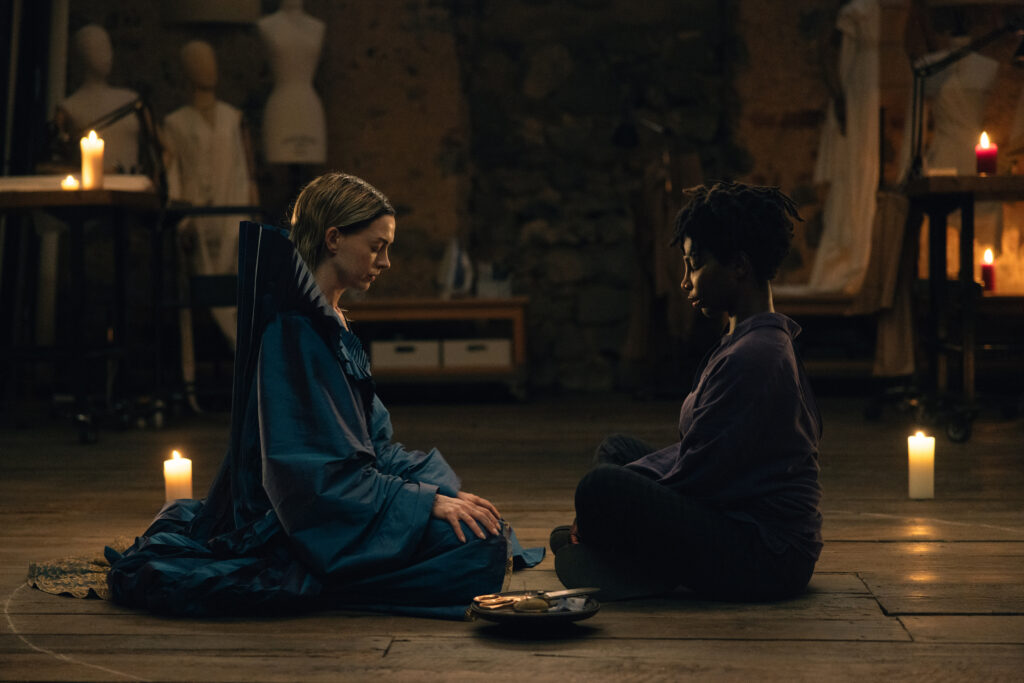
After this nearly hour-long conversation, occasionally intercut with glimpses of musical performances from the shimmering pop star, the film goes bonkers, leaving the stately character study it had constructed to opt towards a visually arresting psychosexual freakout.
The film is almost entirely a two-hander. Other characters exist, but this is a story about Sam and Mother Mary and no one else, which puts a lot of pressure on the lead actors’ performances.
Coel (“Black Panther: Wakanda Forever,” “The Christophers”) delivers a performance one would expect to see in a Shakespearean play, very formal and dramatic. She seems, however, a bit weighed down at times, carrying the movie through the first hour as Mother Mary often sits quietly to the side.
It’s not an out-and-out bad performance per se, and Coel clearly is a very technically gifted actress, but the part seems like it needs someone with more gravitas than Coel to portray Sam.
While Coel’s performance is essential, the key performance, of course, is Hathaway’s (“The Devil Wears Prada,” “The Princess Diaries”).
Mother Mary is presented from the opening frame as a broken individual. The audience knows almost nothing about her — her past, what specifically broke her, even her name are all uncertain on the whole. The only thing the audience can be certain of is that she’s not well.
When on stage, however, this frailty dissipates and a magnetic, confident performer emerges.
The contrast is a clear, well realized observation from both the script and Hathaway in recognizing the potential duality of a star’s performance and personal life.
For Hathaway, this role is a tough task. She’s a very external actor — she effortlessly communicates everything she feels through her face or tone, and it leaves little room for interpretation. While this skill has served her well as a movie star, it actually hurts the movie, unintentionally undermining some of the mystery and nuances of the script.
As for the musical aspects of the performance, Hathaway’s singing leaves something to be desired, though she credibly looks the part and is very comfortable with commanding an audience as a pop star would.
Hathaway’s singing is far from the main issue with the music, however.
The songs were created by Charli xcx, Jack Antonoff and FKA twigs, but for a group of musical geniuses, they’re surprisingly uninspired and ordinary. This is unfortunate because the musical performances are staged gorgeously, but the music itself is utterly forgettable.
Aside from the music, the film is audacious throughout — not a surprise given it’s directed by Lowery (“The Green Knight,” “Pete’s Dragon”). Lowery has had a truly singular career, directing both small independent films and big budget, CGI-heavy Disney remakes.
The director’s incredibly malleable in genre, tone and ideas, but his biggest strength is his undeniable ability to create provocative, interesting images. That ability, coupled with audacity and creativity in his scripts, nets mixed results across his filmography, and those mixed results are especially present in “Mother Mary.”
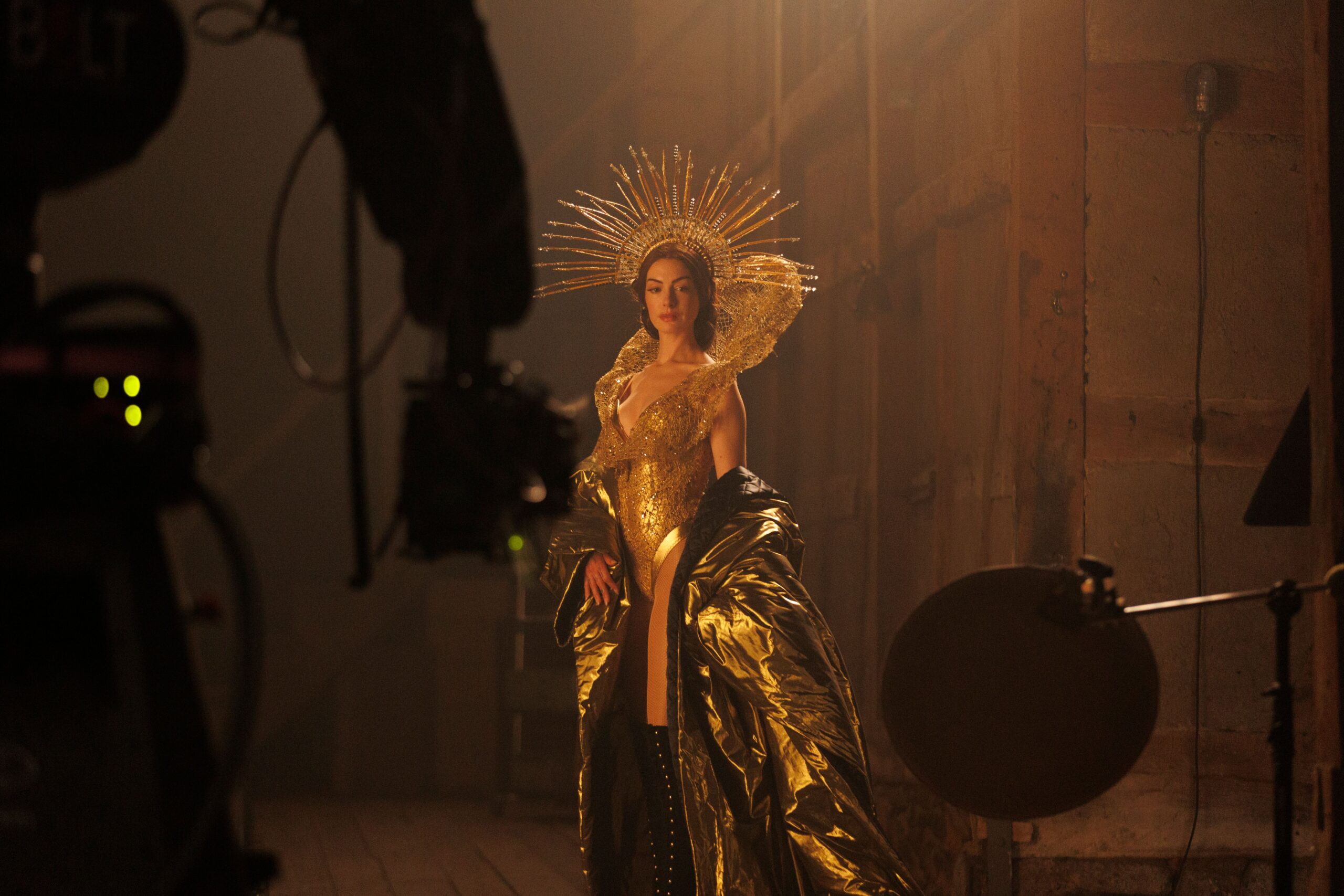
His visual skillset comes to the forefront in the second half of the film and in Mother Mary’s musical performances. The images and color on screen are breathtaking and inspired.
This credit largely should go to Lowery, but also to costume designer Bina Daigeler. There are numerous gowns and headpieces throughout the film, each more original and dazzling than the next.
Aside from the film’s excellent craft, the script could be described as deliberate if you were being kind and horribly slow if you were being honest. While the first hour is a total slog, it sets up the majesty of the last 45 minutes, so it’s not totally without purpose even if uninteresting in the moment.
As a story, “Mother Mary” is remarkably original. The film only features women in speaking roles and defies genre on the whole, taking the audience on what feels like a truly inventive and singular experience.
The main credit for this singular experience is how often and quickly the movie shifts genres and tones.
There are prolonged sections where it’s like a play, two characters in a verbal tennis match volleying back and forth. Then once you get comfortable with that, it shifts to an avant-garde silent spectacle. Then after that, it becomes a gory, supernatural nightmare.
Shifting between all of these styles is a true testament to Lowery’s command as a storyteller.
“Mother Mary” is filled with nuance and mystery, allowing countless interpretations of individual scenes and the movie as a whole. Ideas and metaphors about religion and the supernatural, stardom, tragedy, ego, love, womanhood, trauma or a host of other ideas fill the screen.
So what is “Mother Mary?”
Ultimately, it’s the culmination of all those ideas packed into a messy, prolonged, 112-minute spectacle, and while imperfect, it’s a beautiful thing.
“Mother Mary” is in theaters now.