Lonely and lovesick, Peter Parker grapples with growing pains in the newest installment of the “Spider-Man” franchise.



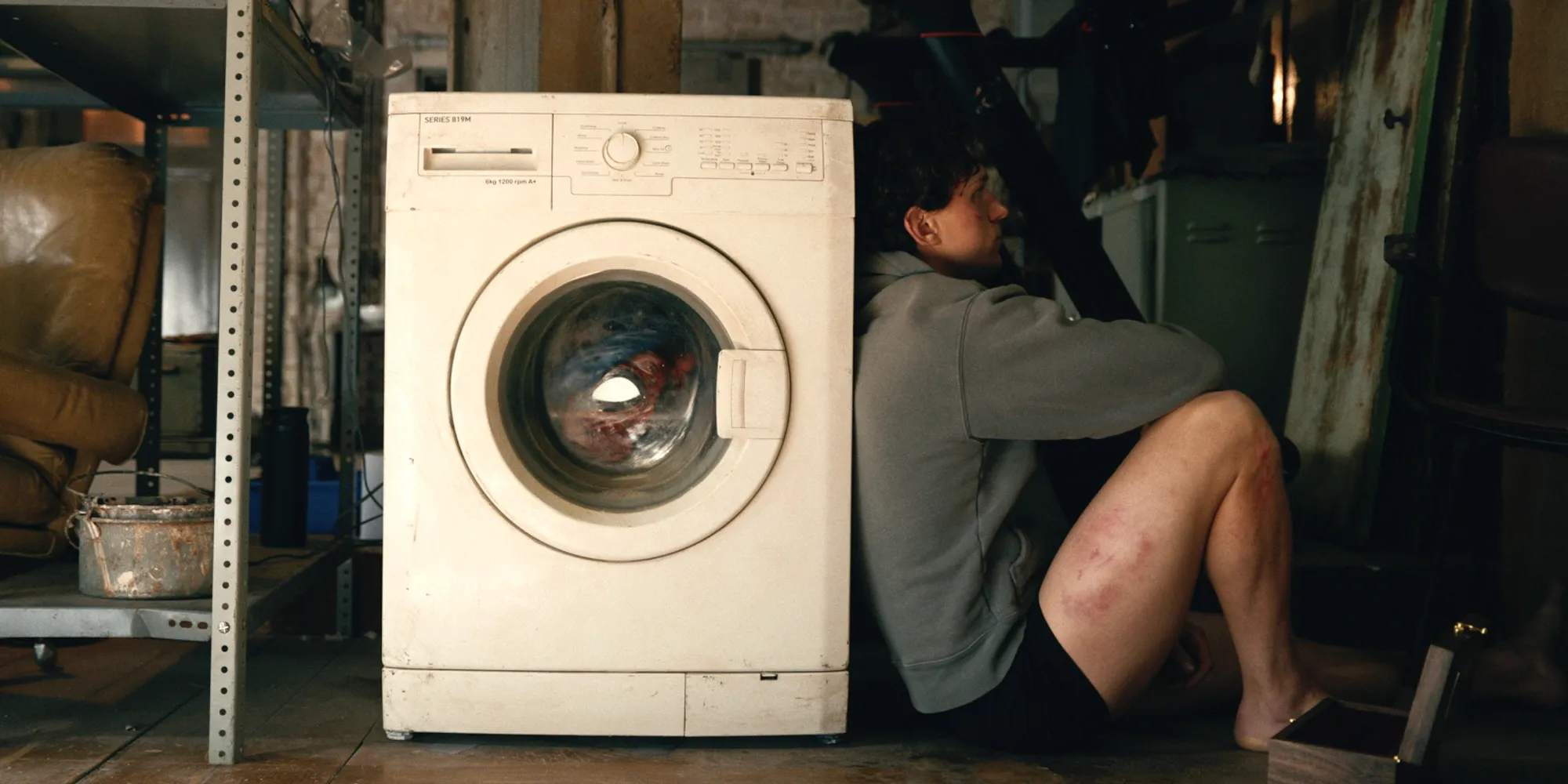
From the very start, it’s clear “Spider-Man: Brand New Day” marks a significant shift away from the typical tone of the Marvel Cinematic Universe’s “Spider-Man” films. Much like Peter Parker’s (Tom Holland) own feelings of loss and isolation, grayer, darker palettes and softer, quieter scenes fill the once vibrant backdrop of New York City.
“Brand New Day” picks up four years after the events of “Spider-Man: No Way Home,” in the aftermath of Dr. Strange’s fateful spell that erased the memory of Peter from everyone’s minds. While his now ex-girlfriend MJ Watson (Zendaya) and ex-best friend Ned Leeds (Jacob Batalon) have graduated from MIT and continue to live out young adulthood in relative normalcy, Peter struggles to carry the responsibility of being Spider-Man on his own as he watches them from afar.
Despite maintaining the city’s crowded commotion and bustling energy, there’s a focused loneliness portrayed honestly by director Destin Daniel Cretton. The ache of being in a room full of people and still hopelessly alone is a pervasive feeling Cretton captures with specificity and skill by lingering on the stillness of Peter’s solitary world.
All alone, Peter is forced to confront hard questions surrounding identity and purpose while encountering formidable external threats and internal transformations as his superhuman-arachnid abilities spin wildly out of control.
In many ways, Holland (“The Odyssey,” “Uncharted”) earnestly stars as the same selfless Peter Parker from films past, but this performance is undeniably unique. The impact of the last four years are observable in Holland’s concentrated acting choices, resulting in a more convincingly mature and complex character. The Peter of the past — complete with references to cult classic movies, snarky graphic t-shirts and lighthearted humor — is still present somewhere behind that hand-sewn suit, but often latent.
His frequent flower drop-offs at Aunt May’s (Marisa Tomei) gravesite and unwavering concern for Ned and MJ emphasize Peter’s constant efforts to maintain a close connection to the people he loves unconditionally — even when his feelings are not reciprocated.
Holland and Zendaya (“The Drama,” “Challengers”) — recently confirmed newlyweds — share the screen for some of the film’s most vulnerable scenes. Their obvious and charming chemistry makes the pair’s captivating interactions especially heartbreaking.
MJ has grown up too — she’s less awkward with more confidence and style, while still maintaining her quintessential dark humor, intelligence and moral principle.
Although his screen time is limited and he remains largely the same, Ned’s character has also undergone some change since his last appearance. He has a larger network of friends and uses his computer skills to build a sophisticated “Spidey Tracker” that tracks Spider-Man’s location and allows for slightly forced Samsung product placement.
The film’s writing exposes a sharp contrast between Peter and his friends’ character developments. Surrounded by loved ones, MJ and Ned have been able to mature in an environment that’s allowed their personalities to find expression, while Peter’s long years of isolation, sadness and heavy responsibility have rendered him significantly more serious and subdued.
Instead of bitterness following a traumatic series of events, Peter retains a remarkable sense of empathy and resilient optimism. Holland captures Peter’s yearning impeccably and wholeheartedly, even in scenes where his painfully dejected facial expressions are largely obscured behind his mask.
The emergence of a new threat, played by MCU newcomer Sadie Sink, simultaneously tests the emotional strength of Peter Parker and the enhanced physical abilities of Spider-Man.
The plot surrounding Sink’s (“The Whale,” “Fear Street Part One: 1994”) character and her motives are predictable as the film contributes to an overused misunderstood villain trope. Initially, the plotline comes off as unremarkable, but narratively, it provides the ideal vehicle to highlight the sacrificing, bleeding heart that still beats within an emotionally wounded Peter Parker.
Through an unstoppable evolution involving heightened sense-perception, blackened eyes and organic webs, Peter’s body learns before his mind that some obstacles can only be faced with truthfulness and uninhibited expression. The film’s conflict provides the impetus that Peter needs to recognize that these qualities are important — even vital — to one’s identity, and they cannot be achieved alone.
Despite efforts to suppress the increased surges of his arachnid powers — including consulting Bruce Banner (Mark Ruffalo) himself — Peter’s realization that resistance is futile against his new pressures results in a firm establishment of himself as both uncompromisingly Peter Parker and Spider-Man.
There’s no longer any tension between the two — a state of affairs that contrasts cleverly with a key conflict in “Spider-Man: Homecoming,” Holland’s first standalone “Spider-Man” film, in which Peter questions his value unconnected to a superhero alter-ego. It’s no coincidence that his enhanced superpowers are an internal development, not a product of nano-technology or updated super suit capability.
Holland’s Spider-Man shines alongside Jon Bernthal’s Frank Castle. Castle acts as a friend to Spider-Man when he needs one the most. Bernthal’s (“The Accountant,” “Baby Driver”) gruff, hard-shelled and engaging portrayal of Castle joined with the youthful liveliness of Holland’s Peter Parker makes a pleasantly unexpected combination and adds scenes of sincere, camaraderie-driven dialogue.
In line with the themes of Cretton’s more mature take, the score and soundtrack are tonally different from the previous three “Spider-Man” films but perfectly attuned to the new era of Peter’s life — a little less vibrant, a little more melancholic and fully expressive.
In practically every way, “Brand New Day” is one of the most focused and personal MCU films produced. First-person camera perspectives — from the close-up glimpses behind Spider-Man’s mask lenses to the web-slinging and large-scale fight sequences — bring immersive, thrilling energy to the superhero spectacle and increased vulnerability to the more emotionally charged shots. And when it’s done best, these perspectives do both at once.
“Spider-Man: Brand New Day” does away with the exaggerated superhero bravado of previous MCU films. It’s heart-wrenching and heartfelt, with just the right amount of nostalgia and a tad too many forced product placements. Although there’s no entirely idyllic conclusion, there’s something refreshingly satisfying about the raw authenticity and deep, grounded humanity that’s manifest throughout the film.
“Spider-Man: Brand New Day” is in theaters now.