Deputy Opinion Editor Sadie Harlan argues today’s maximalist dorm trends are wasteful.



Since 1969, students and parents alike have wheeled unwieldy maroon carts into the cramped elevators of Mertz Hall, leaving their belongings in favor of making the trek up flights of stairs in the 19-floor building. It’s a tale as old as time.
In the building’s first few decades, the contents of their move-in looked different from how they did this past August. Students may have brought a poster or two, a shower caddy with hygiene products and what people today would consider just the necessities.
Now, however, students commandeer multiple carts overflowing with mini sofas, floor lamps and a plethora of throw pillows. In recent years, the adjustment to college living has been placed into a consumeristic focus, and students have begun to see changes to an experience once defined by minimalism and utilitarianism.
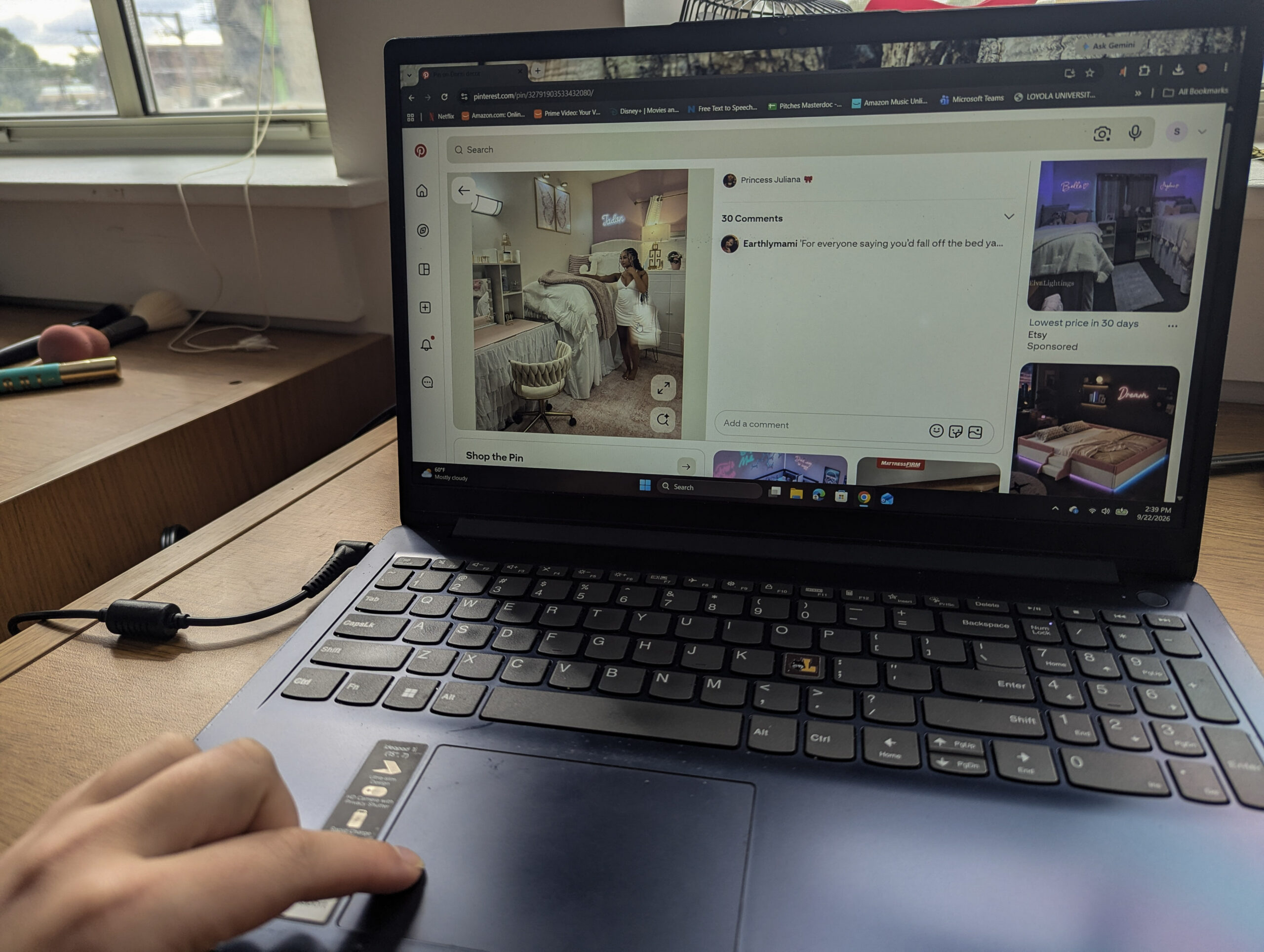
Apps like Instagram and TikTok, where users can post their own college experiences and living spaces, only feed the fire. In the rise of social media, there are whole accounts dedicated to dorm aesthetics and college life. With platforms like Pinterest, where decoration inspiration is endless, college housing has seen a spike in overconsumptive tendencies.
When placed under the scrutinizing eye of the public, certain room decor becomes a trend quick to fade into oblivion as new styles captivate consumers.
Today, college students are outfitting their dorms to resemble extravagant sorority houses, small living rooms or hotels. Once finished, their picture-perfect living space is uploaded to social media for likes and views.
So begins a vicious cycle. Excited freshmen see a dorm video, take note of the often unnecessary items included,recreate the look on their own, post it and begin the next round of college consumption.
In recent years, items like frilly bedskirts, cushy chairs and the occasional trampoline have populated the residence halls of schools across the United States In dorm room Facebook groups, it seems like each living space is a carbon copy of the last, photos blending into a pastel Frankenstein of all the latest trends.
Many of these over-the-top dorms are made to promote an idea of quintessentially feminine girlhood, rather than the notion of a young woman in academia. Often these rooms look like the living space of a girl, not an adult pursuing higher education.
By decorating desks to resemble vanities rather than study spaces, students are subconsciously reverting to traditional gender roles.
Similarly, many of these social media posts have at least one aspect in common: blatant maximalism and overconsumption hidden under the guise of so-called aesthetic living.
Overconsumption is characterized by excessive acquisition of goods, use of services or products. Though the term itself is certainly not new, it’s begun to hold more weight with the increase of modern technology and ease of consuming goods.
When it comes to on-campus housing and decoration, the waste doesn’t end at move-in.
There’s little documentation of the exact amount of items thrown away at the end of each year, though the few universities who’ve documented their waste report staggering amounts.
In fact, many students simply throw out the appliances, decorations and possessions they neglected to use at the end of the year. It accumulates in school-sanctioned disposal areas and the odd recycling bin around campus.
Combined, this amalgamation of influence from social media and the ever-increasing amounts of working-condition furniture and appliances disposed of during move-out provides the perfect storm for waste in consumers.
Students should return to what the original dorm culture looked like. With the rise of fast-furniture, dormers are better off relying on household goods supplied by the school rather than store-bought products that may look more fashionable but wear down quickly.
By accepting the limited storage and living space, those living in residence halls can practice the valuable concept of deciding what items they truly need for day-to-day life and purging unnecessary pieces.
Additionally, ceasing the practice of trying to make dorm rooms something they aren’t — a fully furnished sorority house, for one — cuts out a considerable amount of maximalist consumerism when it comes to dorm shopping.
College is already expensive enough for young adults across the United States, so why steepen the cost with unnecessary and wasteful items?