Writer Jack Dumanski discusses the slow shrinking of Trader Joe’s snacks.



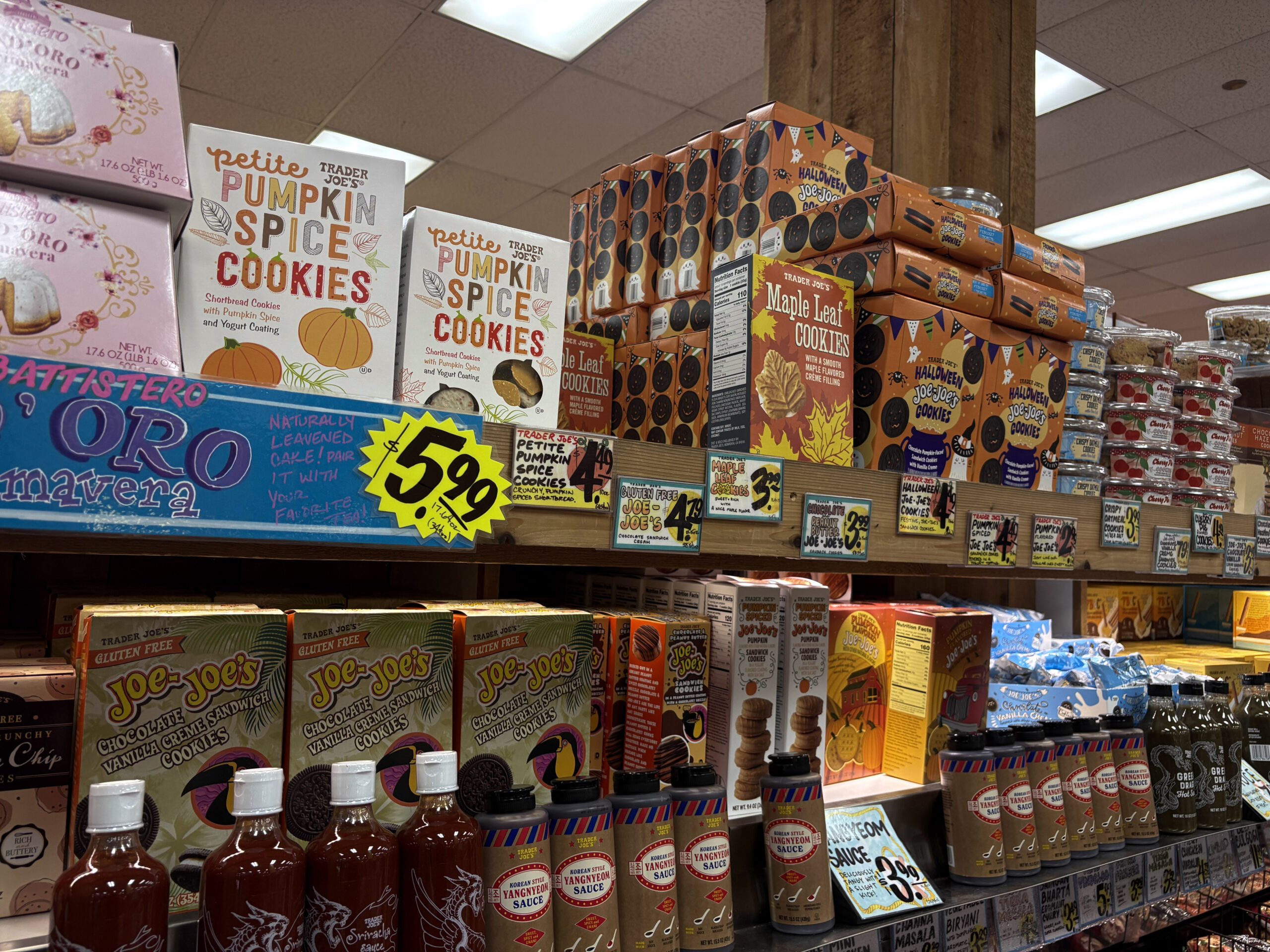
Recently, upon entering my favorite grocery store, I’ve had to withhold the hope my groceries will occupy the same space in my cart as in past visits. I tend to repeat my essential order, plus or minus a couple of eye-catching seasonal treats, but I’ve come to realize on any given week, the sizes of my preferred items could change entirely.
Shrinkflation, or the economic phenomenon of decreasing the size of goods while maintaining the price, has been rampant, and it happens without customers’ knowledge. Without careful attention to the measurements of each item, it’s unlikely that, before purchasing an item, customers will notice any difference.
A study from informs.org analyzed hundreds of retail stores and found customers are more sensitive to price increases than to size decreases, where increasing price reduces sales by twice as much compared to decreasing sizes of items.
Shrinkflation is effective because customers are far more likely to notice price rather than size changes, especially since the packaging can remain the same.
Trader Joe’s is no different than most grocery stores in its use of shrinkflation, changing the size of items seemingly at random. Customers have been observing this since at least 2022, when the store was caught restocking smaller jars of marinara sauce before modifying the quirky information tag.
Frequent shoppers have begun to voice their frustration. Having years of experience seeing items develop, they’ve come to the conclusion that Trader Joe’s has been secretly engaged in shrinkflation, according to food and drink site TastingTable.
I first encountered this phenomenon when I was scooping chips into my Chunky Guacamole when I noticed the container was shallower than I had remembered. Perhaps I got carried away and ate too much without realizing, but a common characteristic of shrinkflation is making small modifications or “dents” to jar-shaped packages to preserve the illusion of constancy.
This led me to think: does this guacamole have 60% reduced fat and 50% fewer calories because it’s being made with Greek yogurt or because it shrank?
Trader Joe’s didn’t respond to The Phoenix’s request for comment at the time of publication.
The frustrating part of shrinkflation is that it’s difficult to tell whether your eyes are bigger than your stomach, or if your eyes and stomach work fine, but you no longer have the same quantity of a product. When shrinkflation occurs successfully, customers will — by definition — have less total food, leading to the need to purchase additional portions.
On more than one occasion, once realizing the bag of frozen cherries I selected wasn’t anomalously small, I’ve contemplated lobbing a second in my cart. The thing is, if I stick to my normal order, I’ll pay the same, but be hungrier. It’s only when I purchase more that I’m satisfied, and so is Trader Joe’s, cackling at the success of their scheme.
The phenomenon of shrinkflation has even led to overthinking in my shopping. Each time I notice one of my staple items being out of stock, I fear for the event of it coming back in the future with a different size.
If an item is exceptionally high in demand, like the Sublime Ice Cream Sandwiches, I especially feel the company’s attempts to eke out more stock at the expense of the circumference of the cookie.
Trader Joe’s already presents a dilemma to Loyola students due to its distance. A student who lives near the Lake Shore Campus must travel, on average, 30 to 40 minutes each way, taking two separate trains to access the stores, with the closest locations being in Lincoln Square and Evanston. For a commuter wanting to shop entirely at Trader Joe’s, it requires time and the ability to transport heavy grocery bags through tight spaces on the CTA.
The quality and atmosphere of the store outweighs the inconvenience for me, and I still haven’t given a thought to shopping anywhere else. I believe it’s ultimately easier to shop at a single store rather than scattering grocery purchases across many.
I’m not arguing shrinkflation is something to brush off, but it’s difficult to boycott one of the largest grocery store chains, especially when most other grocery stores are complicit in or actively practice shrinkflation.
Shrinkflation typically falls into the hands of the manufacturers, not the sellers, but since Trader Joe’s hides manufacturer labels, the only target to blame is the one whose logo is at the top of every item.
My frustration fronts the powerlessness I feel knowing shrinkflation is almost inevitable no matter where I shop. However, Trader Joe’s provides a balance between affordability and commitment to organic flavors that I haven’t found anywhere else. It would require a much more drastic change for me to leave TJ’s, just as long as they never alter the Deli Sandwich Potato Chips.