Robert Pattinson’s spine-chilling portrayal of TV personality Chris Hansen makes for the feel-bad movie of the year.



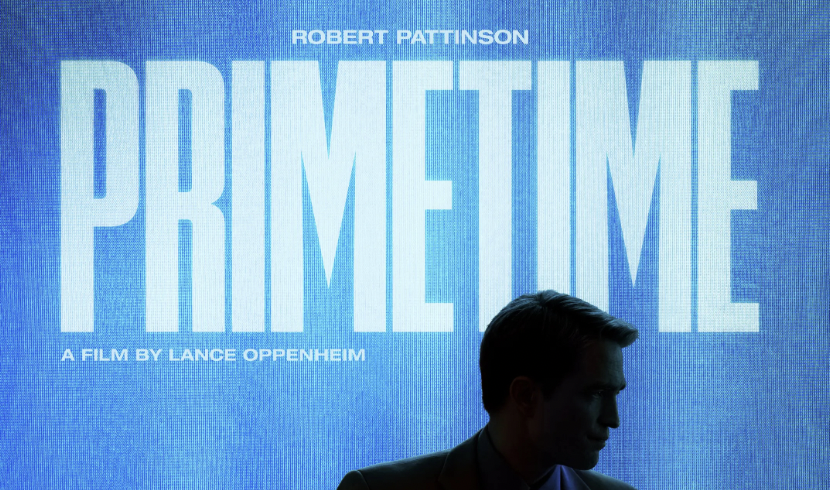
“You see how this looks, right?”
Robert Pattinson’s Chris Hansen utters these words within the first ten minutes of “Primetime.” For the way-too-online or fans of “To Catch a Predator,” hearing these words is akin to hearing Peter Parker introduce himself as “Your friendly neighborhood Spider-Man.” These words are Chris Hansen’s iconography.
In “Primetime,” Hansen, the longtime Dateline correspondent for NBC, is positioned as a superhero, but by the end of its 110-minute runtime, it becomes evident he’s anything but.
The film follows Hansen, his producer Andie Bender (Merritt Wever) and new child decoy actor Dan Plumb (Skyler Gisondo) as they set out to take their hit show to new heights in NBC’s “primetime” slot.
“To Catch a Predator” follows a simple premise. The show goes city to city, tricking pedophiles searching for child targets into getting caught in the act before turning the predators over to authorities.
It’s hard to talk about this film without talking about its star. Pattinson (“The Odyssey,” “The Drama”) is on a historic run playing heels, dirtbags and straight-up villains, and it all leads to his Chris Hansen, who he depicts as a pathetic, narcissistic monster.
Pattinson delivers one of the most hammy, showy performances of the decade, carried by his singularly enthralling energy and charisma. He’s transformative as Hansen while keeping many of the regular ticks and tricks of the dirtbags and doofuses he’s embodied on screen this decade.
Reigning in Pattinson is Director Lance Oppenheim (“Some Kind of Heaven,” “Spermworld”). “Primetime” is the 30-year-old’s first foray into narrative filmmaking.
This film joins Oppenheim’s prior two documentaries as an exploration of the underbelly of middle America — the stories behind the artifice of seemingly regular people. In all his work, there’s an unbearable sadness tilting between hilarious and terrifying, and “Primetime” is an extension of that.
In many ways, a documentarian is the perfect person to tackle this story. Oppenheim has a keen understanding of the artificiality of a show like “To Catch a Predator,” highlighting it through humor and behind-the-scenes looks at pivotal figures.
A clear emphasis for Oppenheim and his crew is carefully placing this film in 2006, featuring references to Saddam Hussein and Osama bin Laden, the musical “Rent,” Fergie and many other cultural footprints from the time period.
Perhaps Oppenheim’s chief contribution, however, is the film’s visual style. What initially looks like a 2006 television program evolves into a psychedelic, hyper-frenetic visual hellscape that perfectly captures the paranoia and haunting place the film ends up moving toward.
A big part of the movie’s atmosphere is its noisy score from Ali Balouzian, which loudly announces itself with its off-kilter strings and keys throughout the film.
The other chief contribution of Oppenheim is his expert casting, particularly in Wever (“Marriage Story,” “Nurse Jackie”) and Gisondo (“Superman,” “Booksmart”).
The story of Hansen is well documented, so the film makes the smart decision to highlight a producer and young actors’ stories as well, even though the movie loses a lot of steam when it moves towards these characters’ backstories.
Plumb, in particular, is a fascinating character in the context of “To Catch a Predator” as an aspiring actor playing a 13-year-old boy that only serves to lure in pedophiles.
His arc is critical to the film’s ideas about ambition and whether or not a person like Hansen is doing work from a genuine place or a place of narcissism and outward praise-seeking.
While ideas about ambition and the nature of performance exist, the most interesting and essential theme the film ponders is the perception of good versus the perception of evil.
At its core, the film asks who gets to be understood as evil, who gets to be understood as good and where the lines between the two blur.
Both the audience of the movie and the audience of “To Catch a Predator” are getting what they want when Hansen catches a predator to begin the film -– a black-and-white moral compass. Hansen is good, the predator is bad and that’s the long and short of it.
This is Batman catching the Joker. This is Spider-Man saving the day. This is real life heroism.
But then the film goes on, and the audience learns life isn’t that clear.
The audience leans in, wanting to see the predator get caught. Even though they know a part of it is fake, and they can tell this act isn’t done out of moral altruism, they still want to see the bad guy get caught.
Hansen is — literally — a blurry figure throughout the film, but the audience wants to believe he’s the hero. Villainizing people like the predators or bin Laden while heroizing someone like Hansen, the film proposes, is just a way for people to order the world in a way that makes sense to them.
Of course, people don’t fit nicely into these boxes of good or evil. As Hansen says, these perceptions are only “what this looks like.”
Reality itself, “Primetime” asserts, is something far more haunting.
“Primetime” is rated R and in theaters now.