Arsene Reynertson writes about the balance between academics and mental health.



Five weeks into the fall term, students have hopefully found their footing while navigating the new semester. Promises made at the start of the year to live out an aesthetic vision board lifestyle have achieved varying levels of success, some perhaps humbled by unforeseen difficulty in the process.
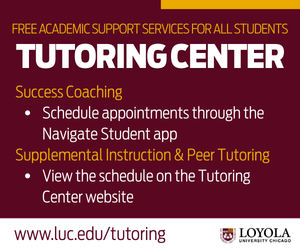
With new classes to study for, students both struggling and succeeding might’ve utilized the various academic services — funded by tuition — advertised all across campus. Tutoring, personal academic advising and group study sessions are just a short walk to Sullivan Center away.
Still, no amount of Cornell notes will fix the cracks within the foundation for success: a healthy school and life balance.
For some, a school-life balance is a status symbol, largely seen as an unachievable pipe dream.
It’s easy to believe, given success is no longer just a number on a transcript. Now, it’s grades, volunteer hours, internships, work or extracurriculars. About 87% of students felt overwhelmed by their workload, according to a study done in collaboration with the American College Health Foundation. And yet, the grind is revered with anticipation of reward and relief.
This experience isn’t universal. Some students’ success has come with little struggle, facing the newfound challenges of university life — difficulty adapting to independent living, managing academics alone and pressure to perform well for future success — feeling prepared and unafraid.
Such triumph could be luck, or perhaps previous skills built without the assistance of university resources. In the same vein, students who are struggling despite their hard work might be disadvantaged without help managing university life.
Rarely is the acclimation to college workloads naturally occurring. Students must give bouts of energy to academics, but not be stretched thin enough to affect their relationships. Likewise, overindulging in recreation or entertainment can be counterproductive to academic performance.
Loyola’s wellness mission emphasizes preventative and evidence-based care. Many other universities are moving to similarly holistic, mental-health-oriented care for students.
The good news is resources are available. The bad news is they’re severely limited and lacking in substance.
Loyola offers counseling, sessions with the adorable therapy dog Sullivan, success coaching and fitness classes, all aiming to support students through adjustment difficulties.
While a step in the right direction, these fixes don’t address the fundamental issue of student-life imbalance, smoothing over the issue without providing the tools to maintain stability.
Loyola is clearly invested in student well-being, but the resources provided largely focus on supporting student wellness habits, rather than establishing a foundation for health.
Without resources that sustain a holistically healthy lifestyle, the cycle of stress, declining performance caused by imbalance and seeking out temporary relief with no real change ultimately repeats.
If the issue is clear and Loyola isn’t keeping up, how can they, as an institution, properly take care of their students?
Loyola holds sway as an institution over the unhealthy standards academic culture pushes onto students, and they must do their part in speaking out against these expectations.
Loyola is capable of change. Given they’ve already demonstrated it with academic resources, all that’s required now is a reassessment of priorities.
Research on academic success and personal health is still emerging with studies on the correlation of the two few and far between. Loyola demonstrates care for student health and success but doesn’t address both concerns in the same context. These are directly correlated, equally worthy of concern and should be addressed as such for real change to occur.
In all likelihood, any institutional changes will take time to be fully realized. However, students are hardly helpless. University institutions are responsible for teaching their students the skills necessary for success in higher education, but this doesn’t mean students will develop those skills without effort.
In fact, the key to achieving student success has already been studied. Students can set themselves up for greatness through evidence-backed studying methods like active recall, spaced repetition, mnemonics and the Feynman technique. More importantly, adequate sleep and breaks are essential for information consolidation.
Adjustments Loyola should make to holistically support students’ health largely build upon previous efforts such as longer counseling opening hours to combat increased demand and inaccessibility for students unable to attend regular hours, long-term counseling opportunities specialized for student care and institutional investment in additional practitioners.
Although there’s plenty of room for improvement, there’s also plenty to be optimistic about. The micro-society that is campus life isn’t a crystal ball predicting students’ futures through a gradebook.
At its core, a university is a place for self-actualization, learning for the sake of it and a chance to emerge into the adult world prepared for more juggling acts, regardless of whether students are attending school for those purposes.
Learning is a fundamental aspect of mankind. It deserves full attention to detail, especially when that education comes with receipts.