Deputy Arts editor Kevin Stovich celebrates the 50th anniversary of Stevie Wonder’s magnum opus.



After releasing six albums in six years and winning the Grammy Award for Album of the Year for two consecutive releases — “Innervisions” and “Fulfillingness’ First Finale” — Stevie Wonder was at the top of the music world during the ‘70s.
Yet, the former child prodigy — then in his mid-20s — began to resent the state of contemporary American politics and contemplated quitting music altogether to move to Ghana.
However, in 1975, Wonder re-signed to Motown Records with a record deal worth $37 million — about $230 million today — giving him full creative control over his future musical endeavors.
What resulted from this monetary and creative catalyst was the 104-minute, 21-track triple album “Songs in the Key of Life,” released September 1976, the first album by an American to ever debut atop the Billboard 200.
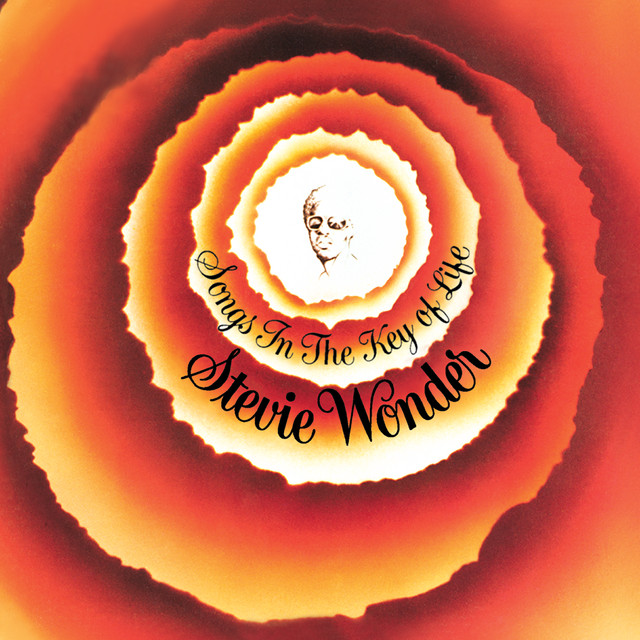
Now, 50 years later, the critical and commercial praise the album’s received is as endless as the concentric orange rings on its cover. To try and capture the totality of the album’s acclaim, influence and wonder within the confines of a singular article is seemingly impossible. Yet, with the distance of a half century, the effect it had on popular culture as a whole is undeniable.
Perhaps the record’s most tangible effect on pop culture is its inherent ability to be incessantly sampled — “Pastime Paradise” becoming Coolio’s “Gangsta’s Paradise,” “I Wish” intertwining with cowboy imagery for Will Smith’s “Wild Wild West” or “Love’s In Need Of Today” providing the basis for Jay-Z’s confessional ode to his mother, “Smile.”
Or maybe it’s Wonder’s pioneering use of emerging musical technologies, like the then-new Yamaha GX-1 synthesizer, in tandem with older, tried-and-true techniques, like multitracking. The Michigan native used the GX-1 to create synthetic string instrumentation on “Pastime Paradise” and “Village Ghetto Land.”
The extensive use of a talk box throughout the triple LP, especially on the funky “Ebony Eyes,” helped pave the way for artists to begin to experiment with vocal manipulation, a precursor to the now-popular autotune.
But past its cultural and technological influence lies something greater, something more emotionally potent — an unbridled love for everything life has to offer.
Sentimentality and gratitude for a loved one are scattered across “Songs,” tackling the connections between family, friends and lovers.
The seven-minute epic “As” delves deep into themes of undying, eternal love, while “Knocks Me Off My Feet” and “Joy Inside My Tears” both express just how powerful love can be — so much so it can render one in complete disbelief.
With the ethereal plucking of a harp, echoing vocals and a lone harmonica, “If It’s Magic” ruminates on the ephemerality of happiness and the evanescence of interpersonal relationships.
A repeated example of this affection is Wonder’s infatuation with music as a universal love language. Arguably the album’s most popular single, “Sir Duke” is a horn-filled tribute to several jazz artists, both living and dead — namely pianist Duke Ellington, who died two years before the song’s release.
“For there’s Basie, Miller, Satchmo / And the king of all, Sir Duke,” Wonder sings, replacing sorrow for the dead with celebration for their careers. “And with a voice like Ella’s ringing out / There’s no way the band can lose.”
The trilingual “Ngiculela-Es Una Historia-I Am Singing” — sung in Zulu, Spanish and English — is the musician’s manifesto on the necessity of music, a shimmering instrumental accompanied by booming thwacks further reinforces its grounded divineness.
Wonder’s Christian faith and overt devotion are recurring themes on the album. “Have a Talk With God” sees him imploring his audience to turn toward a higher power when in need of guidance, a reflection of his Baptist upbringing.
“When I think about it, I say, ‘God, how can I make you even more happy?’ Because, you know, obviously I’m appreciative of the fans and success and all that,” Wonder said in an interview with NPR in 2017. “But to please God is my greatest joy.”
Several cuts off “Songs” also explore the inverses of love and peace — heartbreak and hate — in a way that harbors hope, not fear.
Released only a year after the conclusion of the Vietnam War, tracks like “Saturn” and “Love’s in Need of Love Today” denounce worldly vices that’ve become all too common. The former imagines a utopian society on the ringed planet, one where everybody can peacefully coexist and the latter laments the loss of collective love.
Wonder used his position as popular music’s hottest star, along with his youthful political vigor — he was 26 when the album was released — to spread awareness of civil rights issues and uplift Black voices.
The sound waves reverberating off the electric bass on “Black Man” mirror the rippling influence many Americans of color — especially African Americans — had in the history of humanity, breakthroughs that are recounted on the track.
The lush, opulent synthesized strings on “Village Ghetto Land” harshly contrast Wonder’s near-satirical description of the titular location, which includes families resorting to eating dog food or children playing with rusted toys — a simultaneous condemnation of sensationalist stereotypes and the systems that disproportionately affect people of color.
“Now some folks say that we should be / Glad with what we have,” Wonder sings in an exaggeratedly theatrical tone. “Tell me, would you be happy in Village Ghetto Land?”
Even on the tracks where Wonder sings no words — “Contusion” and “Easy Goin’ Evening (My Mama’s Call)” — his sheer passion for creating music is evident through his spiraling, groovy electric guitars and layers of emotion-laced harmonicas, respectively.
However, no song on the album has a greater proclamation of love than Wonder’s six-and-a-half-minute ode to his daughter Aisha, “Isn’t She Lovely?”
Like many of the tracks on the album, the majority of the song’s instrumentation and vocals were solely performed by Wonder. Despite the immense work and musical talent needed to achieve such a feat, somehow the then-new father still managed to write lyrics with such emotional weight, turning a casual listen into a teary-eyed endeavor.
“I can’t believe what God has done / Through us, He’s given life to one,” Wonder sings.
Wonder’s sheer admiration for his first-born transcends words, as a nearly four-minute-long harmonica solo overwhelmingly overflows with paternal affection, underscored by splashes and laughs of Wonder giving her a bath.
Since the invention of recorded music, there have been few albums that serve as benchmarks in music history — “Abbey Road,” “Kid A” and “To Pimp A Butterfly,” to name a few.
Wonder’s 1976 release isn’t one of those albums — it’s a benchmark of human history.
Furthermore, “Songs in the Key of Life” is Wonder’s sonic celebration of human joy, accomplishment, sadness and love, a musical testament putting the utmost hope in the future of humanity. Never before has there been such a staunch statement of the beauties, hardships, intricacies and wonders of living — and there may not be for a long time.
On the English chorus of “Ngiculela-Es Una Historia-I Am Singing,” Wonder delivers not just a thesis for “Songs in the Key of Life,” but a credo for his incomparable career:
“I am singing someday love will reign / Throughout this world of ours / I am singing of love from my heart.”