Writer Anna DeBord argues third spaces are become steadily disappearing.



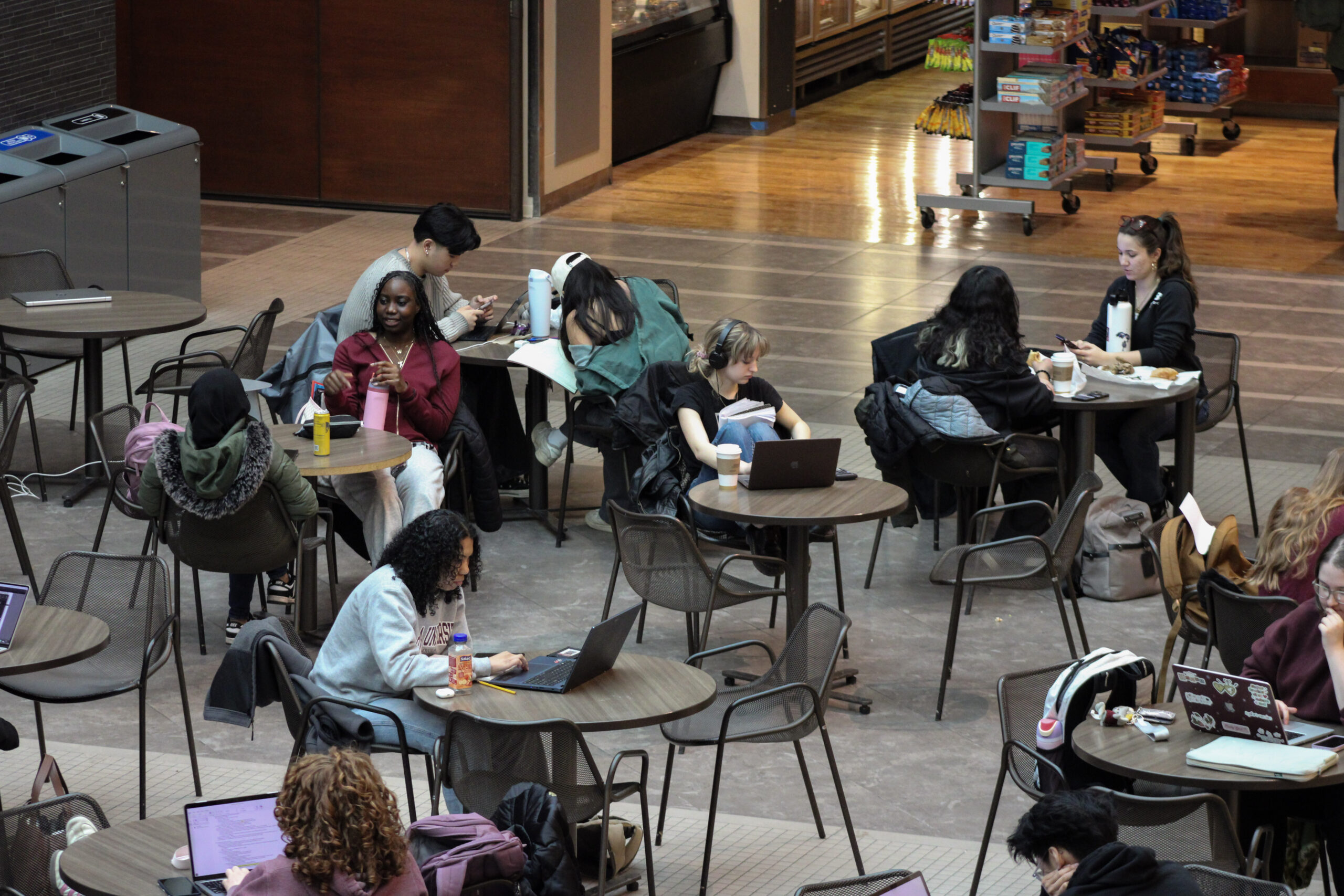
In the first article I ever wrote for The Phoenix, I argued third spaces — the places we go between school, work and home — are steadily disappearing, and with it our ability to form meaningful communities as an American society.
In the months since my first article, the concept of third spaces has transformed into a buzzword. The rise in its popularity online is wonderful for bringing visibility and public awareness to the subject. However, there are unforeseen consequences.
While I wait at crosswalks, I stare at the posters taped to telephone poles with community-oriented event flyers and wonder where it all went wrong, when my simple, naive wish for community became twisted into yet another cycle of consumerism and exclusion.
Every weekend, my friends and I fight tooth and nail to find something affordable and fun to do off-campus. My Instagram feed floods with advertisements and posters all claiming to be a place to connect and form community with fellow Chicagoans.
Coffee shops are hosting live DJs on the weekends so we can get caffeinated and dance to lively music. Numerous dinner clubs offer monthly meals and the opportunity for community for just over $100. In parks throughout the city, picnics and garden parties are hosted for connection and socialization.
The unfortunate truth about many of these events attempting to cultivate a type of third space is that they’re inadvertently trying to manufacture a specific kind of community, one which is marketable and trendy.
For many, it’s an act of leisure. While community is a vital aspect of humanity, most have a home, family and network of friends they can rely on after these events end and the buildings close.
But what happens when someone needs third spaces to survive? What happens when a homeless person comes into one of these places and suddenly, third spaces aren’t quite so inclusive anymore?
In his article “Homelessness and the Issue of Freedom,” legal philosopher Jeremy Waldron argues the homeless are welcome in society to the extent that society is communist. In other words, when everything in American society is privately owned, the only saving grace for the homeless is public property.
With hostile — or anti-homeless — architecture taking over Chicago, places where the homeless population of our city is allowed to merely exist are becoming scarce. For the unhoused, third spaces aren’t just a matter of forming community, but of survival and the freedom to live.
In order to exist, one needs a place to exist.
The options run slim when Starbucks’ bathrooms require receipt codes to use, police remove anybody sleeping on a park bench and neighborhoods are unwelcoming to the homeless.
Additionally, third spaces have been the blueprint for immigrant and ethnic communities for much longer than this trend has been around. While it isn’t a hard and fast rule, many of these communities are centered around the idea of collectivism.
Collectivism, or putting community well-being ahead of the individual, counters the individualism our society is currently saturated with. It’s directly tied to the level of socioeconomic development a society has undergone.
It’s no surprise, then, that Americans are yearning for the kind of collective societies often seen in immigrant and ethnic communities.
Individualism is practically embedded in what it means to be an American.
But these collective spaces can’t be manufactured out of thin air. Community is built over time by supporting others and not expecting something in return instead of endlessly consuming. When we try to replicate it out of nothing, we end up with a hollow, soulless version of community, stripping it of purpose and meaning.
Community has been repackaged as a trendy, luxury experience. It’s forcing consumption from those able to participate while simultaneously shutting out the people who have historically needed these places to survive.
When I said I wanted third spaces to make a comeback, I wanted the multitude of people and communities I’ve come to know and love in Chicago to be a welcome part of it.
Whether it’s the amazing women experiencing homelessness I met while volunteering through Loyola4Chicago, the wonderfully unique people I interact with daily on campus or the multitude of Chicagoans I pass on the street with a simple smile or nod, they deserve to be as much a part of these third spaces as anyone else.
The very fact of a public space means the public will show up and occupy these places.
If third spaces don’t welcome and embrace the marginalized, then our very concept of community should be reconsidered and reconfigured to include rather than exclude.