Writer CJ Strejc discusses the various ways Americans are affected by violence.



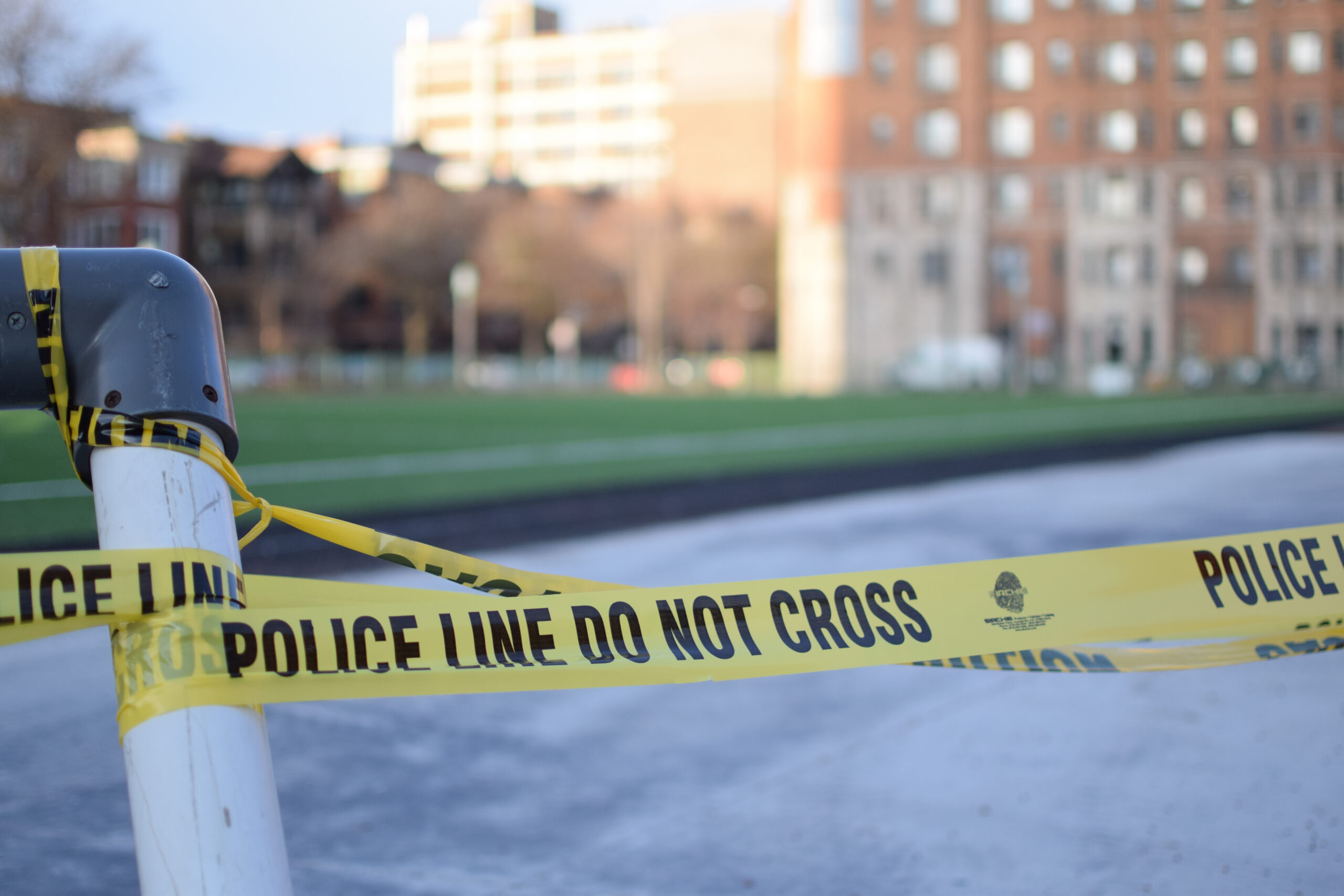
Americans have no shortage of opinions when it comes to violence and can readily identify when it comes in the form of a battered body or a broken window. However, Americans are less comfortable recognizing violence when it leaves behind a debt notice, an unfilled prescription or a life shortened by poverty.
Exploitation, willful neglect, oppression and privation are widely recognized as social and political problems affecting subsets of American society but are rarely discussed with the same language used for more immediate and physically identifiable acts of violence.
Perhaps they should be.
Violence shouldn’t cease to be called violence simply because the harm is distributed across policies and institutions — as with redlining policies that produced lasting segregation, disinvestment and health disparities — rather than concentrated into a single act. When preventable decisions predictably leave people poorer, sicker or dead, choosing to describe their detriments as violence is the recognition of what those decisions actually do.
For a large portion of the post-World War II period, enough Americans had been comfortably insulated from severe deprivation that structural violence could remain abstract. Americans could blame these hardships on inevitability rather than question the postwar economic order that had delivered rising prosperity to much of the middle class.
But it appears the postwar spoils are beginning to dry up, and as economic instability spreads, more Americans are encountering the economic and institutional systems that determine whether they can afford housing, medicine and necessities.
For instance, medical debt isn’t an isolated problem for the uninsured. As of 2024, 36% of Americans had medical debt and since 2009, it’s been the primary cause of bankruptcy, according to the National Center for Biotechnology Information. In 2025, 40% of Americans ages 18-29 said they or someone in their household had experienced problems paying for healthcare in the last year, according to the KFF.
For Loyola students, the struggle with American private healthcare is closer than they may think.
For the 2026-27 academic year, Loyola students without qualifying outside coverage are automatically enrolled in the university’s health insurance plan and are charged $3,869 for the school year.
Loyola’s student health insurance provider is UnitedHealthcare Student Resources — part of UnitedHealthcare, whose CEO Brian Thompson was killed in 2024.
Five weeks ago, Luigi Mangione — Thompson’s alleged shooter turned internet sensation — finally pleaded guilty to two federal counts of stalking resulting in death nearly two years after the event.
In his statement to the court, Mangione bluntly admitted to killing Thompson.
The target himself supplied a motive, and the public immediately understood how Thompson’s position within the healthcare system was relevant to why he’d been singled out.
The anger many felt toward Thompson was hardly baseless, as a class action lawsuit against UnitedHealthcare alleges they knowingly deployed an AI model with a 90% error rate to deny claims.
None of this makes Thompson’s killing morally equivalent to an insurance denial, but violence doesn’t need to be identical to belong to the same language of harm. One gives us a perpetrator whose act created a victim, while the other can distribute its consequences through thousands of decisions until responsibility becomes shrouded.
Just outside Loyola’s campus, the consequences of inadequate access to healthcare are apparent in the community itself. In 2003, Loyola Stritch School of Medicine students participated in a free student-run clinic in West Rogers Park for uninsured residents. More than two decades later, many of the clinic’s patients continue to rely on it as their sole primary care provider.
The contradictions are difficult to ignore. Loyola students are insured through one of the largest healthcare companies in the country, while students from the same university volunteer in a neighboring community to provide care to people the conventional healthcare system has failed.
However, this failure isn’t inevitable, and although Americans may not spend much time looking at the other nations of the world, it’s difficult to ignore that most of America’s peer nations live under systems that guarantee their right to healthcare.
Despite being the wealthiest nation on Earth, the United States remains an outlier among its peers in guaranteeing healthcare to its population.
Healthcare is something people can’t simply opt out of. It’s needed whether one can justify the expense or not. When the price of care becomes so prohibitive, people are forced to choose between lifelong debt and gambling with their life.
If healthcare is structured around the ability to pay for something people can’t afford to go without, then people will inevitably suffer and die prematurely.
One analysis from 2020, published in the Lancet, estimated a single-payer system providing universal access could save more than 68,000 lives annually.
Additionally, an August 2026 Yale preprint puts that number closer to 114,000. Both estimates suggest tens of thousands of deaths could be avoided by changing how Americans receive healthcare.
However, Americans aren’t choosing between 100,000 deaths or 2 million deaths. It’s a choice between preserving the enrichment of a select few private healthcare conglomerates and human lives.
A denied claim doesn’t go off with the sound of a suppressed gunshot and a debt notice has no body — but both still kill. The difference is that the violence is distributed across policies, unaffordable premiums and decisions made at the corporate level until there’s no identifiable moment to pin the blame.
This is why the language we use matters.
Defining preventable institutional suffering as “violence” doesn’t make every insurance executive a murderer, nor every hospital bill an assault.
For students and young adults, these consequences are already arriving — whether it be in the insurance charge on a student account, a prescription held off another month or the free clinic treating neighbors who have nowhere else to go.
Violence doesn’t become an inevitable misfortune simply because nobody pulled a trigger. Sometimes there’s no single perpetrator to blame and no single moment to identify when the damage was dealt.