Upzoning developments in Rogers Park and Edgewater have sparked debates in surrounding communities.



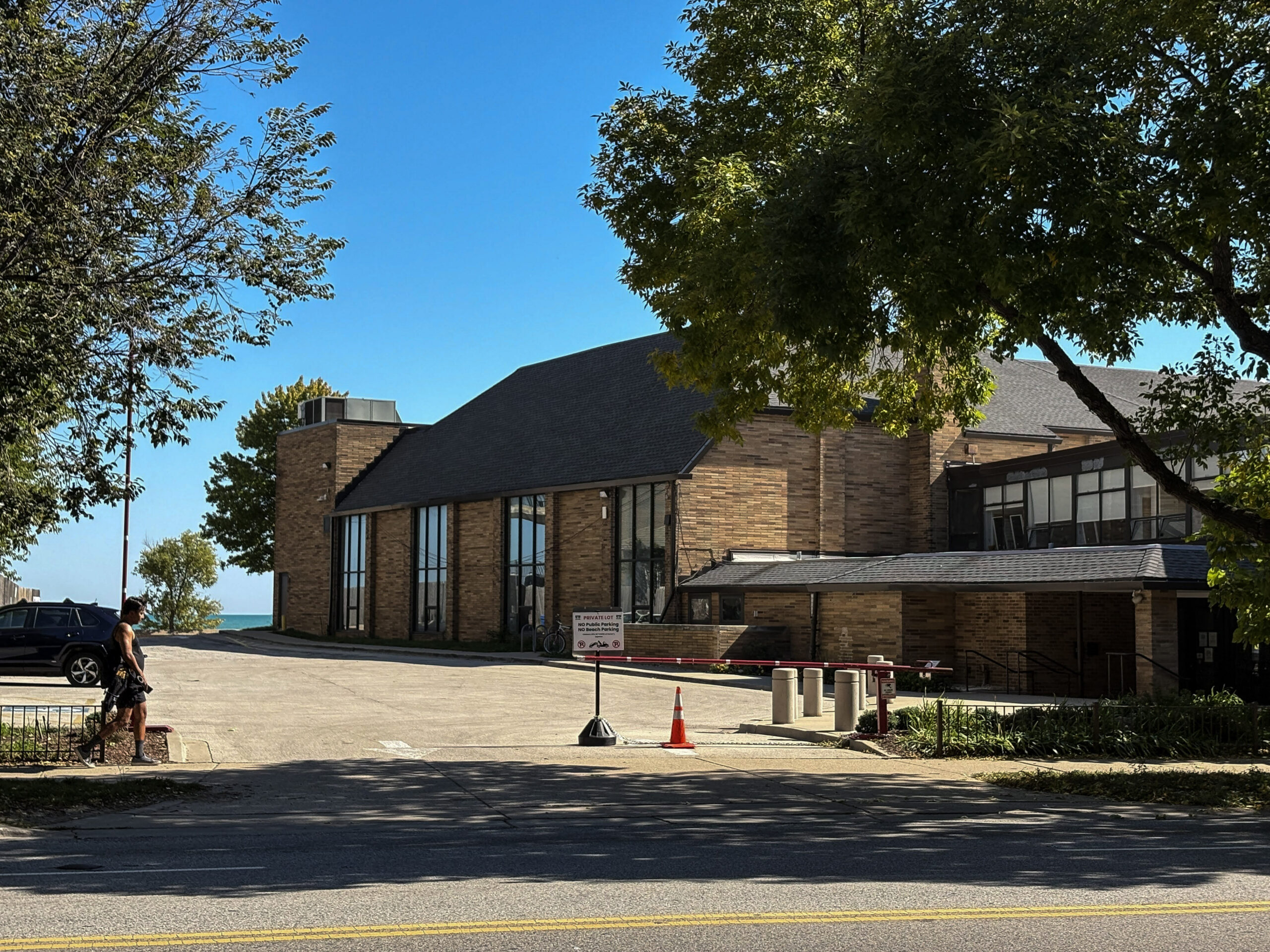
Upzoning, the process of changing local zoning laws to allow for higher-density development, is underway in Chicago’s 48th and 49th wards with construction projects like a plan to redevelop Emmanuel Congregation currently in progress.
According to 48th Ward Alderwoman Leni Manaa-Hoppenworth, upzoning has been permitted along Broadway from Montrose Avenue to Devon Avenue since October 2025. The changes span three wards and affect 20 zoning districts.
Manaa-Hoppenworth said the upzoning project aims to encourage more transit-oriented development, like the recently renovated CTA Red Line stations at Bryn Mawr, Berwyn, Lawrence and Argyle.
“We haven’t seen significant amounts of housing built on Broadway for 20 years,” Manaa-Hoppenworth said.
Emmanuel Congregation, currently located at 5959 N. Sheridan Road, is undergoing a redevelopment plan to renovate the building and property. The congregation is planning to build upward and create a 25-story high-rise luxury apartment complex. The synagogue is planned to be separate from the housing and lower to the ground, according to the congregation’s website.
The congregation is working with Fern Hill, a real estate development company, and Eckenhoff Saunders, an architectural company, on the project.
Emmanuel Congregation and Fern Hill held their first public meeting about the project Sept. 17, 2025, which was posted to Fern Hill Edgewater’s YouTube channel. Four additional meetings have been posted to the account since, most recently on June 26.
According to Emmanuel Congregation’s website, no final plan has been approved. The project is currently in the design and zoning stages as the team explores potential concepts.
Manaa-Hoppenworth said the next steps include more hearings and eventually the approval from a zoning committee. This plan would require a zoning change under a planned development classification.
Zoning changes on the lakefront must abide by the standards set by the Lake Michigan and Chicago Lakefront Protection Ordinance. The ordinance is a local law enacted in 1973 to preserve the Chicago Lakefront space. The law emphasizes the importance of preventing intrusive development to keep the shoreline “forever open, clear and free,” the ordinance reads.
The proposed changes have drawn reaction from the surrounding community. Board Member of the Edgewater Residents for Responsible Development group Andrea Raila said the Emmanuel Congregation project doesn’t provide truly affordable housing. Only about 20% of the 603 units created will offer affordable housing for those who make less than $50,000 annually.
The rest of the units will likely be market-price, leaving few units available for disabled Chicagoans who need affordable spaces, Raila said. All of the units would also be studios, which excludes families who need apartments with multiple rooms.
“Most people who are desperate for affordable housing are grandmothers and aunts, and sometimes a single mom, who have two to three kids,” Raila said.
Upzoning can have positive outcomes if done correctly, Raila said. The property on 5958 N. Broadway is being upzoned by Bickerdike, an affordable housing developer. The project has been in the works for six years.
The outcome will contain 70 multi-bedroom units over 12 stories with all units designated as affordable housing, Raila said. She also highlighted the project’s focus on families, noting its proximity to the Edgewater Public Library and Edgewater Armory, both located a block away. Bickerdike plans to break ground in late 2026, Raila said.
Raila said many community members also have environmentally based arguments against the construction, including the negative effects that can come with a lakefront high-rise such as limited space and increased traffic and emitted green-house gases around the lakefront. Raila said park advocacy groups like Friends of the Parks would rather have free space near the lake instead of more housing. Other concerns include how the congregation zoning will impact nearby public spaces, such as Interfaith Park and Lane Beach.
“You don’t have to give up our environmental rights and a 53-year-old protection of our environment for this,” Raila said, defending the Lakefront Protection Ordinance.
Local businesses voices like Kara Beigh, manager of Lickity Split, located at 6056 N. Broadway, also weighed in on upzoning.
The process of upzoning and what it entails isn’t commonly known to residents,according to Beigh, but she said she knew about construction happening on the street.
“I think creating more housing is good, but maybe not at the expense of local businesses,” Beigh said.
Metropolis Coffee Company’s Granville location Assistant Manager Nat Hughes said they believe more housing would be beneficial.
“I think we need more affordable and accessible housing,” Hughes said. “There’s a lot of underserved and underprivileged people in the community.”
The push for upzoning mainly comes from the lack of housing mixed with the desirability of the area, Manaa-Hoppenworth said. She said the schools and parks in these small but dense wards are very attractive, but people can’t always find places to live.
Glen Noble, a Rogers Park local, said he believes the Emmanuel Congregation upzoning wouldn’t necessarily help the housing crisis in the community. Noble already knew about the Congregation’s upzoning plans and how they conflict with the zoning laws. He said he was familiar with their long-running history in the neighborhood.
“I don’t think that these units are going to be affordable,” Noble said. “I don’t think that it’s really gonna help the people that need it.”
Noble also said he’s worried about the street becoming even more crowded than it already is, stating he hasn’t heard of plans to avoid possible traffic issues.
Another Rogers Park community member, Chris Muller, has been living in the neighborhood for five years. He said housing in Edgewater and Rogers Park is a hidden gem, but he noted it lacks affordability and accessibility.
“People are getting priced out for sure,” Muller said. “If there’s affordable units in this new building, then I feel like it’s worth it.”
Muller said he’s worried the new construction may raise property value and leave nearby housing rates to increase.
“You can upzone if you can change people’s lives,” Raila said.