The Pulitzer Prize opened a traveling exhibit in connection with the American Library Association.



Stepping into the fifth floor of the Harold Washington Library Center will lead to the periodical section of the Chicago Public Library, filled with stacks of dusty tomes and files looming overhead.
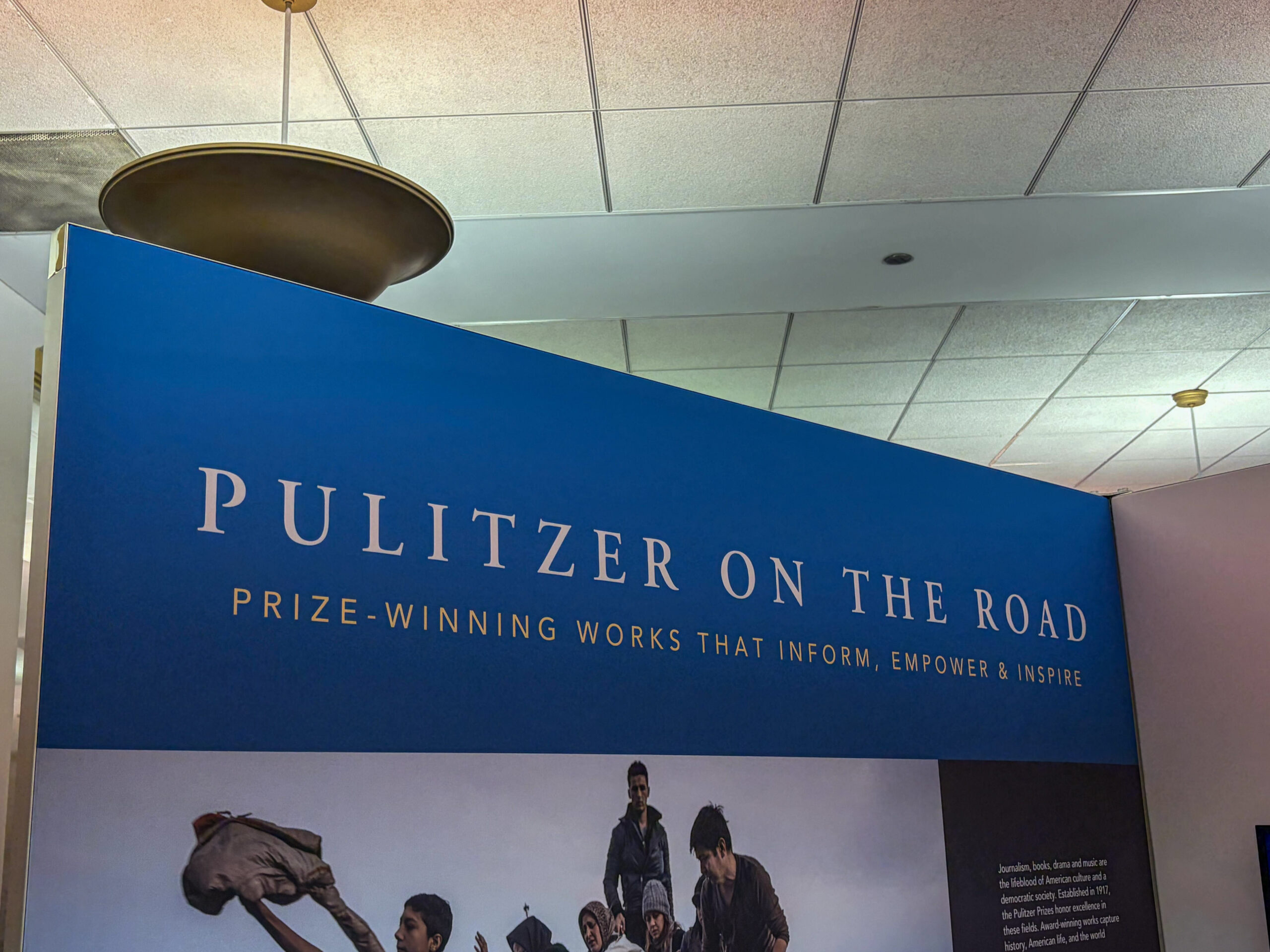
Among these journalistic displays stands a new addition to an already astounding monument to journalism — the first showing of “Pulitzer on the Road: Prize-Winning Works that Inform, Empower & Inspire.”
Presented by the American Library Association and traveling to libraries across the nation, “Pulitzer on the Road” made its first stop with the Chicago Public Library on Oct. 14 and will stay on display until Dec. 31.
The exhibit shares the history of the Pulitzer Prize, a set of awards administered by Columbia University and given to extraordinary examples of journalism, literature, drama and music. In its two months in Chicago, the exhibit will host book talks, author events and more activities surrounding the history of the award.
The traveling exhibit consists of a handful of panels featuring pictures, literary works, music and interactive displays to bring the Pulitzer to life.
A group of members of the Pulitzer Prize and the American Library Association narrowed down over 100 years of the award’s history to pick what they found to be the most impactful Pulitzer Prize-winning pieces, ranging from books on protest and musicals about the American Revolution to harrowing war photographs.
Representing “Pulitzer on Road” at the launch of the exhibit was Marjorie Miller, a Pulitzer Prize Administrator. As the prize’s administrator, Miller announces the award winners, assists in overseeing and selecting the jury voting on the prize and helps to bring attention to the Pulitzer.
Miller expressed the difficulty in choosing photos for the exhibit among some of the greatest photographs and photographers in recent history.
Ultimately, awarding any art is subjective. The exhibit’s photographic selections, however, are undeniably impactful.
The exhibit begins with a brief overview of the Pulitzer Prize, punctuated by a stark photograph of migrants on a Turkish boat arriving on a Greek Island. In the center of the frame, a man stares straight down the barrel of the camera. Taken in 2015 by Sergey Ponomarev for The New York Times, this photograph sets the scene for the rest of the exhibit.
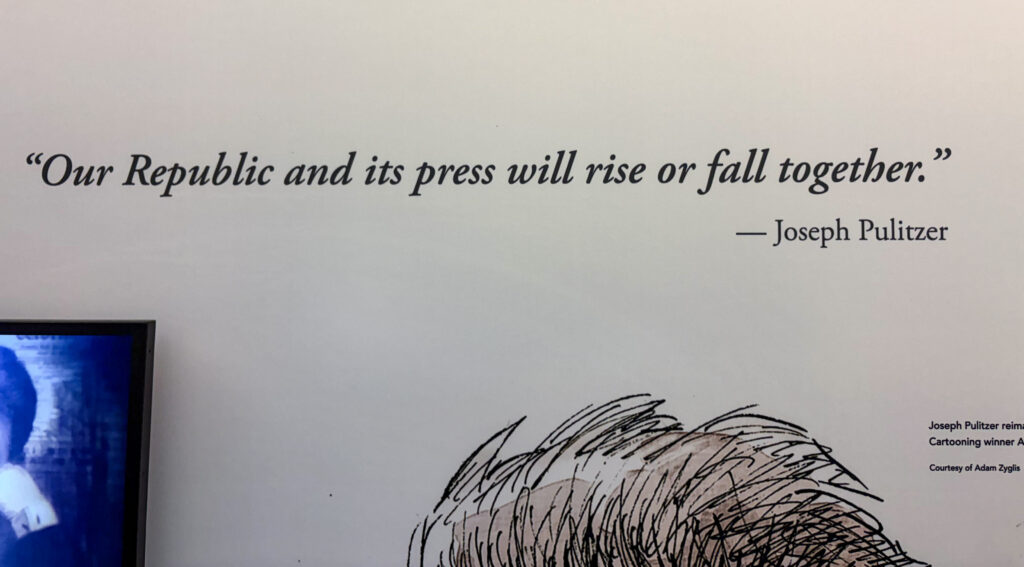
Next to the image is a quote from Joseph Pulitzer, newspaper publisher and founder of the prizes: “Our Republic and its press will rise or fall together.”
Moving into the Pulitzer Prizes themselves, the exhibit leads with an American history section. The display depicts works ranging from grief over the 1999 Columbine High School shooting to the celebratory election of America’s first Black president, Barack Obama.
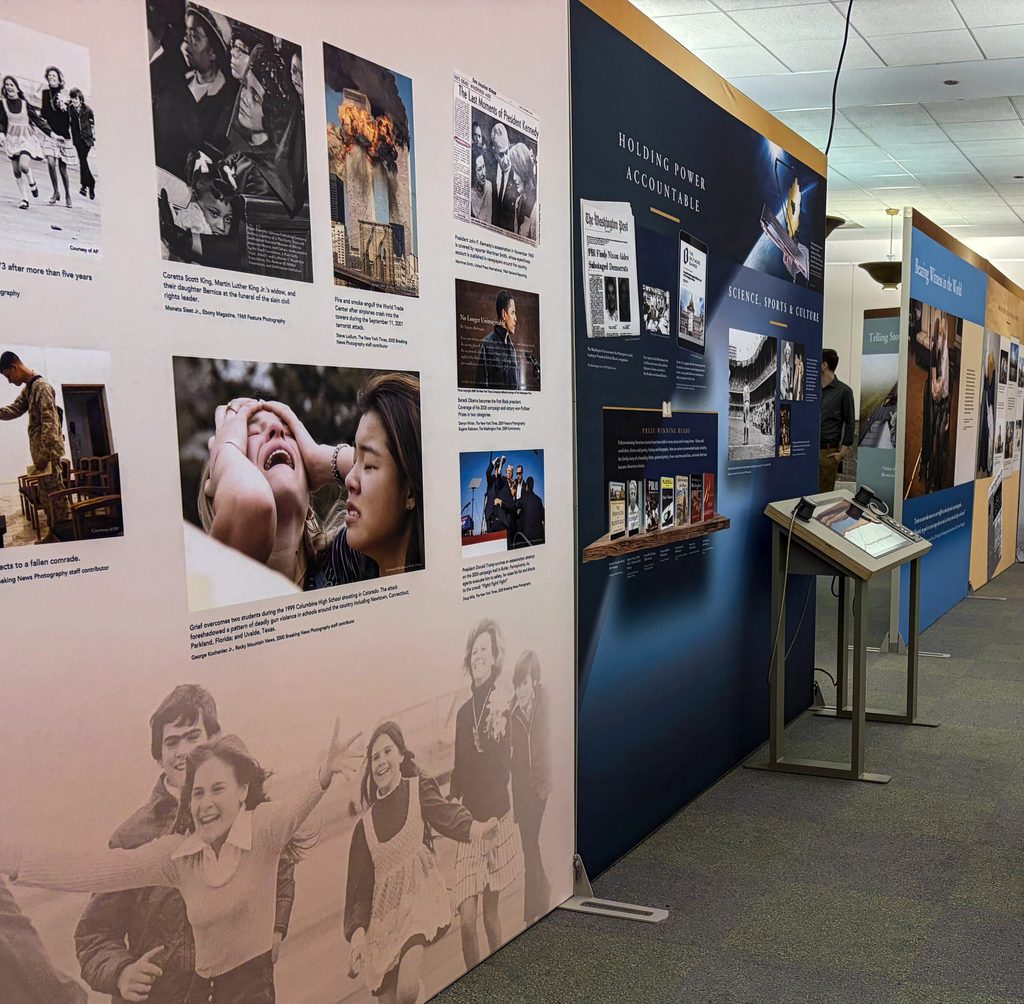
Following American history, photos of international history captured the devastation of global starvation, war and destruction.
“Pulitzer on the Road” puts a major focus on photographers and their work, turning into a traveling panel exhibit to showcase photojournalism specifically, according to Miller. Large photographs are bolstered by books from Pulitzer-winning authors, interviews from Pulitzer-winning creatives and examples of Pulitzer-winning music.
According to a segment in the exhibit, the Pulitzer Prize committee notices themes in what they select to award the Prize, such as protesting.
“Photojournalism captures public protest in the moment. Nonfiction books and biographies recount stories of historical protests and their leaders. Cartoons and other creative works that express opinions can serve as examples of protest,” the panel in the exhibit reads.
One interactive display showcases different local papers, like the Des Moines Register and Boston Herald American, along with the impact local stories have had. The phrase “Local News Matters” stands boldly above.
The exhibit ends with a segment of pictures of Pulitzer winners, asking “Who Tells These Stories?”
Next to the photos of creatives, a mirror shows the face of the viewer, asking the public to tell their own story. This is stressed further with the stack of notecards and pencils sitting alongside a place for visitors to write their own story.
A final quote from Pulitzer reads, “The power to mould the future of the Republic will be in the hands of the journalists of future generations.”
“Pulitzer on the Road: Prize-Winning Works that Inform, Empower & Inspire” is a rallying cry — a call to action for aspiring journalists and creatives alike. Democracy is in the hands of those who record it.
The Harold Washington Library Center is open and free to the public Monday through Thursday 9 a.m. to 8 p.m., Friday and Saturday 9 a.m. to 5 p.m. and Sundays 1 p.m. to 5 p.m.