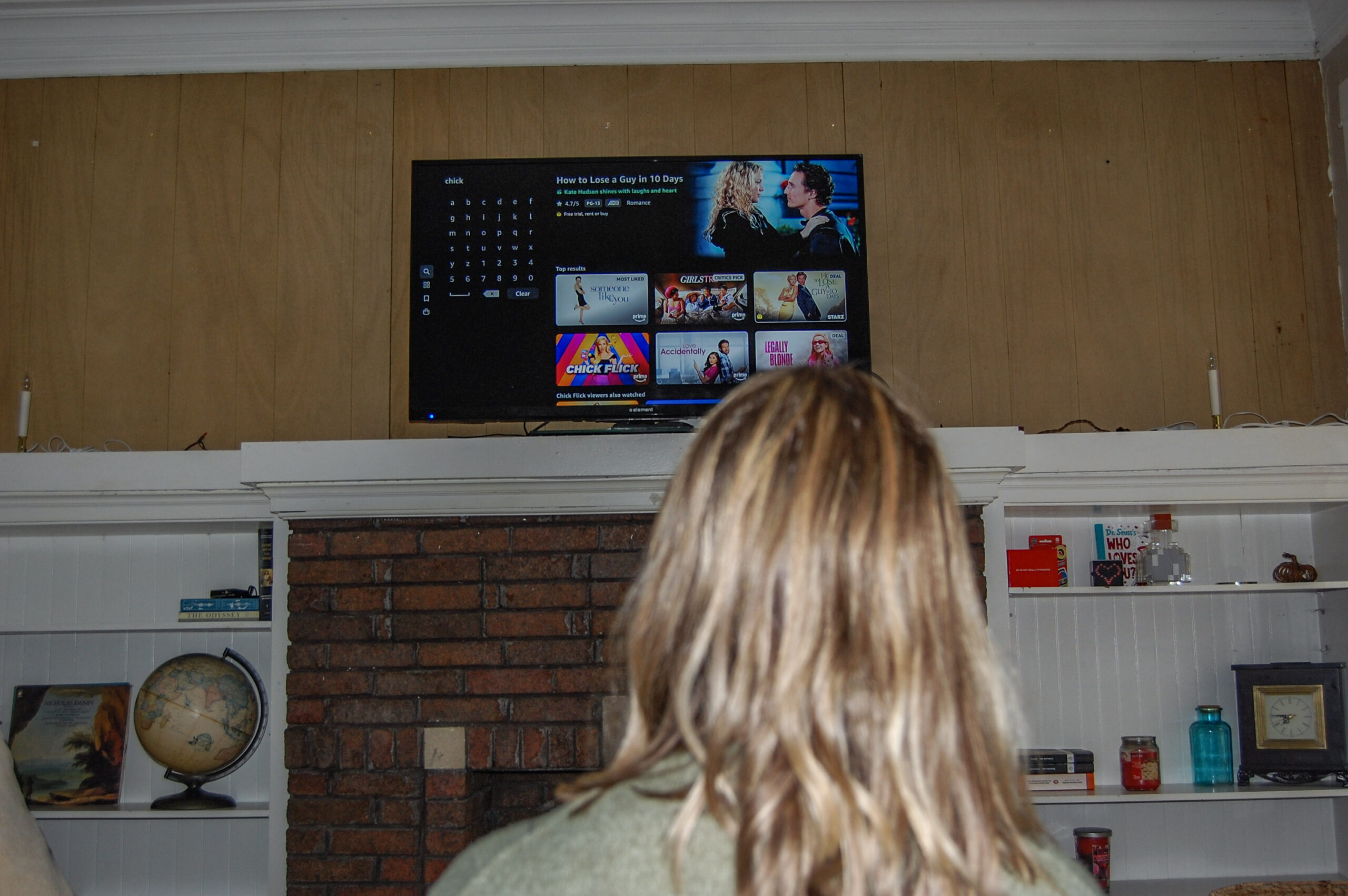
The term “chick flick” is a belittling label that reduces films to the gender of their subjects and audiences.



The 1989 film “Dead Poets Society” is widely regarded as a relatable coming-of-age story.
Set in 1959, a group of teen boys at a prestigious boarding school embolden themselves through poetry and learn to “seize the day” with the help of their unconventional teacher. The film beautifully displays friendship and finding oneself through the arts, teaching the students to value creativity.
The 2003 film “Mona Lisa Smile” is uncannily similar — set in 1953, a teacher encourages students at a boarding school to discard outdated conservative societal mores.
“Dead Poets Society” has more than 673,000 ratings on IMDB, with an average of 8.7/10 stars. “Mona Lisa Smile” only has 101,000 ratings, and the average is 6.6/10.
The most glaring difference between the two films? “Dead Poets Society” has a majority male cast, while “Mona Lisa Smile” has a largely female one.
The latter film is listed on IMDB’s Ultimate Chick Flicks List, among others like “Pretty Woman” and “How to Lose a Guy in 10 Days.”
“Chick flick” is a slang term for films centering on women, aimed at a female audience. The theme is usually — but not necessarily — romantic, most often centering dreams and aspirations of women. The phrase is often used in a belittling, dismissive fashion toward films fitting the profile.
It’s not merely the people making these films, however, who are perpetuating this harmful assumption — audience support follows the same logic. On the Rotten Tomatoes review aggregator site, men typically rate films aimed toward women about 8.4% lower than women do.
If the only major difference between the two aforementioned films is the gendered audience they’re aimed at representing, it doesn’t make sense for the one centering women to be a specific and primarily female experience — a chick flick — while the other is somehow more universal.
Androcentrism is the term applied to the phenomenon where, either consciously or unconsciously, maleness is placed at the center of a cultural point of view, defining male as gender-neutral while female is gender-specific.
Androcentrism isn’t exclusive to film, however. It’s weaseled its way into vehicle safety, with crash test dummies primarily being modeled after the average male body. It’s widespread in medical studies, with data often collected from men and generalized to women. It’s even wormed its way into daily language — phrases like “you guys” and “mankind” refer to the general public, not just men.
Androcentrism is one of the many factors contributing to the greater narrative of the universal male experience, while the female one can be perceived as less relatable. This overarching cultural narrative inevitably makes its way into the stories and media people consume daily.
To understand why films like “Dead Poets Society” are labeled as coming-of-age while others like “Mona Lisa Smile” are chick flicks, it’s essential to see the trauma inherent in feminine coming-of-age.
To grow from a girl to a woman in modern society isn’t merely coming into oneself. It’s being made aware of how a male-dominated society sees women — as submissive, objectified and lesser.
As for male coming-of-age, its narrative consists of strengthening one’s confidence and learning one’s place in modern society. For most men, it’s at the top.
The entire premise of the chick flick category begins to fall apart when examined by this logic. Why should these films be separately categorized in a downgrading manner due to the gender of their subjects?
Putting a woman at the center of a story shouldn’t make it harder for men to relate.
Many young girls in modern society grew up reading about male characters — Harry Potter, Percy Jackson and others — and never had trouble finding a way to relate to them. The same should be true for men.
Classifying films as chick flicks puts a preconception in the viewer’s head that it’ll only be relatable and enjoyable to a female audience, when in reality, anyone watching should be able to find a connection, regardless of gender.
It’s an imperative aspect of the human experience to learn how to identify with those different from oneself. If one can’t empathize with characters different from them, how can they expect to relate to anyone different in real life?