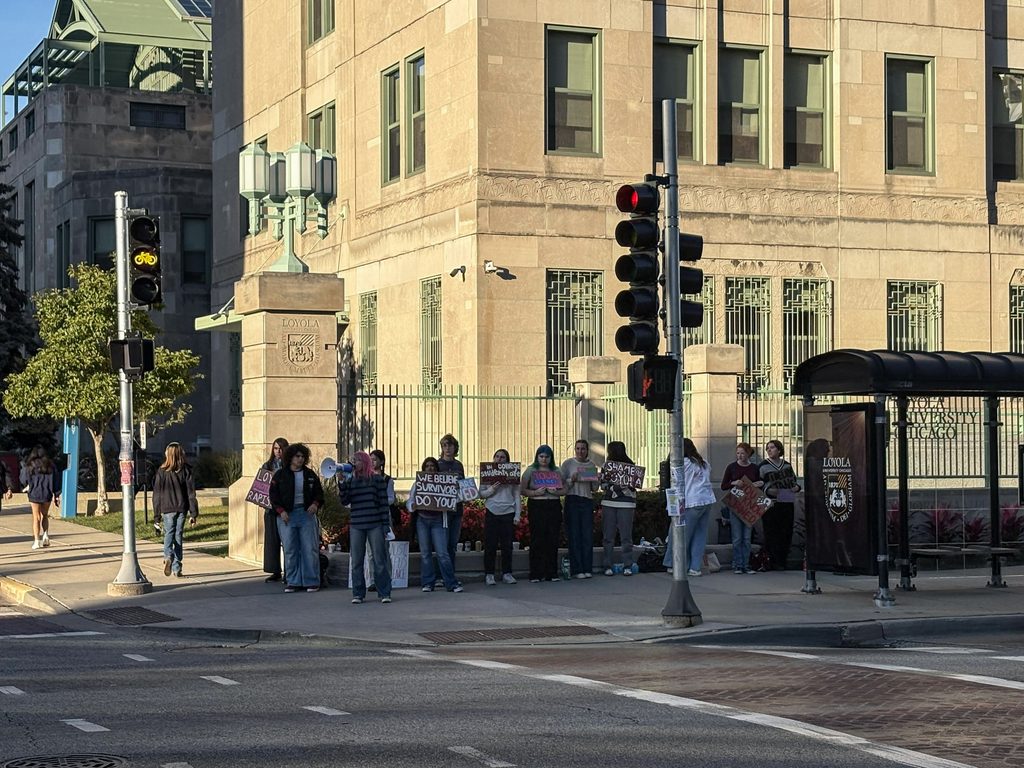
The protest took place Oct. 19 from 1:30-6 p.m. on the Lake Shore Campus.



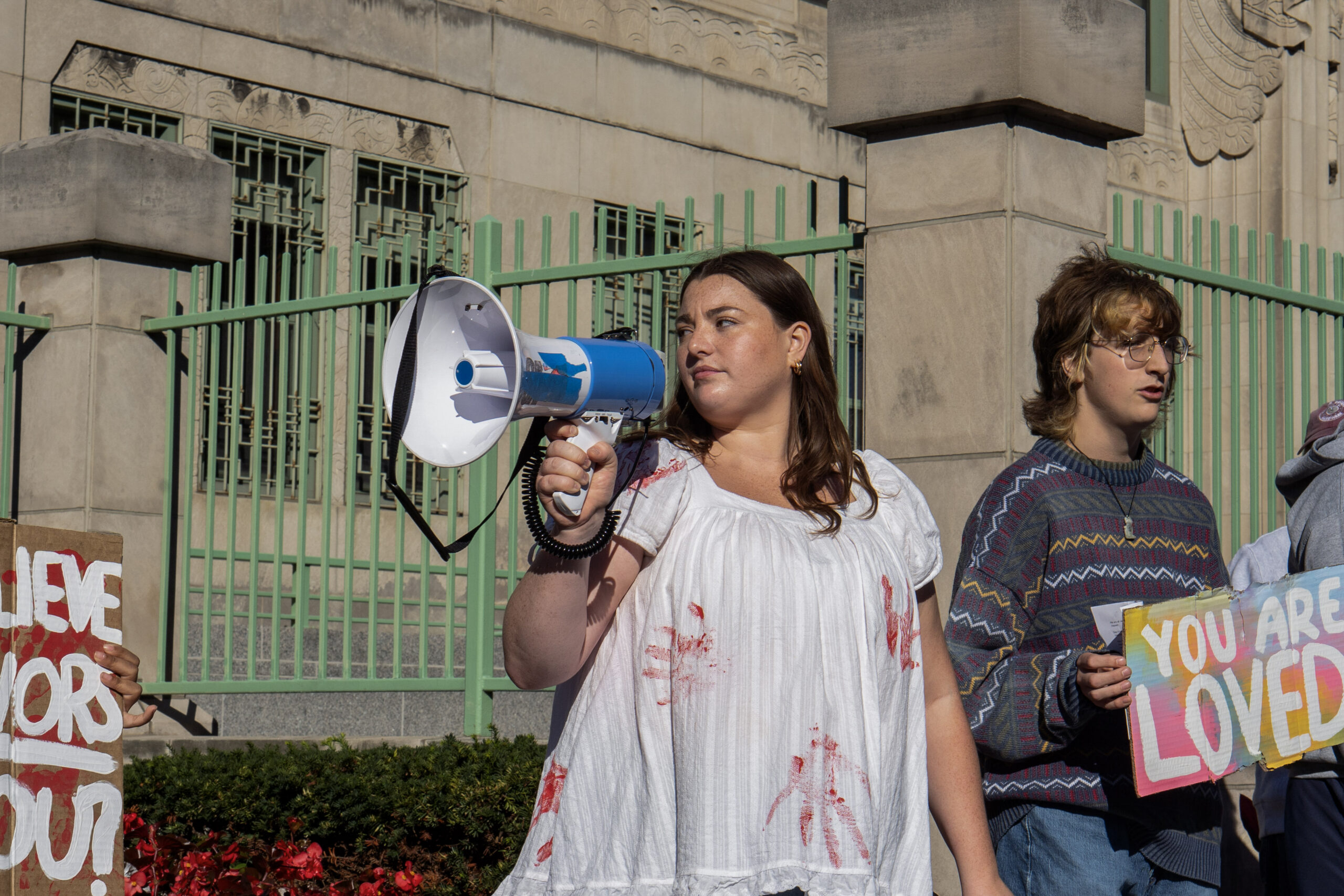
Loyola students and Chicago community members gathered on the corner of West Sheridan Road and North Kenmore Avenue Oct. 19 from approximately 1:30-6 p.m. in protest of the university’s handling of accusations of sexual misconduct on campus.
After news of an alleged gang rape at Cornell University broke, sparking country-wide anger regarding sexual assault on college campuses, attention to a 2022 lawsuit accusing Loyola of mishandling sexual misconduct on campus was reignited, The Phoenix previously reported.
The protest fliers, most of which were designed by fourth-year psychology and criminal justice major Caroline Fawcett, said the event would start at 2 p.m., however students began chanting at approximately 30 minutes before the designated start time.
A group of around 10 students held signs, chanted, spoke to passing students and handed out flyers concerning administration accountability, rape culture on campus and solidarity with survivors.
Throughout the protest, chants of “we are Jane Doe,” “silence is complicity,” “where is your voice Loyola,” “how many more Jane Does?” and similar rallies urged the Loyola community to stand with victims loudly and demand Loyola administration take action.
Fawcett worked to organize the protest along with first-year philosophy major Lucia Battista. Together they decided to hold the protest on the corner of West Sheridan Road and North Kenmore Avenue in order to avoid abiding by the university’s on-campus protest procedures. They said they also wanted to increase visibility by standing on a public sidewalk.
Fawcett said although it may seem intimidating, she felt it was important to speak up when issues like this come to light.
“It’s hard to step in and do it,” Fawcett said. “It takes a lot of bravery and courage. We’re just here to welcome everyone to stand and speak up with us to protect women.”
The group started out around 10 students and a handful came and went every hour, with a larger group of around 20 students amassing in the final hour of the protest.
Representatives Will and CC, whose last names are omitted for anonymity, from Socialist Alternative — an organization working to build a movement for a democratic socialist society fighting for an end to all capitalist oppression and exploitation, according to their website — caught wind of the event and joined the students for the first few hours.
After hearing about the protest, state representative of the 14th District Kelly Cassidy attended to support the students and all victims of gender-based violence.
“This is where I’m supposed to be,” she said. “I stand up for survivors of all sorts of gender-based violence regardless of their age and where they are, whether we’re talking about students or women in prison.”
Battista led chants for a substantial part of the four hours. She said although sexual misconduct and gender-based violence are widespread issues on college campuses, Loyola administration needs to recognize these cases are specific to Loyola and require individuals and administration to take accountability.
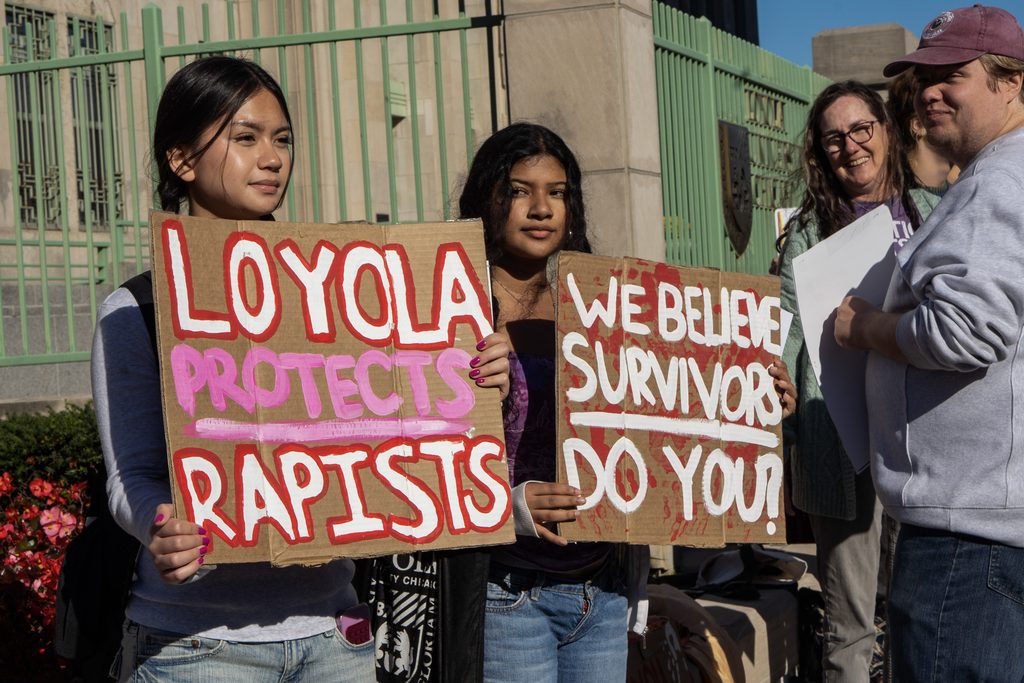
Loyola’s annual Clery Report documented six cases of rape, seven cases of fondling, six cases of domestic violence and 12 cases of stalking in 2025, The Phoenix previously reported.
Battista said the university has the resources to attain justice for the women on campus affected, and she hopes the protest will result in Loyola using those resources where they’re needed to serve their students.
“I think there’s faculty and students and professors on campus who really care about this and really want action to be taken,” Battista said. “But this administration’s not giving them the resources that they need. They’re not distributing the funding in a way that is meaningful.”
Passersby stopped to join the protest, encouraging students and chanting with them in solidarity. Passing cars honked in support and cheered along.
Second-year anthropology and political science major Reagan Bieligk led chants and held signs. Bieligk said issues of sexual violence and rape resonate in her personal life, adding that her personal experiences and those of people she cares for have influenced the way she advocates for survivors now.
Bieligk said she hopes the protest efforts made today will result in accountability and justice from Loyola administration.
“I want them to hear that people care, that we’re not going to let this continue happening, to let victims and survivors continue to be silenced and swept under the rug because that is what has been happening for centuries,” Bileigk said. “It’s sickening and I’m tired of it. I think everyone is. We deserve justice.”
The protest ended with a minute of silence where participants held their signs and covered their mouths to stand with silenced survivors. Afterward, they said their final chants and parted ways.
“This administration has blood on their hands,” Battista said. “People are very seriously harmed because of sexual assault and sexual violence on campuses, and this administration, frankly, doesn’t care.”
Amid the disappointment, students who gathered found hope in each other and the support they received, according to Battista.
“I’m very used to these events being very hostile in nature, but fortunately, the response to this has been pretty good,” Battista said. “I’m really proud of this campus.”