The festival was put together by Loyola professors.



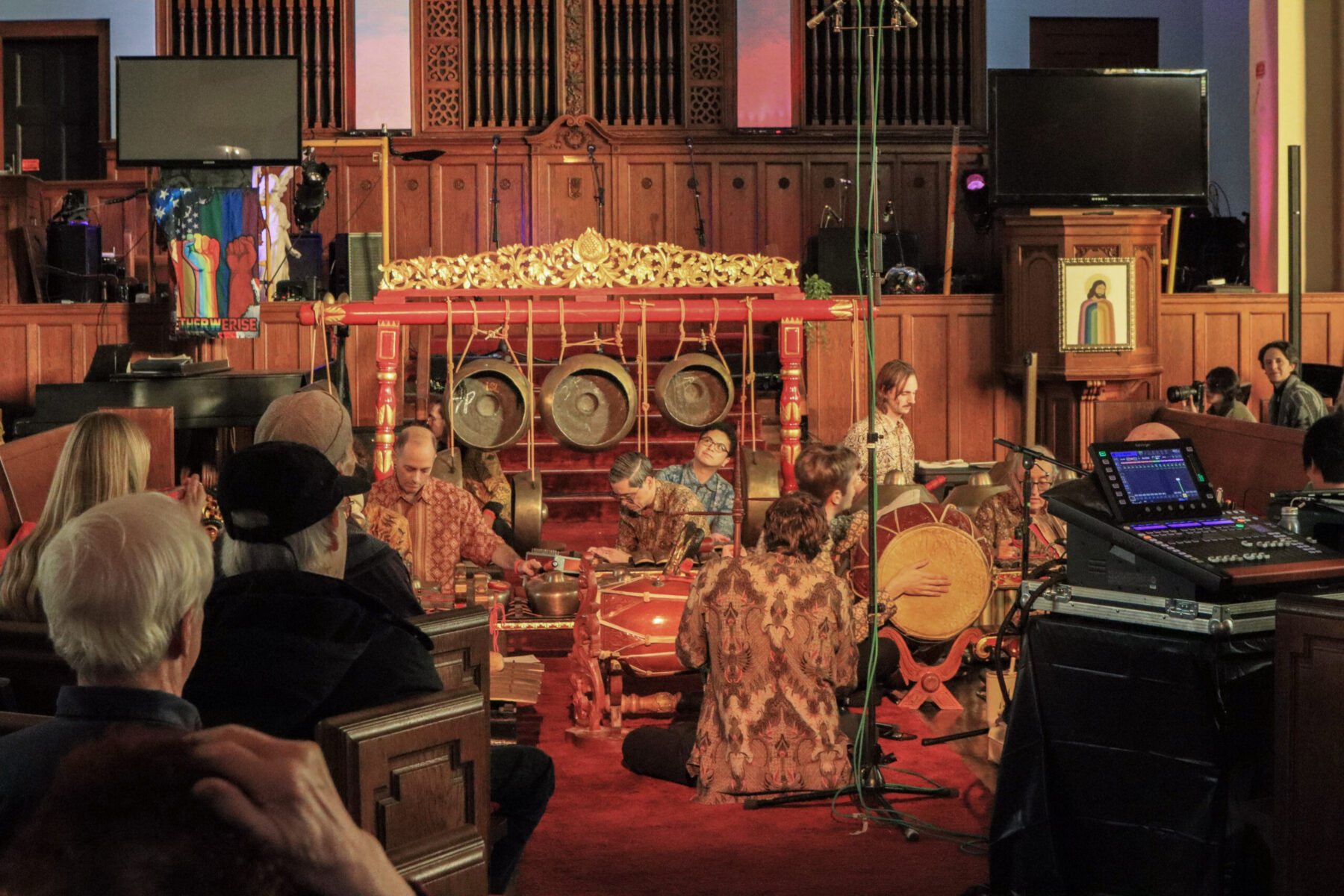
To the tune of the Mariachi and Mongolian throat-singing upstairs, stroll through the corridors of the United Church of Rogers Park to find the satin-seated sanctuary dazzling with sparkling disco balls.
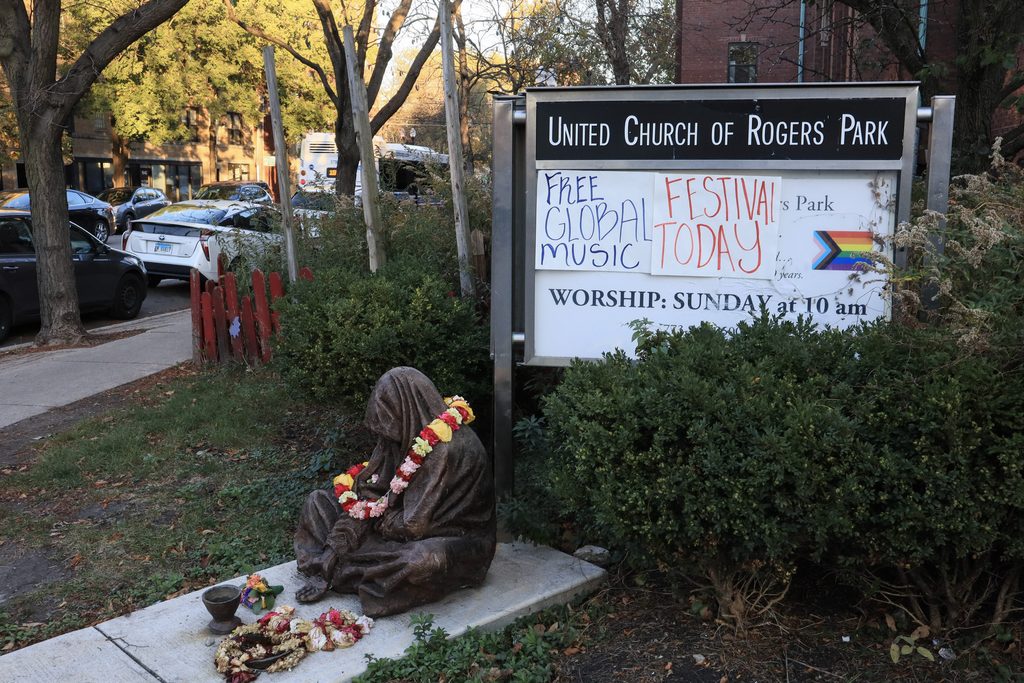
It’s decorated for GaanMela, a festival of global music where people reunite with their cultures, find peace through the celebration of others and harvest their innermost emotions through music.
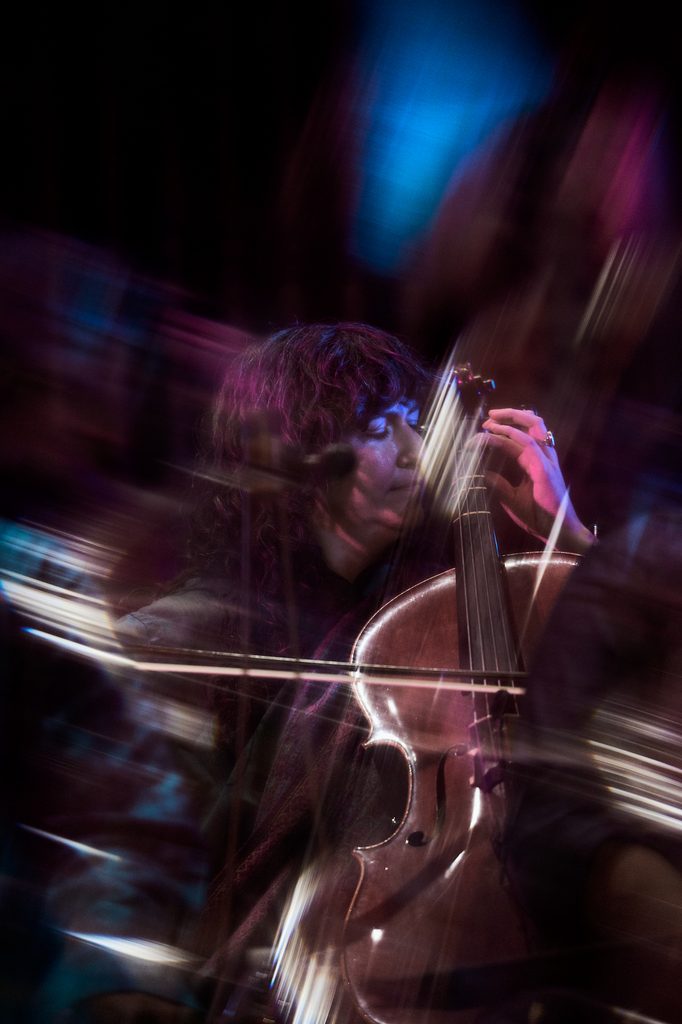
“We sing this song that says, whatever name you call God, when you’re in the experience of obliterating love, no language could possibly capture this,” Ochin Pakhi’s cellist — and theology professor at Loyola — Leigh Greening said.
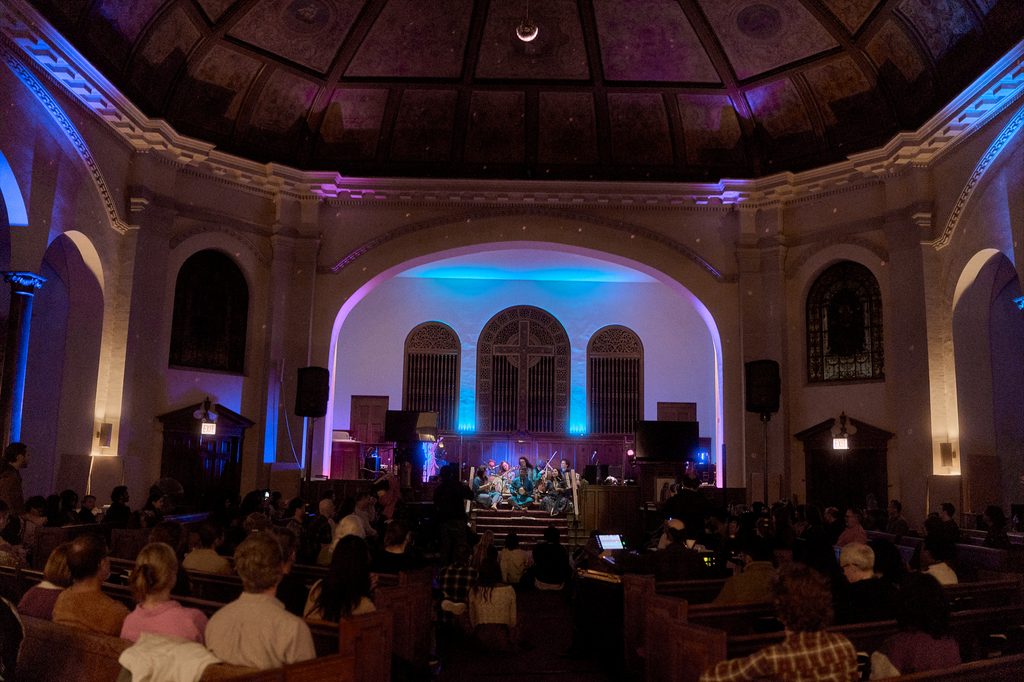
Ochin Pakhi, a Bengali folk group, organized the free multicultural festival thanks to a $50,000 grant acquired by vocalist Subhajit Sengupta. Taking place from Nov. 6–7, the festival showcased 16 different bands across four continents of sonic inspiration.
The lineup featured bands representing music from countries like Guinea, China, Afghanistan, Java and Pakistan. Though most acts opted for clothing inspired by their musical origin, Chicago marching band Environmental Encroachment dressed as rabbits.
Culture is one of the most important aspects celebrated at GaanMela. The festival provides several avenues for self-discovery – attendees and performers sing and dance, memories resurface from generations of expression of heritage and the music’s messages unite communities.
The event situated the harmonious experience through a recontextualization of church space. Greening provided insight into the importance of shared cultural spaces like the United Church.
“They’re really taking a Christian message of ‘love your neighbor’ into action,” Greening said. “Making a church into this space really serves the community. It’s very meaningful to have this place as a hub for these events to exist.”
Notably, the church holds punk rock and other unexpectedly secular events, broadening the capabilities of the church as a venue, rather than simply a place for Christian spiritual practice.
Speaking about the togetherness Chicago provides, Greening elaborated on how accessible art is organized, emphasizing tradition and the welcoming of others into it.
“We’re doing some fusion, and yet I think there’s something really beautiful about translating some of those concepts to the Chicago area,” Greening said. “I play the cello, which is not a traditional Bengali folk instrument. There’s something kind of beautiful about how traditions shift and shape the different areas and yet express a similar message.”
As traditions turned into song, the Church filled with resonance.
Mariachi Flor de Primavera, one of many bands which headlined the festival’s first night, is a group which emphasizes each of the rotating members’ talents delicately. In every song, a new voice held the microphone while the band plucked, bowed, blew, crooned, strummed and serenaded.
Dressed in coordinating black outfits with pants studded from hip to toe, Mariachi Flor de Primavera embodied a polished synchronicity. The band encouraged dancing, and the upbeat, passionate tunes compel the audience to do so.
Culture can seemingly be found on every corner in Rogers Park, and Abdoulaye Conde, a Guinea-based kora player, proved it. As a multimedia artist and musician, Conde’s presence surrounded the neighborhood through prints and murals.
Conde plucked and strummed the traditional 21-stringed West African instrument producing a fascinating harmonic rhythm. His expertise was resounding — the melodies from his strings were inconclusive to whether they come from harp, guitar or bass. With Conde’s soulful dedication, beauty emanates through the sanctuary.
To close out the evening, Ochin Pakhi took the stage. Some of their traditional Bengali instruments included the dubki, manjira, dotara, alghoza and tabla. As their performance began, audience members became interwoven in embrace while others literally tended to knitting projects. Everyone in the room seemed to follow their own calling.
When subsequent songs were being introduced, the strings continued to reverberate. Among these interludes, the band called to challenge tradition in order to feel universalism.
When explaining the meaning of Ochin Pakhi’s music, Greening recalled the roots of Vaishnavism, Bengali and Indian tradition while maintaining the importance of listening to oneself.
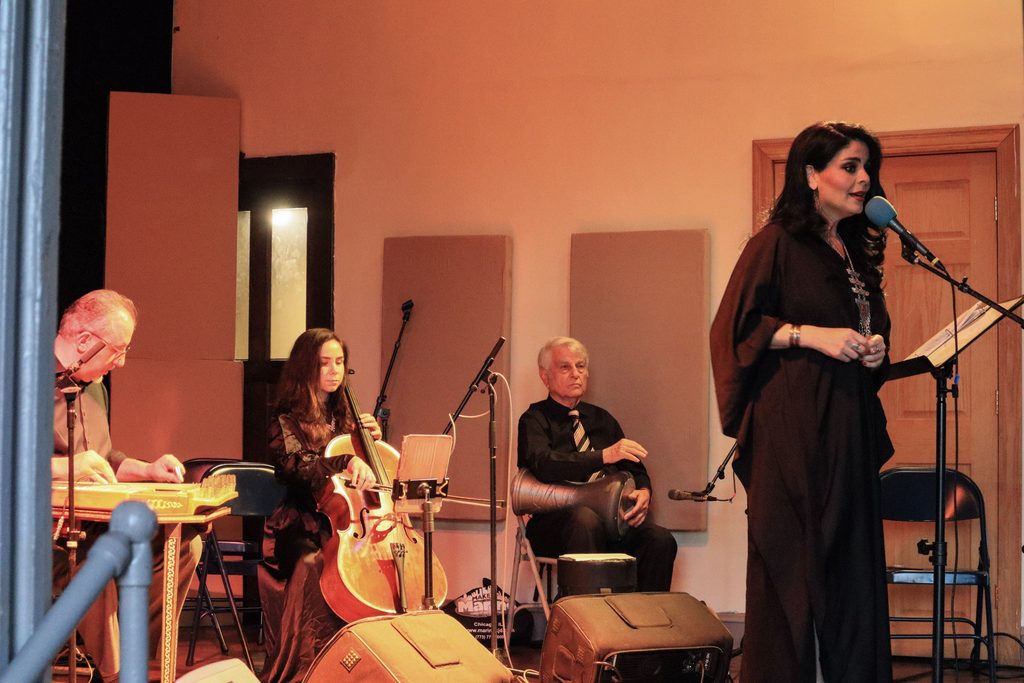
“Read the text of your own body. Find the divine within and challenge some of these hierarchies. Some of these distinctions, like caste, like gender,” Greening said. “There’s this very egalitarian message.”
Greening outlined the many layers of importance a festival like GaanMela possesses and directed a message to students who may be unaware of the prolific opportunities the city provides.
“Take advantage of the richness of the city of Chicago. The city has so much to offer in terms of free programming,” Greening said. “You don’t have to study abroad. You can learn in Chicago itself.”
In the band, Greening joins another Loyola professor – Data Science Program Director and vocalist Swarnali Banerjee. For these two, Ochin Pakhi is a passionate side project which demonstrates the multifaceted personalities of professors. GaanMela is a gracious reminder faculty have a far-reaching impact beyond the classroom.
“Celebrate your professors that are doing so many different things,” Greening said. “We talk about cura personalis at a Jesuit institution, and I’m so grateful that Swarnali and I get to not only teach and be in the classroom, but also have this part of our souls fulfilled by making music.”
GaanMela literally translates to “music festival” in Bengali, but in Rogers Park, its music is one of many mediums to express togetherness. The festival’s inclusion of diverse and individually unique bands displayed the depth of life present on every street of the city.
“This event has been such a beautiful opportunity to share that with my students,” Greening said. “I say to them, ‘I know you all are complex human beings. I’m gonna be complex here too.’”