The National Hellenic Museum hosted a two-day reading of the ancient epic.



On your marks, get set, read!
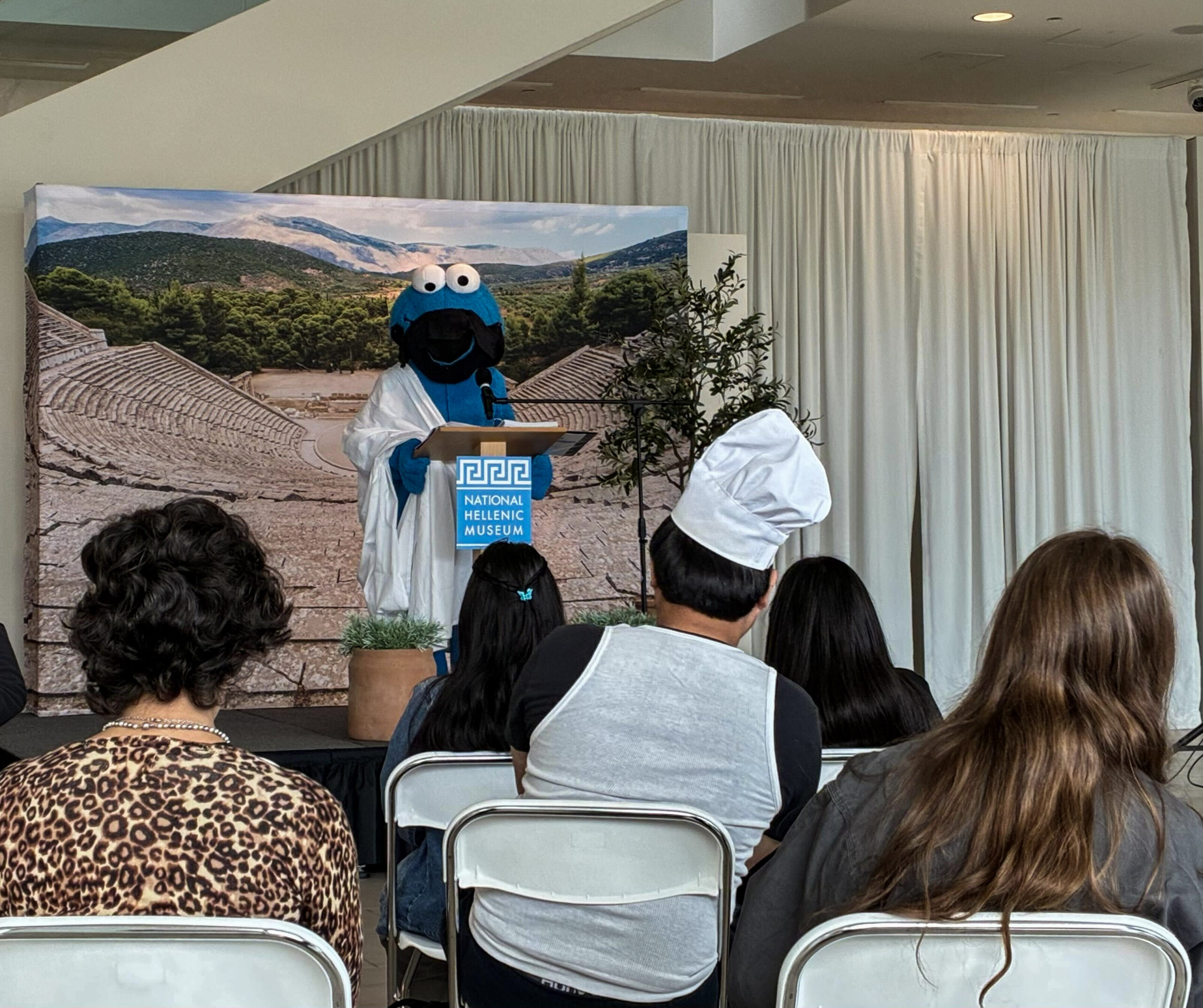
Sunlight peaks through the floor-to-ceiling windows enveloping a bustling gallery at the National Hellenic Museum in Greektown. Flanked by a marble statue, foliage and a backdrop of the Ancient Theatre of Epidaurus, readers serenade the audience with a familiar text: the 19th book of Homer’s “Odyssey.”
Community members of all ages and backgrounds listened intently and marveled at the many speakers’ practiced orations, participating in the museum’s annual Homerathon, a two-day reading of the classic ancient Greek text Oct. 30.
The enduring classic is read over the event’s combined duration of 11 hours and 30 minutes. The reading’s agora — “public” — is gathered to preserve the tale, not only for its spoken duration, but far beyond it.
“The Odyssey” was meant to be experienced aloud and in the community, Executive Director Marianne Kountoures explained.
“People have gathered to hear this story for centuries,” Kountoures said. “That is what we do at the National Hellenic Museum — sharing Greek history, art and culture in ways that are meaningful today.”
As she spoke, she was interrupted by a reader donning a Cookie Monster costume under a toga. Readers of all ages were present at this year’s Homerathon, from undergrads at University of Illinois Chicago to local middle, high and homeschoolers.
Kountoures emphasized the goal of the Homerathon — and its surrounding “The Odyssey Reimagined” exhibit — was to “share Greek history in ways that reach across generations and cultures.”
“The Odyssey Reimagined” was a recent addition to the annual event — after all, reinterpretions the Odyssey are having a moment. Christopher Nolan’s popular movie adaptation of the famous classic has created a curious creative backlog.
“The Odyssey Reimagined” opened in October 2026 and will be open until January 2028. A marble statue of the head of Zeus is one of 16 impressive contemporary art pieces inspired by the epic poem.
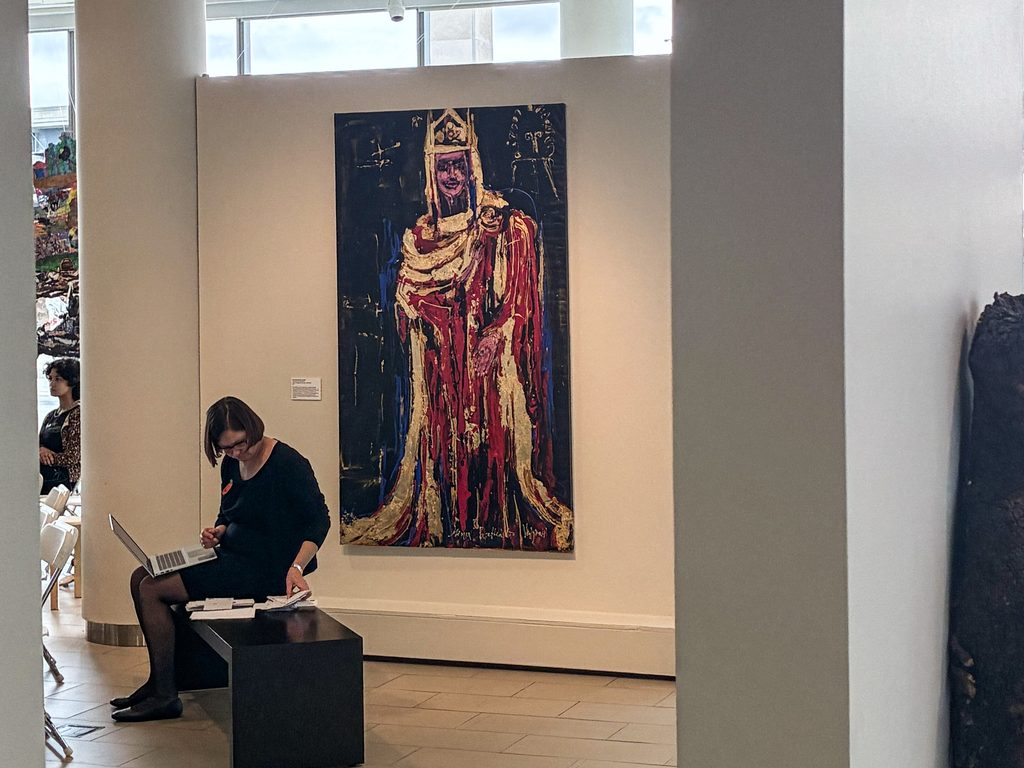
Sculptor Jyl Bonaguro’s statue is displayed alongside Serene JV Eleston’s Caryatid sculptures made out of Reishi mushrooms. Etchings, paintings, drawings, prints, photographs and even a copy of “The Odyssey,” ripped apart and stitched, make up the vast variety of work on display.
As participants listen to the readings, they might stumble onto Allison Svoboda’s “Universe in a Teardrop.” The 360-degree sculpture is meant to capture the appearance of salt water in Odysseus’s tears and the sea he travels. Svoboda achieves this by creating granular white and blue waves on a metal curvature.
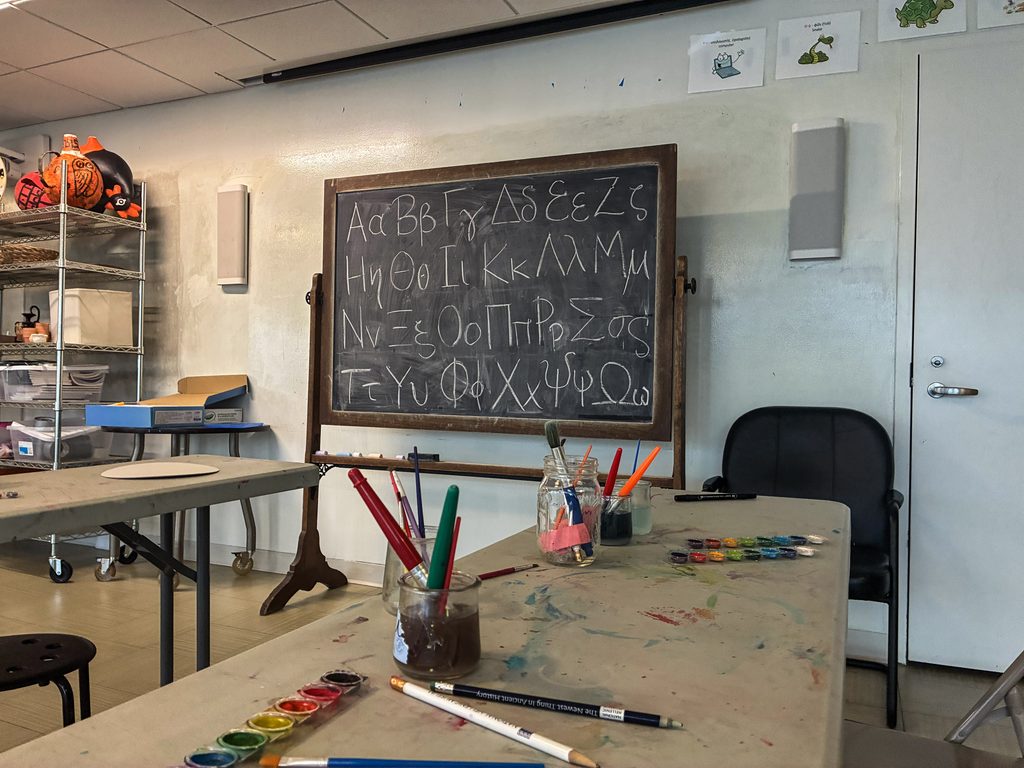
Beyond the installation are two tables covered in “Odyssey”-themed coloring pages and a far-from-finished puzzle. Listeners engage in various crafts, surrounded by art while the ancient narrative guides them in thoughtful creation.
“Ultimately, the argument for studying the Classics is not that the Ancient Greeks and Romans had all the answers or represented some ideal civilization. In fact, it is almost the opposite,” Kathereine Kelaidas, the museum’s director of research and content, said. “Studying the Classics allows us to understand not only the ancient world, but also how generations of people have used, challenged and reimagined that world to make sense of their own.”