Dana Garbarski and colleagues discuss future hopes for the Gannon Center for Women and Leadership.



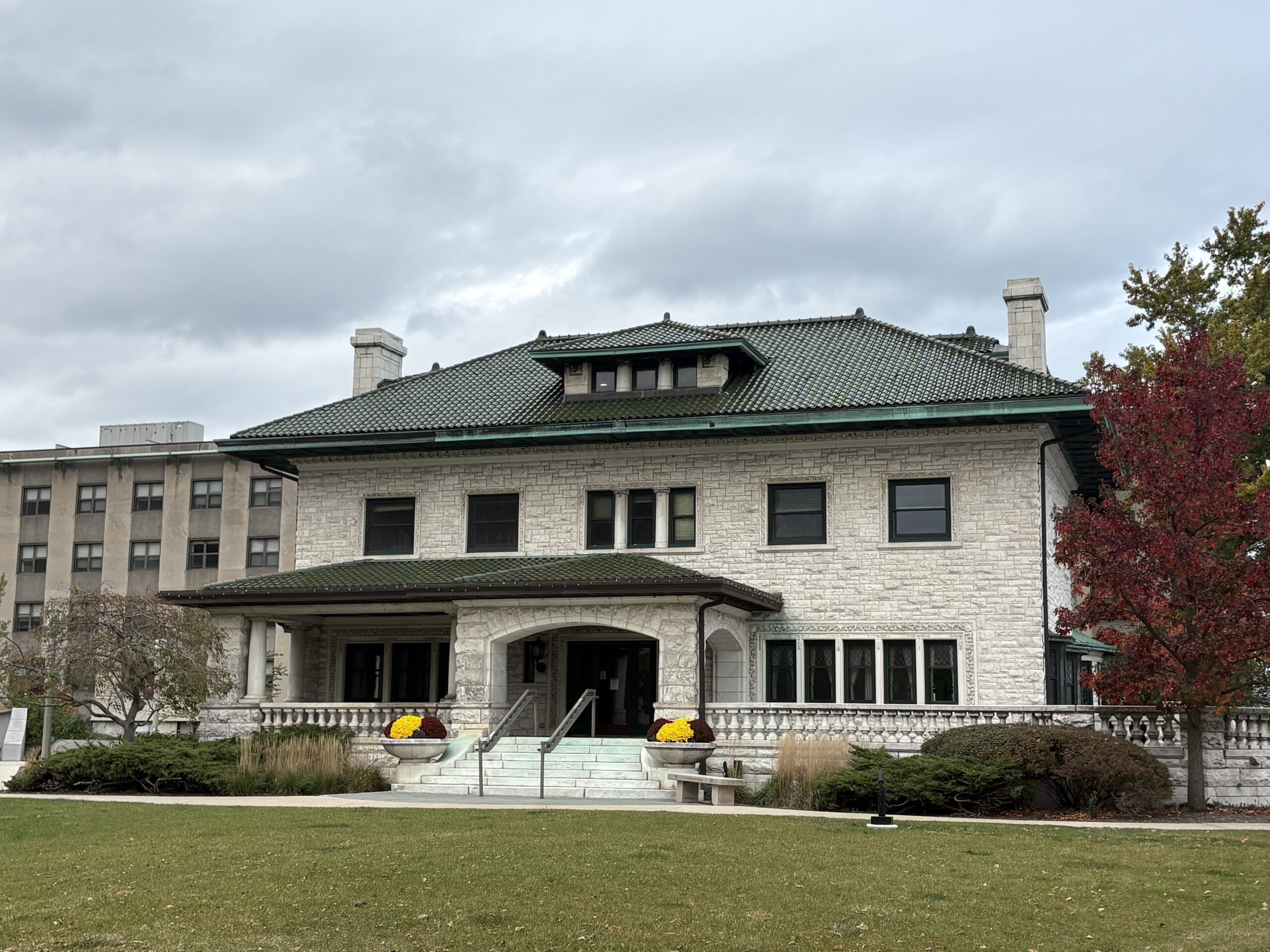
Effective this January, current professor and Core Curriculum director Dana Garbarski will take over the role of director for the Gannon Center for Women and Leadership after Gabrielle Buckley left the position in spring 2026.
Garbarski serves as a professor in Loyola’s sociology department and has been the director for the University Core Curriculum for six years. Despite her entrenchment with Loyola administration, Garbarski said she’s familiar with the Gannon Center and its work, having been an assistant professor for the center from 2018-2020.
“Coming back to the center feels like coming home,” Garbarski said. “I learned so many things from so many women in leadership. They really broke the mold of what it looks like to be a leader.”
Garbarski said she supports the mission of the Gannon Center and wants to contribute to it throughout her tenure as director.
The Gannon Center, established in 1991, is a community centered on fostering leadership, scholarship and collective action among women at Loyola, according to its website. The center is a chapter of the National Organization for Women Scholars.
Gannon’s creation was meant to preserve the legacy of Mundelein College, the women’s college that merged with Loyola after closing its doors in 1991 following 61 years of operation.
“We’re focused on making sure that the Gannon Scholars Program embodies that concrete legacy of the Mundelein alumnae,” Garbarski said.
The Gannon Scholars Program admits 10 first-year students each year who will commit to representing the center as a whole throughout their four years at Loyola. 40 students make up the program.
Assistant Director of Leadership Formation Rebecca Valeriano-Flores said she thinks hiring a permanent director will help curb high turnover rates in the department.
“I’m relieved to have strong leadership,” she said. “We know that Dr. Garbarski is in it for the long run. Even through the transition period, I feel comfortable knowing that she’s here to stay.”
With more staff planning to stay in the department, Valeriano-Flores said issues with staffing consistency will become less of a concern. She also said she plans on staying in the department long term, and that a large part of the program’s mission centers on consistently being there for students by promoting leadership and personal growth.
“I’m here for my students,” Valeriano-Flores said. “I want to see them through from their first day until graduation.Having a strong foundation of staff who plan on staying in the long run makes me feel confident that I can do this.”
Beginning their search in December 2025, Valeriano-Flores said the department focused on finding a new director internally who had experience in educating.
“We were looking for a Loyola faculty member who already had teaching and research experience,” she said. “We also wanted someone who has a vision for the future of Gannon, as well as an understanding of the history of Mundelein College. I believe Dr. Garbarski meets these desires well.”
Valeriano-Flores said the unique way the Gannon Center operates with its lack of traditional classes makes it essential for its director to have a vast understanding of education.
“There’s a lot more to it than programming,” she said. “We don’t teach classes in the sense that other departments do. Most of our work is focused on the tangible impact of educating students in a broader lens, including aspects like leadership training.”
Garbarski said she appreciated the care shown by her mentors during her time in graduate school. She said during that time, many women helped her both academically and personally to become a better educator.
“I spend a lot of time focused on student research,” she said. “I teach the capstone for the sociology major, helping students ask research questions, gather their own data, analyze it and write it — all within one semester.”
She said teaching students is one of her greatest passions, a commitment that aligns with the Gannon Center’s mission to educate, support and advocate for students.
Third-year Gannon scholar and sociology major Hannah Schmidt said while she’s excited about new leadership within the program, she’s also apprehensive.
“I think a lot of us are skeptical of a new member of the administration in general,” Schmidt said. “A key pillar of our program has historically been social justice. The social justice mission of Gannon and its leadership have never really jived well.”
She said that in the past, leadership took a blind eye to the social justice issues the Gannon Scholars’ mission is committed to addressing. Schmidt said that while the center claims to follow this mission, many scholars feel their needs aren’t being met in this regard.
“Coming into the Gannon Scholars program, a lot of us had the expectation that we would have an engaged community that focused on social justice topics,” she said. “Internally, a lot of us have felt disappointed in our experience with these promises not being met.”
Schmidt also highlighted how some minorities in the program haven’t felt the support the center’s advocacy promises.
“A lot of trans, genderqueer or Gannons of color have faced microaggressions that have gone unchecked,” she said. “Administration, in the past, has almost served as a roadblock for fostering productive dialogue and holding ourselves accountable.”
Second-year anthropology and English major Avaya Hall mentioned the turmoil within the program, specifically the high staff turnover rate for the program manager position. They said this raises questions for them and other members, as they feel they don’t have a purpose to fulfill.
“There’s a lot of tension when it comes to Gannons of color feeling underrepresented, especially me as a Black Gannon,” Hall said. “I’ve had to raise a lot of issues with the fact that they are questioning whether they should bring men into this program that is historically for and by women, when they still can’t accept more than one or two Black girls per class.”
During their first year as a Gannon, Hall said the program conducted presentations on intersectionality, such as a presentation on homelessness in Chicago.
“We had a lot of those topics that were introduced to us, so we could figure out how to be the best leaders,” Hall said. “But now we’re so focused on this very white male-centered leadership development that we don’t do any of the social justice and service aspects.”
When focusing on her future position, Garbarski said she wants to focus on supporting not only the students who are in the scholars program, but also the faculty and staff who also make up the center as a whole.
“Ensuring smooth operations of both our programming as well as making sure that our finances are aligned is important to me, as is telling the story of the Gannon Center,” Garbarski said. “Not only is the legacy of the Gannon Center important to highlight, but also what our students are doing, what our faculty are doing and our different initiatives and programs.”
Schmidt said when the scholars met with Garbarski for the first time, she emphasized her goal to advocate for the students.
“We met with Dr. Garbarski recently, and I went in with my guard up,” Schmidt said. “Honestly, I appreciated that she seemed genuine and transparent. This is not a quality that I anticipate within our leadership, so it was a nice surprise.”
After meeting with Garbarski, Schmidt said many scholars felt more seen by her than recent leadership, though she still remains somewhat skeptical of trusting a new director.
“If she prioritizes us Gannons and allows us to shape our community the way that we want it to be, all while upholding our social justice pillar, then I think she’ll get more engagement from us in the program,” Schmidt said.
Hall also said they’re excited to see how Garbarski “puts [Gannons] on the map.”
“I believe in this program, and I believe it’s going to do well no matter what,” Hall said. “We have such intelligent, passionate people in this program that do want to better not only our university or our city, but the world in general.”