Mona Fastvold’s musical drama shakes understanding of the Shaker Movement.




Content warning: sexual violence, domestic abuse, eating disorders, nudity and physical assault.
In the beginning, there was the Word — and in “The Testament of Ann Lee,” the Word doesn’t descend quietly.
The Word — the truth that the Second Coming of Christ is upon the world — arrives sung, strained and embodied, carried by a woman whose authority the film refuses to justify or soften. Directed by Mona Fastvold, “The Testament of Ann Lee” isn’t interested in translating belief for a modern audience. Instead, the film examines what happens when Christ is not symbolic, not metaphorical and especially not male.
Ann Lee, the historical founder of the Shaker Movement, was proclaimed by her followers to be the female Christ. Fastvold’s film, released in theaters Jan. 23, doesn’t frame this as a provocation or a revision twist, rather, it accepts the premise outright.
The result is a film less concerned with belief itself than with authority — specifically, how authority functions when it occupies a female body enduring scrutiny, discipline and suspicion simply to exist.
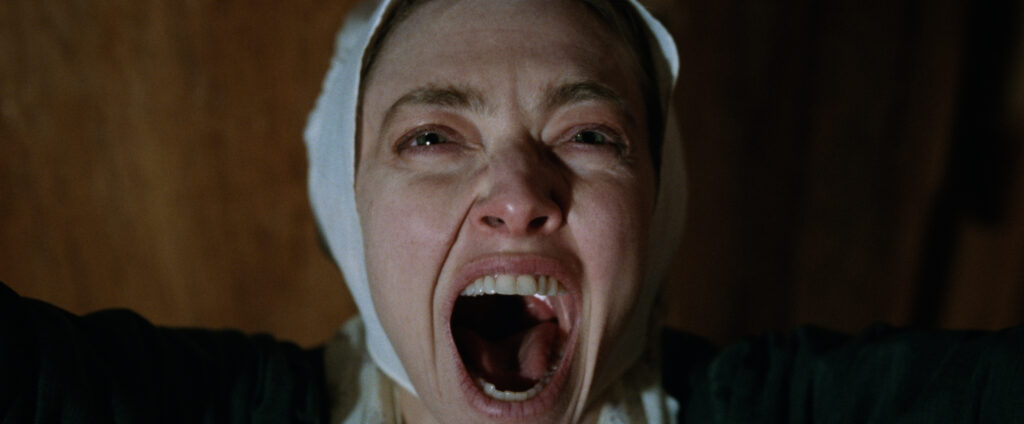
This female authority is embodied by Amanda Seyfried, whose performance is deliberately anti-charismatic. There are no moments of divine flourishing and no visible transcendence — instead, Seyfried’s Lee is quiet, physically contained and visibly worn down. Suffering from childhood trauma, witnessing rape, continuous abuse from her husband, brutal miscarriages and gut-wrenching beatings, Seyfried played this stoic leader with monastic restraint.
Seyfried’s portrayal allows suffering to remain unresolved, never converting pain into performance or sanctity.
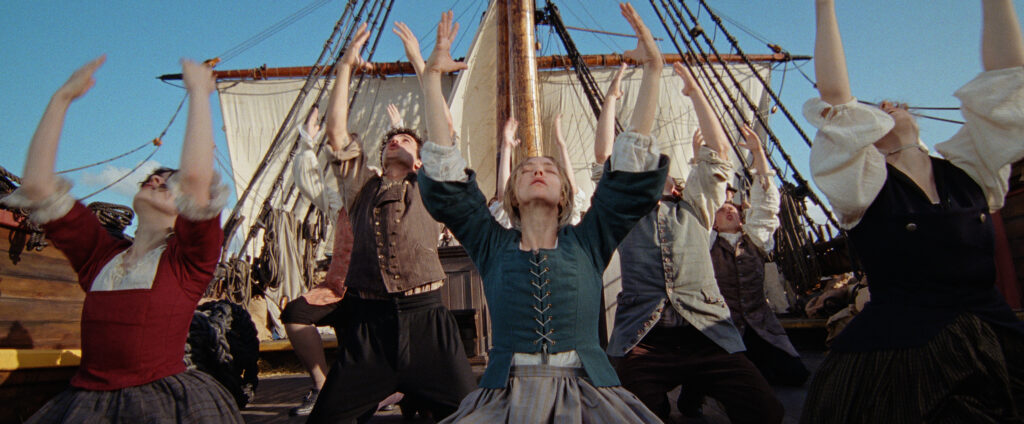
Fastvold strips away familiar cinematic markers of holiness, leaving Ann Lee’s authority exposed to doubt. Lighting remains low and natural, favoring candles, shadowed interiors and overcast skies. The camera lingers on bodies rather than faces, on hands working, feet moving and backs bending. Dance guides the story, rather than facial expressions.
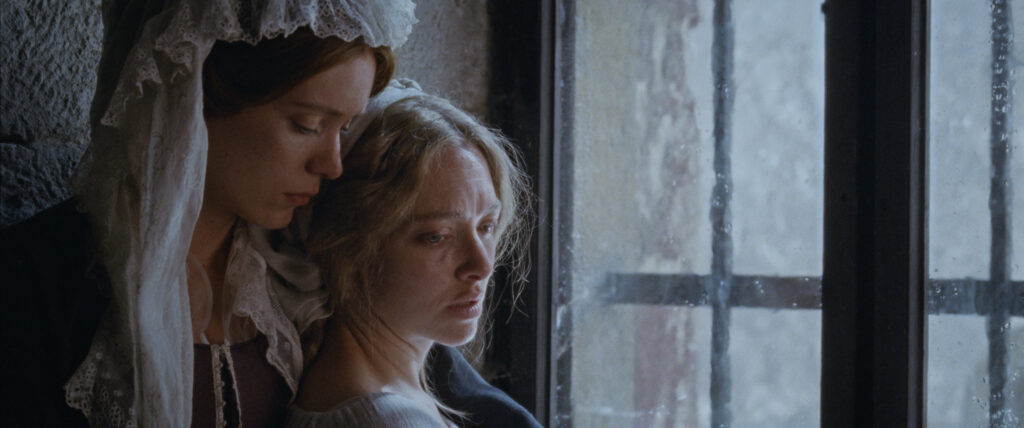
Lee is accused of heresy, imprisoned repeatedly and rumored to be a man in disguise. Fastvold includes these accusations without dramatic emphasis, treating it as an almost predictable response to a woman who rejects sex while commanding devotion. The dramatic emphasis lies on Lee’s love for community, connection with God through music and restraining her body willingly.
Sex and abstinence function as sites of control rather than moral or theological lessons. The Shaker’s commitment to celibacy is depicted without reverence or condemnation.
Lee’s articulation of the Shaker’s anti-sex doctrine emerges from her refusal to allow her body to be subject to violation — which she previously experienced multiple times from her husband. Desire didn’t disappear, rather it was displaced outwardly into bodily discipline, and inwardly into an introspective posture of vigilance and protection from men.
Throughout the film, physical and spiritual hunger reappear as a form of revelation. While in jail for performing the Shaker’s spiritual dances, Lee refuses to eat and becomes dangerously anorexic. Through her anemic withdrawal from bodily needs, she’s able to gain insight into the “hidden realm,” as she calls it. Fasting, frailty and the erosion of strength became further evidence she’s Christ in female form.
Music serves as the film’s guiding mechanism of power. Composed by Daniel Blumberg, the score draws from Shaker hymns but fractures them with raw percussions, bells and uneven rhythms. Seyfried’s ethereal singing voice anchors these moments without elevating them into performance. The music becomes the spiritual light into the lives of the Shakers and what brings them closer to God.
Yet for all its rigor, “The Testament of Ann Lee” isn’t built for consensus. The film offers little interpretive guidance and no effort to mediate its claims on the power of a woman in Christ’s image. Its divisive nature isn’t solely due to the film’s nudity and depiction of BDSM-inflicted discipline, but because “The Testament of Ann Lee” demands something more fundamental — a willingness to entertain Christ as female without any explanation.
This demand is the film’s problem and also its achievement. For viewers unwilling — or unable — to accept the premise, the film will feel alienating and even impenetrable. For those who do, its power lies precisely in its refusal to accommodate all thoughts. “The Testament of Ann Lee” doesn’t argue for its vision, it assumes it. In doing so, it exposes the limits of contemporary tolerance more sharply than any provocation could.
When approached with openness rather than suspicion, the film shifts its center of gravity and Lee emerges not as a figure to judge, but as a young girl shaped by deprivation. In that space, the impulse isn’t to condemn but forgive, and the belief at the film’s core begins to feel less threatening — a cult rendered not as danger, but as something quietly, unsettlingly worth dancing with.
“The Testament of Ann Lee” is in theaters now, and can be streamed on Hulu and Disney+.