As the internet looks back to 2016, The Phoenix reflected on what the paper was like 10 years ago.




Imagine a Loyola without a campus Target, where you can hit your Juul Bar freely on the quad, spin a PokéStop at de Nobili Hall and grab a Crunchwrap Supreme at the newly opened Taco Bell.
Ten years later as the 2016 facade fades and the Rio de Janeiro filter dissolves, Ramblers are left with a drastically less skinny jean-filled future. Past the motionless bodies of the mannequin challenge and the discarded Claire’s chokers, one publication has, albeit with multiple changes, withstood the decade — The Loyola Phoenix.
While 2016 may have been a turbulent time around the world, with consequential events like the U.S. Presidential Election and Brexit, there was growing tension on campus as well. In solidarity with the University of Missouri students, members of the newly minted Black Tribune — a students-of-color-run publication focused on social advocacy — refused outside media from taking photos of their demonstration, including The Phoenix.
“I do recall there being tension around The Phoenix and The Black Tribune, and questions as to whether representation should be broader, whether it was broad enough and how we were conducting coverage,” the 2015-2016 Editor in Chief of The Phoenix, Marrissa Boulanger, said.
Boulanger, who graduated in 2016, went on to explain she had multiple conversations with The Black Tribune leadership to quell an increasingly “adversarial relationship.”
Furthermore, the now Dallas-based attorney revealed 2016 wasn’t just a turning point in student journalism, but in the industry as a whole. Mass media, once dominated by professional print conglomerates, was now shifting into fast-produced, online content.
To keep the paper relevant, Boulanger had to balance the newly established, never-sleeping news cycle with the waning, less frantic offerings of traditional journalism.
“How do we push out a minimal amount of news that’s still accurate, that can still engage people and doesn’t make us irrelevant?” Boulanger said.
Her solution: to embrace the digital while finding new ways to make physical editions worth picking up.
She pushed for greater emphasis to be placed on the website, whether that be creating video content in addition to written stories or using social media like Instagram and Snapchat to reach a wider audience.
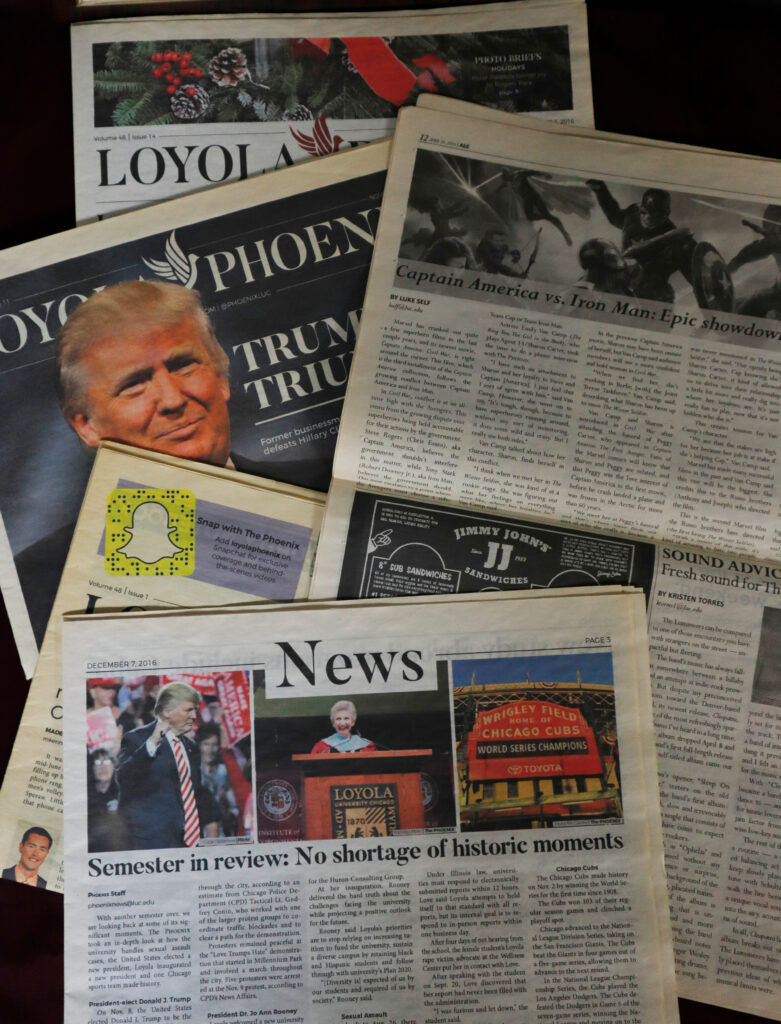
On the print side, Boulanger adopted a magazine-inspired look, combining bright visuals with substantial content.
“I think for young people who are not necessarily automatically attracted to reading a newspaper, pulling in something that’s more like a magazine felt more accessible,” Boulanger explained.
The paper’s skybox — the area above a newspaper’s logo — used to be adorned with colorful cutouts, giving readers a playful preview of what’s inside. Bright graphics transcended their confines, interacting with separate sections of the page. One edition even housed The Phoenix’s Snapcode.
In addition to enticing visuals, Boulanger urged her team to stretch the limits of what’s normally expected of a student publication. Encouraging such daring content, certain staff writer and columnist positions were paid — a far cry from the exclusive editors’ only payroll today.
“Being campus-centric and being RoPo-centric, you find yourself really relying on the same content a lot,” Boulanger said. “Our year, we really wanted to have different information out there.”
This led the paper to pursue more taboo and in-depth topics like housing in the North Side and summer side-hustles, located in the “Closer Look” section — a weekly investigative report. One such piece was an extensive report of drug use on campus, including interviews with student drug dealers and users alike.

At the heart of Boulanger’s leadership was a call for conversation — both within the paper and with its readers.
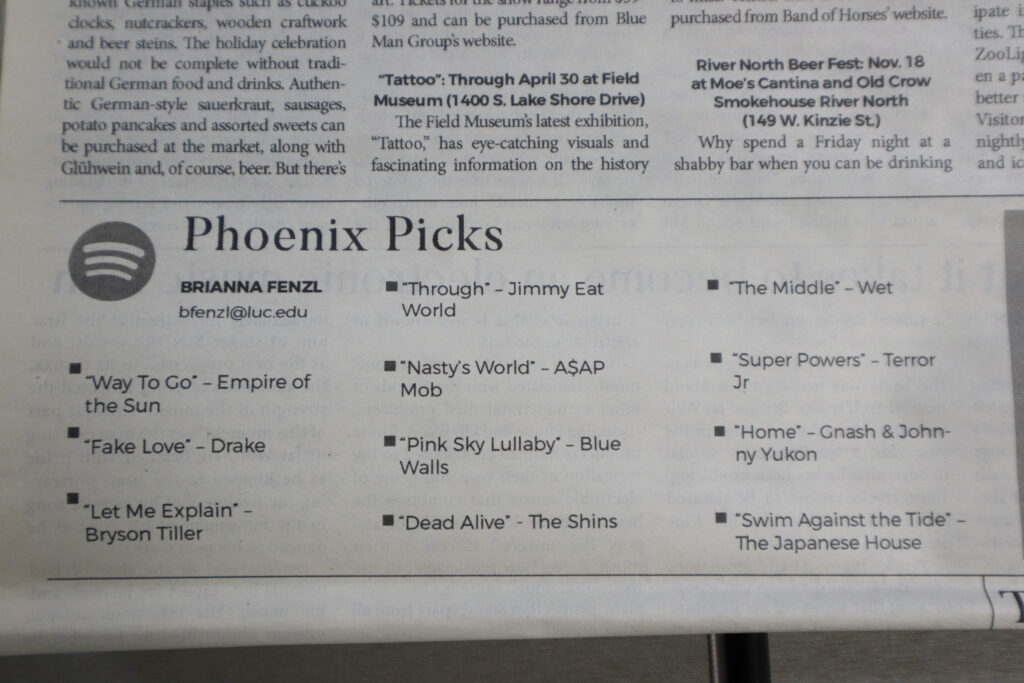
Along with the weekly staff editorial, they ran the “Rambler Response,” a repertoire of replies to the report from regular readers. “The People’s Issue” was a yearly special, dedicated to staff writers answering questions readers submitted. The website even had an ever-updating Spotify playlist with arts writers’ weekly picks.
However, Boulanger said her most vital tool in promoting a healthy discourse on campus was simply disagreeing.
“I always tried to be a contrarian,” Boulanger said. “I think it’s important to consider the other opinions on the other sides — even the tough topics.”
While the majority of the time she said she didn’t agree with the opposing view, by playing the devil’s advocate, the paper was able to represent the broad beliefs of the student body.
While the rolled ice cream may have melted and the Snapchat Spectacles turned obsolete, echoes of the 2016 Phoenix’s impact still live on.
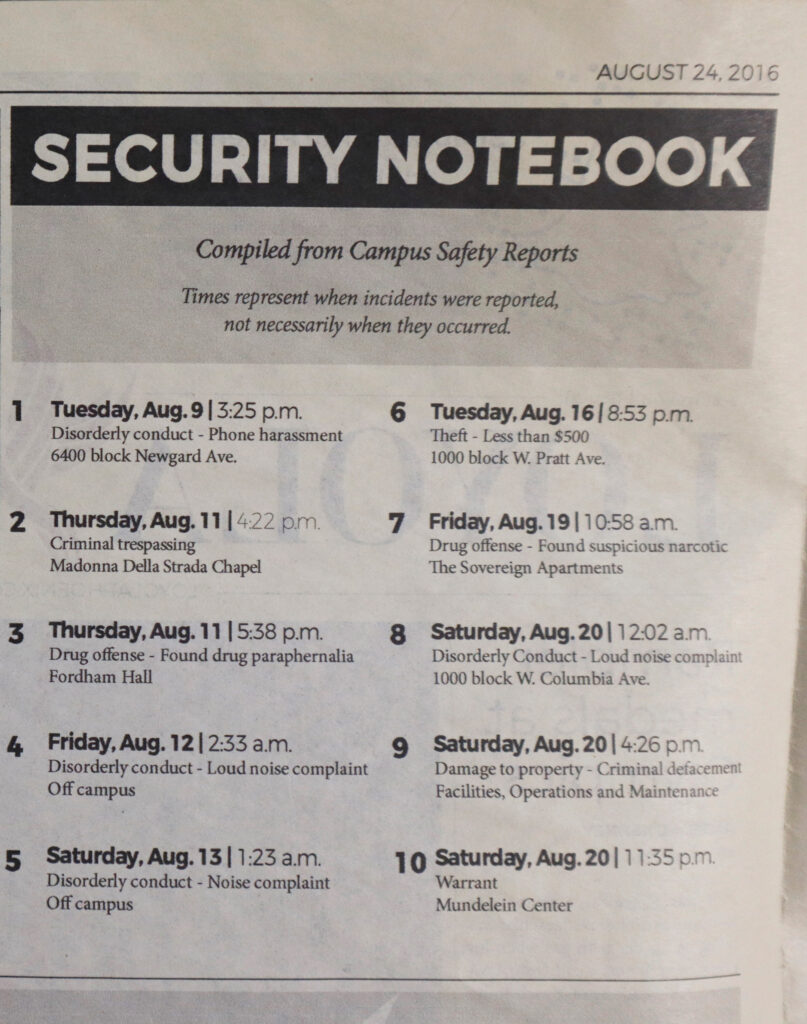
Today, The Phoenix has an interactive ICE tracker; back then, they published the “Security Notebook,” a log of high-profile Campus Safety Reports from the previous week, complete with their own annotated maps.
Ten years later, the university faces the same problems, from divisive student protest policies to first-year dorm overcrowding and endless qualms about Outlook — seriously, why can’t we just use Google?
Perhaps the most significant aspect that’s remained the same is the strong camaraderie between reporters and editors within The Phoenix, all thanks to an environment that values respect among writers and the freedom to break expectations as a student journalist.
When looking back on her time in the newsroom, Boulanger said she’s most grateful to have worked alongside a group of dedicated and passionate writers and editors.
“I think that the staff that I worked with was amazing,” Boulanger said. “I follow some of their work still, and it’s amazing to see where people have gone.”