The Rogers Park community has expressed disappointment toward Loyola administration for the planned demolition of iconic building Archie’s Cafe.



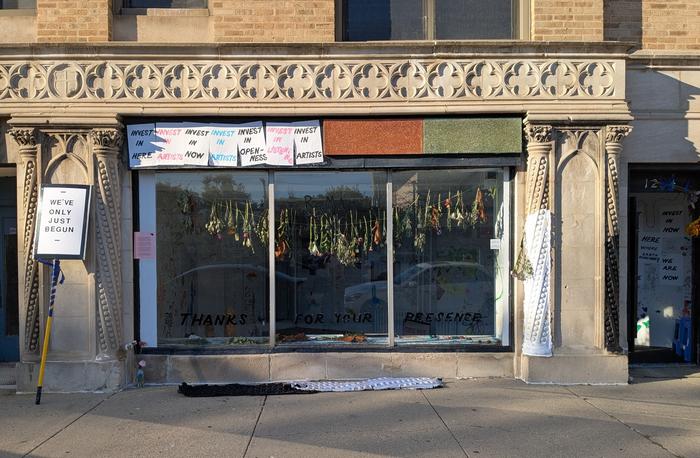
As Loyola officially started their demolition of 1234 W. Loyola Ave. 9 a.m. Feb. 18, several copies of an anonymous flyer were put up on the property renewing the demand for the university not to tear it down.
A copy of the flyer was first seen Jan. 5 by Roberta Schmatz, owner of the now closed Archie’s Cafe which was located in the building. By Feb. 6, another copy had been found and posted online. Two more copies could be seen just past 11 a.m. Feb. 9, which were both gone later in the evening.
The flyer was penned anonymously by “Your Rogers Park Neighbors” and addressed to Loyola’s administration, Board of Trustees, faculty and students. It made several demands of the university, including to not demolish the building, rent out the units inside for no more than 12% of their previous rent or sell it to a buyer willing to refurbish the building.
The flyer’s author didn’t include how they plan to enforce their requests of the university beyond claiming the demands are non-negotiable and ignoring them will bring about consequences for Loyola’s reputation.
“You have ignored pleas from local elected officials and residents who have petitioned you to reconsider, so we feel the time has come to stop pleading and start demanding,” the flyer reads.
Loyola acquired a demolition permit for 1234 W. Loyola Ave. Jan. 5, according to the City of Chicago. In an Instagram post Feb. 4, Alderwoman Maria Hadden (49th) said the university told her demolition would begin as soon as it was confirmed power had been cut off at the site. Power trucks were parked by the building on both Feb. 10 and 11, and by Feb.16 fencing was erected closing off the sidewalk in front of the building.
In December 2023, Loyola purchased 1234 Loyola Ave. with intent to demolish the building, which housed 35 residential units and several local businesses including Archie’s Cafe, Edge Art Gallery and Roman Susan Art Gallery, The Phoenix previously reported.
Since then, there’ve been several attempts to protect the building or convince the university not to destroy it, including a failed bid to grant the building landmark status, The Phoenix previously reported.
In her post, Hadden said she believed the university had other development options that would be potentially more beneficial to the community and would’ve brought Loyola’s real estate decisions more in line with the university’s anchor mission.
Illinois State Senator Mike Simmons told The Phoenix in March 2024 he was disappointed in Loyola and believed they were failing to uphold their own Jesuit mission.
Simmons reiterated his disappointment with the university in light of the impending demolition and said he was “outraged” at how the university is still moving ahead with their plans after years of advocacy and the expression of dissatisfaction from the Rogers Park community. He said it’s a “slap in the face” to the history of the building and to the neighborhood.
“We just expect better from our community institutions that are leaders in our communities,” Simmons said. “We expect them to stand with the community and do what they can to bring the community together and preserve our history, and that is just woefully not what’s happening here.”
In a Feb. 11 edition of the Loyola Community News newsletter, Associate Vice President of Neighborhood Initiatives Jennifer Clark wrote the university understands the issuing of the demolition permit has raised questions about the site, and how they recognize decisions related to their properties also affect the neighborhood.
Clark declined several requests to comment beyond this official statement.
Writer and producer Justin Shady lived down the street from the former 1234 W. Loyola Ave. for seven years before moving to West Rogers Park. He said when he first moved there in 2016 the street was vibrant with music, kids playing and church bells ringing. Now, he describes the block as “a fucking dead zone.”
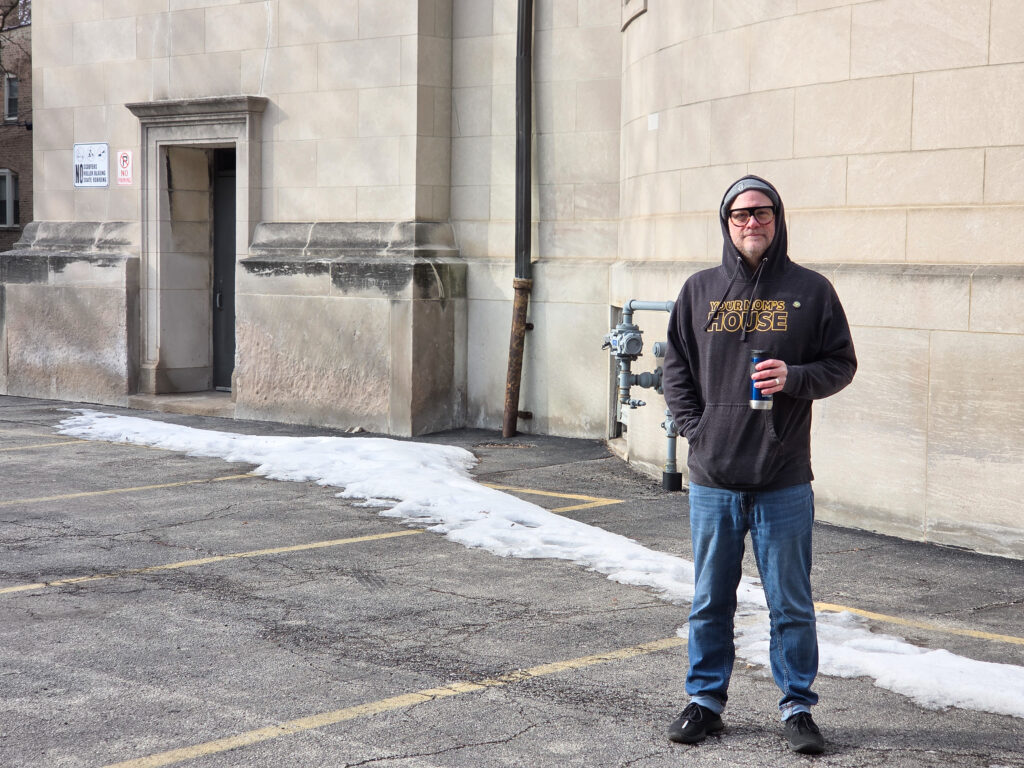
In 2018, the Chicago Waldorf School, a small K-12 institution of 350 students in 2014 according to DNAInfo, left 1300 W. Loyola Ave. and moved to its current location in Uptown. In 2021, the St. Ignatius parish closed, and its roughly one thousand parishioners were consolidated into different churches. The last business at 1234 W. Loyola Ave. to leave was the Roman Susan gallery which closed its doors in September of last year.
Archie’s owner Schmatz said the Waldorf school announced they were moving a few months after she first opened Archie’s Cafe eight years ago in February 2018 and said the street is like a ghost town now.
“You used to go down the block, and there were children playing out front and in the side yard, and a lot of the high schoolers had open campus so not only were they coming to Archie’s but there was just a lot more people and activity,” Schmatz said. “It was a lot of fun.”
President of the Rogers Park Chamber of Commerce Bill Morton said prices and rent in the neighborhood are on the rise to the point where it’s no longer affordable, alongside issues of legacy residents being kicked out to make room for higher earning residents.
After Loyola expressed interest in potentially purchasing the former Waldorf School building to build dorms in 2022, Shady hung up fliers protesting the building’s demolition and later in October 2024 had a short email exchange with Loyola President Mark Reed where Shady said the university doesn’t care about Rogers Park or its residents.
“Want to know what the residents — i.e. the real people — of Rogers Park really think of Loyola?” Shady wrote to Reed. “They think the school is run by opportunistic vultures, right on par with slumlord landlords who will do anything to squeeze an extra nickel out the people who make up the community they claim to be a part of, which is obviously false.”
In response, Reed replied that Loyola isn’t perfect but rejected Shady’s claims as unfair and inaccurate. Reed said they care a great deal about the communities where they’re located and look forward to future improvements “that balance and serve the university’s needs with that of the community.”
Senator Simmons also met with Reed last year and attempted to convince him to preserve the building. Simmons said the meeting was cordial, and he heard from an assistant several weeks later how the university appreciated his perspective but would not be able to support the landmarking.
A university spokesperson declined requests for comment from the president’s office beyond referring to the official statement from the Office of Neighborhood Initiatives.
“I remember sitting with him in his office,” Simmons said. “I remember a beautiful view of Lake Michigan right outside of his office, and I thought, ‘That’s a really pretty view of the lake with birds flying.’ And it just, I think it belies this institutional decision that they’re making to level the neighborhood, leaving us with empty lots.”
Infrastructure and Communications Coordinator Zach Joseph (49th) said the ward office meets quarterly with Loyola personnel, including Clark, to discuss their building permits and ideas for spaces in the ward. He believes he has a good relationship with Loyola. He said previous conversations have been about keeping the university’s anchor mission in mind and said they are trying to ensure Loyola stays a good neighbor while maintaining operations.
Both Schmatz and Nathan Abhalter-Smith, co-owner of Roman Susan Art Gallery, said they haven’t received direct communication from the university regarding the demolition. Simmons said communication has been “anemic,” and all said they found out about updates to the property through the news or social media.
In the newsletter sent by email around once or twice a month and not published elsewhere, Clark wrote there would be streetscape improvements at the location in the spring after the demolition, including new landscaping and updated fencing.
Current West Rogers Park resident Shady said he first took notice of Loyola’s real estate when walking his dog through the neighborhood. He got curious about the number of fenced-in, empty lots before eventually discovering they were university properties.
“The thing that makes me nuts is if you look at all these empty lots — which Archie’s is about to become an empty lot — they buy up these properties, they let them fall apart, they eventually demolish them as a favor to the neighborhood, to the residents, to the citizens,” Shady said. “Then they just sit there as fenced in gravel lots for literally over decades.”
Schmatz said several people had reached out to her after the news of the demolition permits broke and said she directed them towards Clark because she’s “powerless.” She said she hopes people did reach out but doubts it would make any difference.
“I know they’ve got their permits, and they’re going to do what they’re going to do,” Schmatz said. “They have all the money and power over there.”
In a follow-up email to The Phoenix, Joseph from the 49th Ward said the university legally purchased the building and as a private entity is allowed to move ahead with the development on their property.
Rogers Park Chamber President Morton said a community member first alerted him to the flyer Feb. 6 and took a picture of it for him to post online. He said he understands the sentiment behind it, but the wording was ridiculous and absolutely ineffective. Morton also said he thinks the flyer wasn’t solely referring to Archie’s but was the accumulation of a number of issues with Loyola’s real estate over the years.
The author of the letters is unknown as of Feb. 17.
Seven-year Rogers Park resident Shady said he just wants Loyola to stop “soft-committing” to development plans and follow through with what they say they’re going to do.
In September 2024, the university planned to establish temporary greenspaces anywhere a building was demolished with no immediate plans for construction, The Phoenix previously reported. For example, they said the former Centennial Forum location, which currently has no greenspace, would likely be replaced by a temporary one in November 2024.
“I would assume whoever is doing the flyering is somebody who owns property in the neighborhood and has seen this constant churn of buying property, demolishing property, doing nothing with property for decades and is just done,” Shady said. “And I get it man, like I get it.”
Morton and Shady both emphasized they aren’t against Loyola, with Morton approving of the replacement of Campion with a new nursing building. Shady specified he’s against the university’s actions in this specific area. Simmons said it’s not too late for Loyola to change paths.
“They could decide tomorrow to preserve this building and have this be an outcome that honors the history of the neighborhood and the people that live in it,” Simmons said. “But that’s not where we are.”