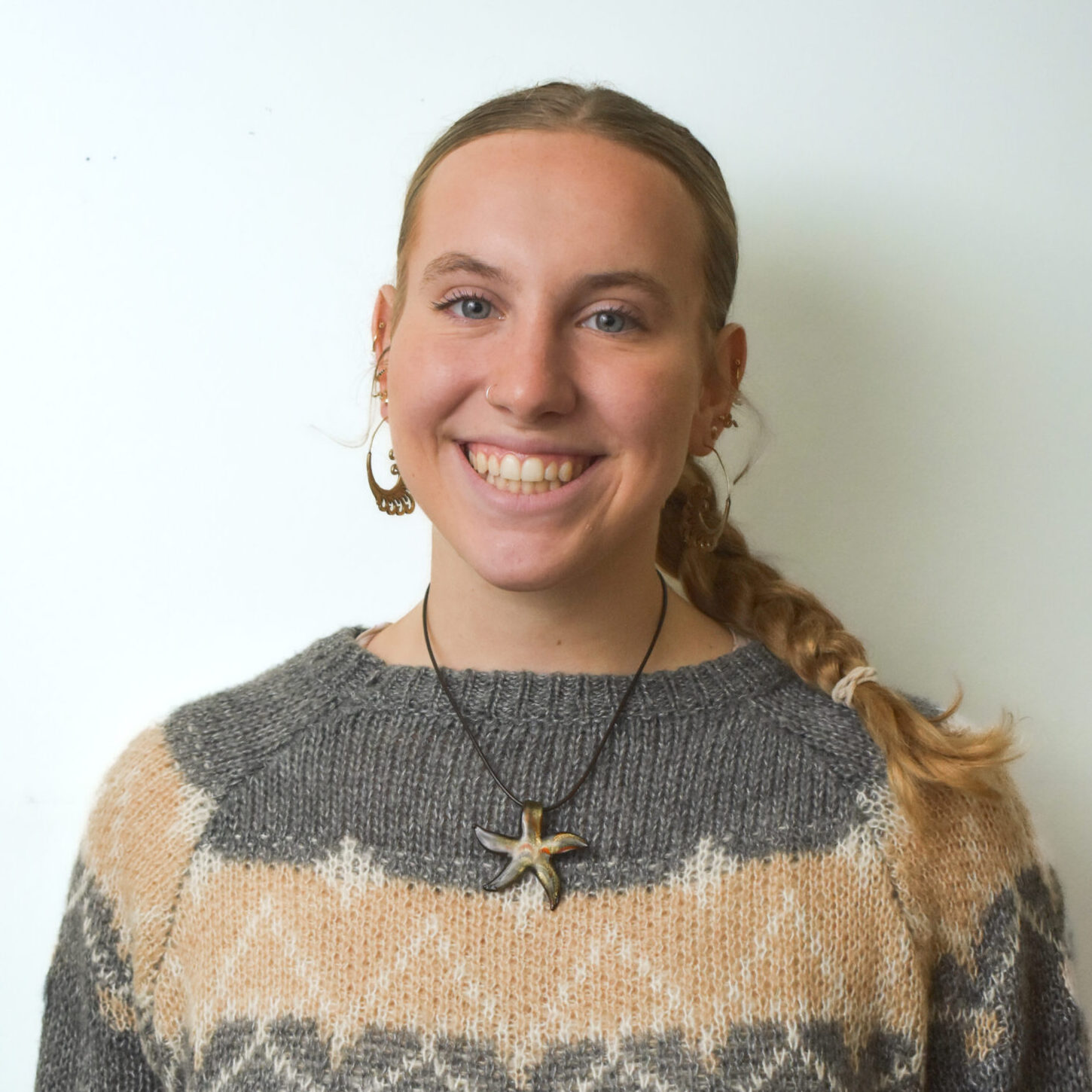
Third Act is an environmental advocacy group whose members are all over 60 years old.




Edgewater resident Peg Dublin is one of the many over-60-year-olds who make up environmental activist group Third Act, which mobilizes elder adults into action around the country. By combining wisdom from three big stages of life — youth, adulthood and the “third act,” or late adulthood and retirement, the members’ lifetimes worth of experience is what makes the group special, Dublin said.
Because her generation was growing up during the 1970s — often dubbed the “environmental decade” because of the significant amount of crucial environmental legislation passed — Dublin said many of Third Acts members have been involved in political organizing their entire lives
“Our generation is a generation that was so active in the ‘70s and ‘60s,” Dublin, 76, said. “So a lot of members have been out in the streets all their lives.”
“Since the Vietnam War,” her husband and fellow Third Act member, Richard Rutschman, 71, added.
The extensive organizing and protesting experience of its elderly members is what makes Third Act so unique, they said.
Third Act is based on two prongs: protecting the environment and protecting democracy, according to Dublin. For this reason, Dublin said the members’ history with social movements helps them organize masses of people against politicians and industry actors who are preventing forward motion in the climate movement. Recently, the group has advocated against banks investing in fossil fuels and has promoted clean energy and solar power in demonstrations.
The group was started by environmental activist and author Bill McKibben in 2021 and has a national network of activists with smaller chapters spread out across the country in about 30 states and cities.
In Illinois, the Edgewater and Rogers Park neighborhoods have more members than any other locality in the state with around 80, according to Dublin, the founder of the Illinois chapter.
McKibben, who wrote the 1989 book “The End of Nature” which brought the idea of global warming to a general audience, said targeting people over 60 years old is crucial because older adults are both numerous — with over 60 million in the United States — and vote in high numbers. McKibben is also the leader of well-known international climate campaign group 350.org, which fights the climate crisis by advocating for the end of fossil fuel use and a transition to renewable energy.
“Your first act, I think, is your youth, through college; then there’s the long second act, of career and raising family, which often means little time for civic engagement,” McKibben wrote in an email to The Phoenix. “After that, the Third Act allows you time to use the skills you’ve built up over those decades to improve the legacy your generation can [leave] behind.”
McKibben said many Third Act members, like Dublin and Rutschman, saw the high points of the civil rights, environmental and peace movements during their “first act” while they were high school and college aged. He said this should be proof of the possibility of change.
“We have this long history, and also we have more resources,” Dublin said. “And then, basically, we have the least to lose. So younger people have jobs, have kids. We have more time. We have more money.”
The Illinois chapter of Third Act started in 2022 in the midst of the COVID-19 pandemic, Dublin said. She and Rutschman hosted about 15 people in their backyard in August, purposefully outside to avoid the spread of the illness while trying to get the organization off the ground. The official chapter then launched in December 2022 with a Zoom call of about 60 people, including McKibben.
Dublin heard about Third Act the year prior at one of the national meetings she attended with her friend. Despite being a “veteran organizer,” Dublin said she was hoping somebody would start an Illinois group. Knowing his wife’s history of activism, Rutschman said he knew she’d be the right person for the job.
Dublin worked in nursing during her career, specifically doing international work in Ghana where she pushed for better pre-natal care. By training in the “group care” technique, many mothers could be helped at once by a midwife or a doctor.
Rutschman said in Ghana, his wife experienced how climate change was impacting tropical areas with significantly warmer temperatures.
Despite the heat, Rutschman said Dublin ran workshops without any air conditioning and often no electricity, meaning they couldn’t power fans. Dublin said the experience made her even more aware of the climate crisis and how it intersects with other social justice issues.
Like his wife, who participated in activism all through her life, Rutschman said he’s a life long environmentalist, and even studied environmental science in Kansas at Bethel College before it was a common major. In his career, he worked in education and was involved in several different environmental non-profits, including Latino Youth, Incorporated which he ran in Pilsen for several years.
Many Third Act members have been involved in grassroots organizing in the Edgewater and Rogers Park neighborhoods for much of their life.
Thomas Clark, a Loyola class of 1976 alumnus and Third Act member, has spent 35 years in Rogers Park since he moved back with his wife Jean Bryan and their children several years after he graduated.
While he was attending Loyola as a political science student, Clark said he was highly affected by the politics of the Vietnam War and the subsequent anti-war protests which erupted across the United States.
During the second semester of Clark’s sophomore year, the historical Kent State shooting occurred May 4, 1970, where the Ohio National Guard opened fire on unarmed student protesters, killing four students and leaving nine injured, the Associated Press reported. The students were protesting the U.S. bombing of neutral Cambodia during the Vietnam War.
“It was a big part of my radicalization,” Clark, 76, said.
After the shooting, Clark said he participated in strikes on Loyola’s campus against the war and the killing of students in peaceful protests. A year later, Clark was arrested for raiding the Evanston draft board with a few of his friends, The Phoenix previously reported in the April 30, 1971 issue of the paper.
Clark said many of the social justice values which he’s spent his life fighting for originated through Catholic Social Teaching, which was taught to him by his family and further cemented at Loyola. In his career, Clark worked with many non-profits, especially in the housing and community development business before he transitioned to working in media and journalism, focusing on social justice issues.
Clark said Third Act felt like an obvious organization to join to continue his lifetime of activism when he heard many of his neighbors were involved.
“I think it’s important to take a stand where there’s injustice and to use whatever means or tools are available or as one is able to speak up,” Clark said.
Rutschman said working with young people, especially Loyola students who are living in the neighborhood, is especially important to Third Act’s mission. He said because his generation is largely responsible for climate degradation, he believes they need to do the “heavy lifting” to solve the problem.
He said Third Act wants to collaborate with younger leaders as much as they can, oftentimes choosing to step back to allow young people to take leadership while still offering help any way they can, according to Rutschman.
“So if we get ourselves arrested, we don’t have a family that has to suffer or we don’t have to lose our career because of it,” Rutschman said. “That’s part of it. We can feel free to be as active as we want and then collaborate with these young people.”
Most recently, Third Act stationed themselves on the Chicago River beneath the Trump Tower during the March 28 No Kings day protest, holding a sign which read, “ELDERS FIGHTING FOR CL!MATE & DEMOCRACY.”
Clad in yellow, a group of people, including Dublin, joined together joyfully under the 20-foot-tall letters on the tower to “dance for democracy” with pre-planned choreography. The group performed for the crowd of protesters with smiles on their faces.
Dublin said the biggest problem she sees in mobilizing people to join the environmental movement is people feeling hopeless or like their actions can’t make a difference. The job of Third Act, she said, is to “activate people” and help them recognize their own power to make a difference.
“It’s such a really big and devastating issue,” Dublin said. “I think there’s this feeling that you can’t make a difference, that it’s too big, that too much has already been done.”