Sports editor Andi Revesz dives into her experiences with Loyola Athletics.



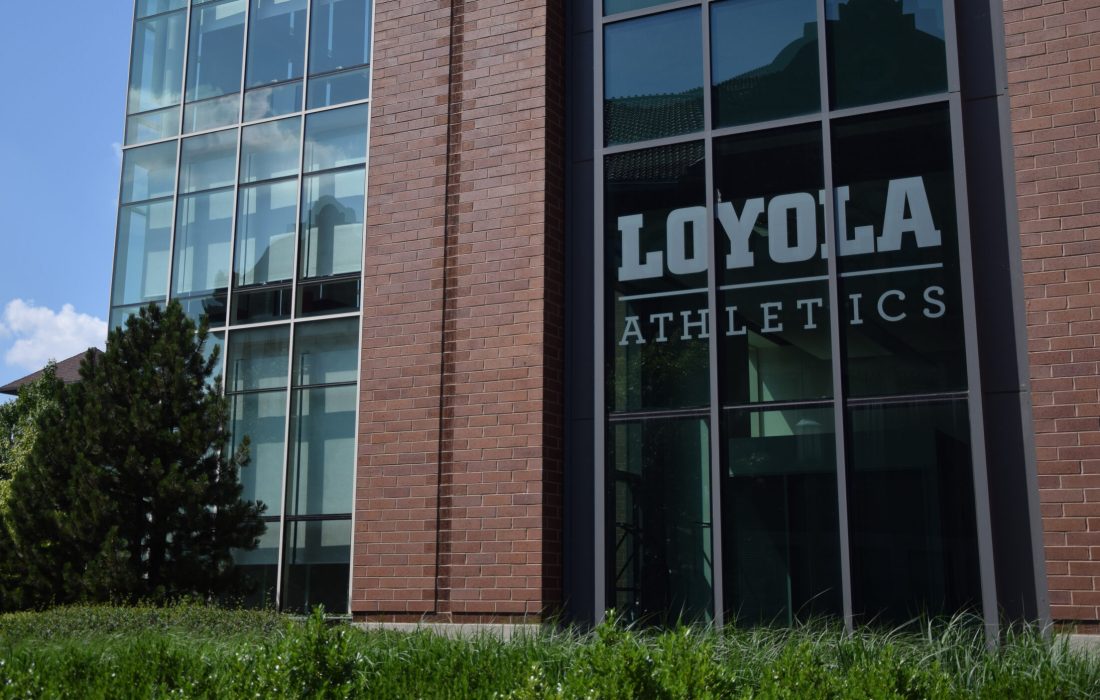
Throughout my time on the editorial staff of The Phoenix, I’ve strived to tell the stories of college student-athletes through features — my favorite kind of article to write. Telling the personal stories of these athletes, who can be “campus celebrities” to a multitude of readers, lets the Loyola community know student-athletes are more than that. They’re people and students, too.
The Phoenix’s lack of student-athlete features is no fault of my own. Every week, my writers and I pitch various stories on players who’ve made an impact on or off the court. This year, we had over 25 student-athlete features pitched and a good majority of those articles were written.
The biggest issue my writers and I face while writing features is Loyola’s Athletic Department.
When I first started writing for the paper, I was notified on how to properly contact student-athletes through the sport’s specific Sports Information Director (SID), listing my availability for a meeting and who I wanted to talk to.
The job of an SID is to coordinate media requests and player availability, helping journalists get the interviews they need for stories.
While Loyola Athletics has helped me and my writers during games, the same can’t be said about these in-depth personality features.
This year, I was declined interviews for a feature on men’s basketball’s third-year center Miles Rubin because head coach Drew Valentine had already discussed Rubin with other media outlets.
One of my writers was prevented from asking a women’s soccer player questions about her transferring to the university, following her head coach Jon Sandoval because athletics had “moved past the story.”
Another one of my writers was completely ghosted regarding a women’s golf player we wanted to feature in the paper, which has also happened to me a multitude of times.
The list goes on.
The treatment of The Phoenix from Loyola Athletics has been nothing short of disappointing. Preventing student journalists from writing stories by not providing interviews is childish for the department.
As my deputy editor, Nate Varda, puts it, as the sports section of the student newspaper, we give these student-athletes free publicity. Not only are we helping these athletes gain more knowledge on how to interact with the media, but we are also helping student journalists build their portfolio and be ready for the real world.
Men’s basketball is arguably the most valuable sport here at Loyola in regards to monetization. I’ve requested over a dozen interview requests for player features in my two years covering the sport and have only written two.
Normally on Tuesday nights when I’m in the newsroom figuring out what goes on each page for the sports section, game recaps take last priority, unless they’re a “Tuesday night special” — meaning the game happens that day.
The sole reason I do this is because readers can look up what happened during the game if they so please. Sadly, in most cases, the game happened a few days ago and becomes untimely by the time The Phoenix goes into print.
There’ve been numerous times where I’ve filled my few sports pages of The Phoenix with game recaps instead of the interesting stories about our athletes I would’ve liked to tell.
I believe features take players off the roster and make them people. So often, readers know little about who’s actually playing and can see them more as a number or a stat line than as a person.
Throughout the features I’ve written, I’ve learned a lot about the student-athletes here at Loyola.
Caleb Reese earned a scholarship with the men’s basketball program after the NCAA expanded roster sizes and has stayed at the university for all four years — an amazing feat in the transfer portal era of college basketball.
Sheldon Edwards Jr. can juggle, and after struggling with playing time, told the story of how religion helped him get out of funks.
Kira Chivers told me she was former women’s basketball’s head coach Allison Guth’s first recruit at Loyola and has trusted her leadership during her four-year stint.
My favorite story I’ve told is Alaina Abel’s, one of the first stories I wrote. Abel has alopecia and had recently shaved her head at the time the article was published. Talking with her over the phone in my first-year dorm room, I was inspired that she had the courage to share such an intimate detail about her life.
All of these stories, facts learned and articles written wouldn’t have been possible without intervention of Loyola Athletics, which is why when I was offered this job, the first thing I did was have a meeting with the Communications Department, asking what I could do to make things go over smoother.
This column isn’t an attack on Loyola Athletics, the SIDs, or anyone involved. It’s a critique on how I’ve been treated as a student journalist, and how I think the relationship between The Phoenix and the athletic department can be better.
SIDs shouldn’t have the power to tell my writers what they can and cannot write. If it’s an availability thing, that’s a whole other story. The issue arises if a narrative is trying to be pushed by Athletics or they have a distrust with The Phoenix. If that’s the case, it needs to be addressed.
There should be no other reason than availability that an interview gets declined. My writers and I shouldn’t have to send up to five emails asking about interviews for a feature.
I will be honest, there’s a reason I’m writing this now. This is the last official issue of The Phoenix for this school year and I’m graduating in May. After this goes out, I will no longer require any ties to Loyola Athletics.
I’ve been wanting to write this for a while now, and all three editorial staffs I’ve been a part of have agreed with me. There have been multiple times where the staff has been in the newsroom and we’ve floated the idea of writing a Staff Editorial about the decline in athlete features running in the paper, and how our coverage has been impacted by this.
Each time the department prevents a story from happening and I get upset, I get asked why I don’t push back against the department’s gatekeeping. The real reason is because athletics has the power to cut The Phoenix off completely based on something I say.
Loyola Athletics is how my writers and I get our information. It’s how we conduct interviews and write stories. Our relationship is key for coverage for this newspaper.
I worried that by speaking up, the already frustrating relationship The Phoenix has had with Loyola Athletics for years would be further strained.
Now, as I prepare to graduate and pass the sports section of the paper onto a new student journalist, I hope these struggles will not be inherited as well.
Loyola Athletics has the ability to change this. I hope they do.