The ASL Program’s director and sole instructor of courses could be replaced for the next academic year.



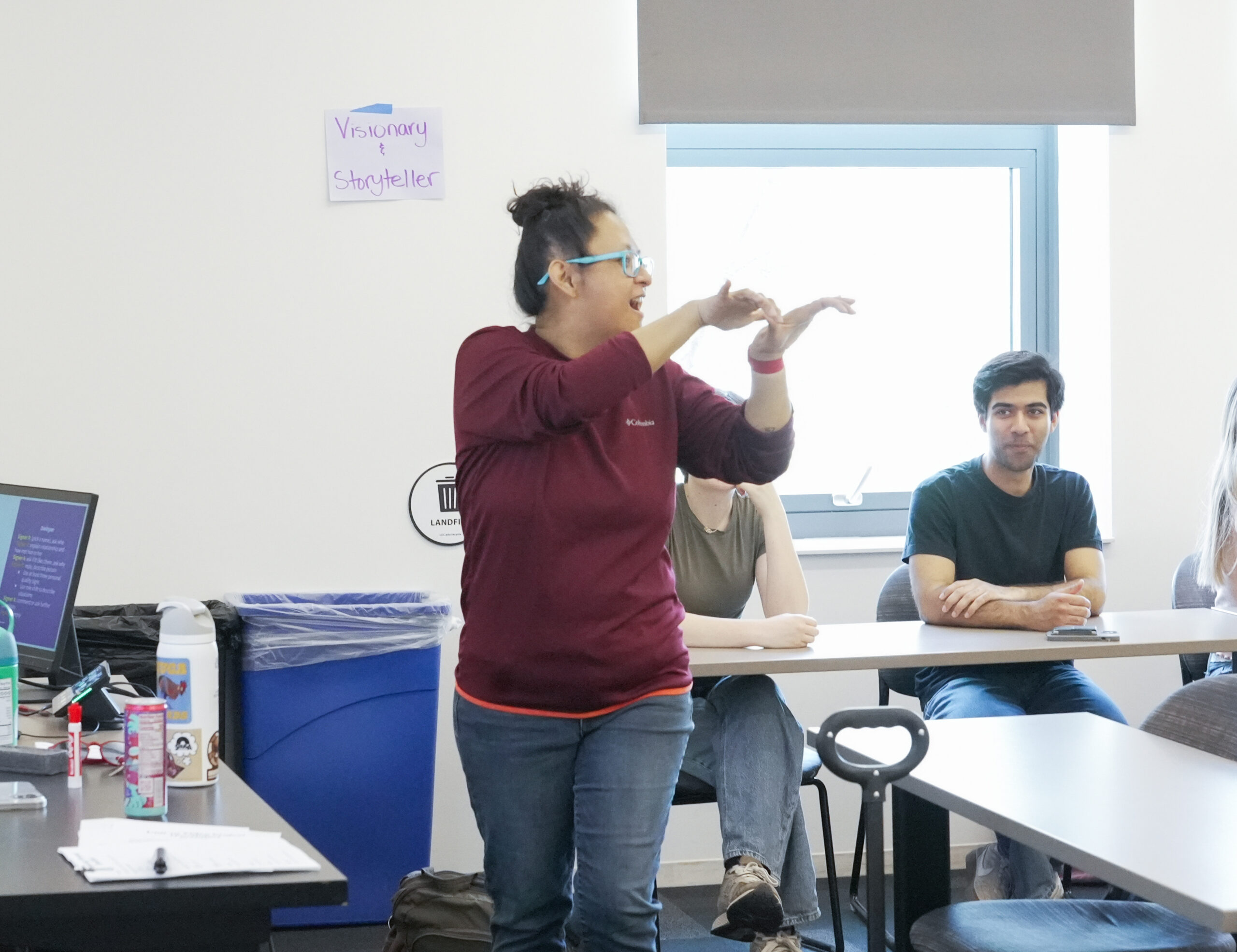
When students in Loyola’s American Sign Language (ASL) classes learned their instructor’s job may be at risk, shock filled the classroom. Then came tears.
Malinda Tran, known simply as “Malinda” to students, serves as the program director in the ASL department. Tran is the face of the entire ASL program, teaching all four classes and course level from ASL 101 to ASL 104 by herself.
Over the past five years, three part-time and two full-time, Tran has built life-changing bonds with her students, where her ASL courses fill up quickly and leave students waiting semesters to get the chance to enroll.
The potential risk to Tran’s position reflects broader cuts seen across Loyola’s language department, The Phoenix reported.
After three years of having a one-year contract, Tran anticipated receiving a three-year contract — until two weeks ago. Tran said she was informed by her department chair her contract may not be renewed, and she’d therefore be replaced by another ASL instructor.
“For my one-year becoming a three-year contract, I didn’t really know the process of that,” Tran said. “I was just trying to check in with them and make sure we had everything and that everything was going to be okay. They said there wasn’t going to be any problems, and then they told me that it wasn’t going to be renewed. So that was kind of a surprise to me.”
From Tran’s understanding, the decision is tied to cost-cutting measures.
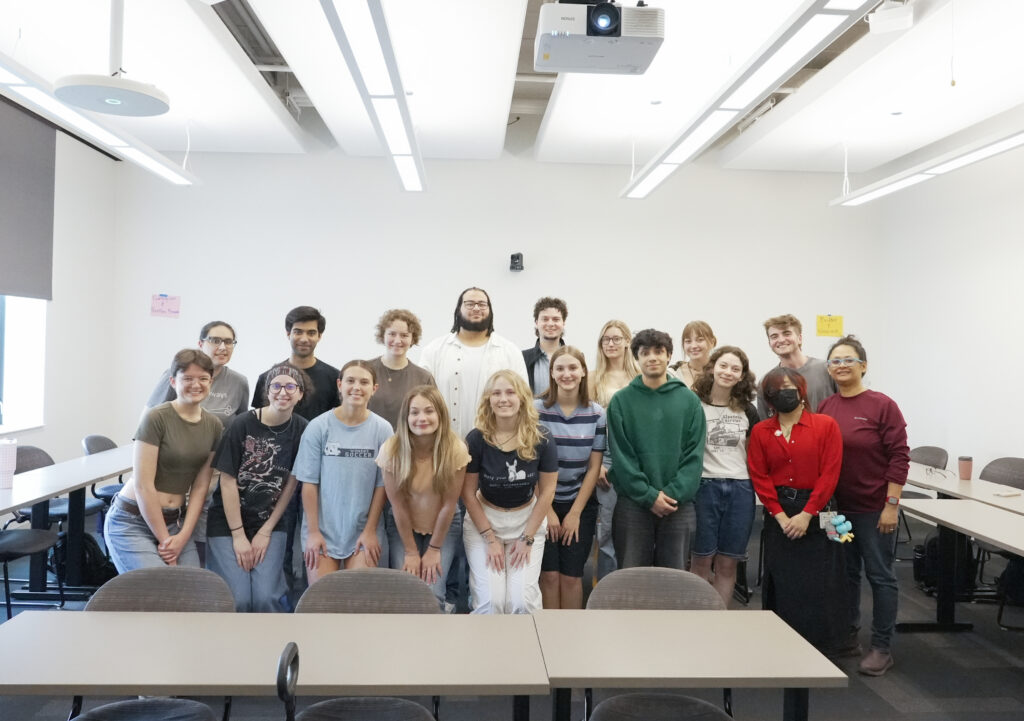
For students, the possibility of losing Tran means losing the person who transformed the ASL program and built the community within it. Fourth-year biology major Joseph Martini remembers exactly how quickly his connection formed with Tran.
“I took one class my junior year, and just had that instant connection with her,” Martini said. “I was with her every day in her office just chatting, and became fluent in ASL within a year which doesn’t happen typically.”
Martini said he’s completed all the offered ASL courses and is now a teaching assistant for Tran.
Following the news of Tran’s potential termination, Martini and around 20 other students drafted a 17-page proposal letter to the provost outlining shared experiences and the program’s impact on students.
“Loyola administrators have done a great job preaching inclusivity in theory; however, they have fallen behind within its application. Malinda Tran does what Loyola administration seems to have neglected: providing a fair, inclusive, and diverse education for all students,” the proposal letter stated.
Martini said he’s contacted over 15 members of the administration, all of whom directed him to Dean Douglas W. Woods. He’s yet to receive a response from the provost.
The university declined The Phoenix’s request for comment.
Martini said the lack of communication has been frustrating for him and other students.
“I’ve written several letters and emails, I’ve posted on the Loyola story and tagged them,” Martini said. “…They’ve said nothing to me.”
Despite the uncertainty surrounding her position, Tran said her focus has remained the same.
“I just want to teach,” Tran said.
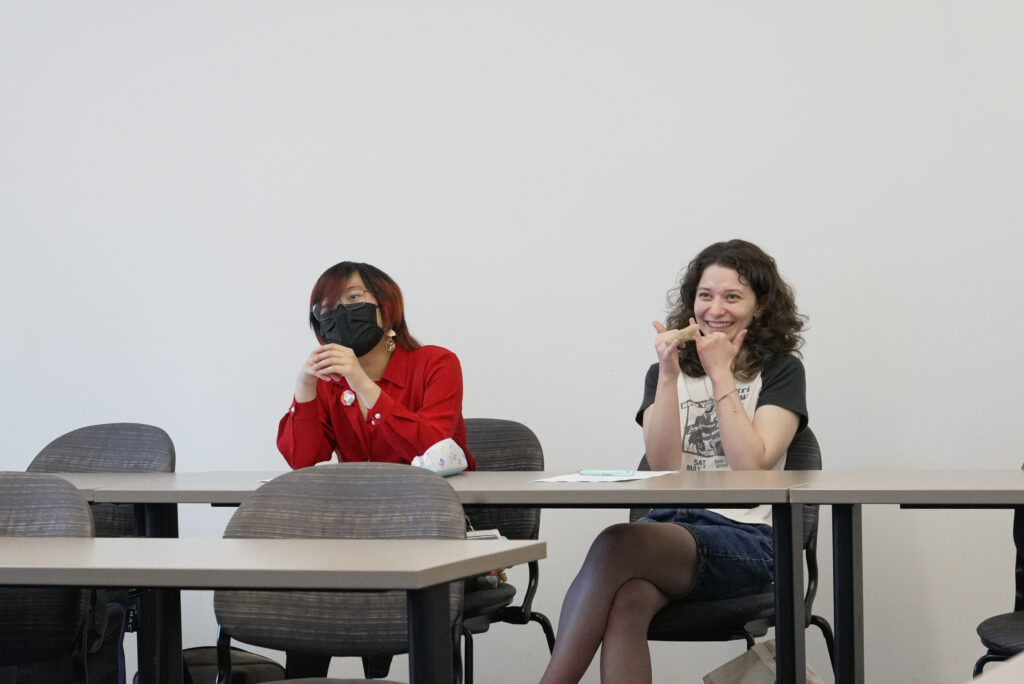
Fourth-year English major Jon Remedi and fourth-year psychology major Natalie Ivie helped write the letter, and both said they wanted to create a space where students could share a common experience: their love for Tran.
“I feel that it’s really important that we kind of share that experience because Loyola administration undermines everything that students and faculty like to say,” Remedi said. “We kind of provide an accessible route for all the students to say those things, and I think that’s the best way.”
Students like Martini mentioned university decisions which seem to contradict decisions made for potential program cuts. Martini pointed out the addition of the artificial intelligence minor, and said the contrast is frustrating.
“You’re going to get rid of a minor that has so much effect on people, literally changed my life,” Martini said. “I’ve changed my job, I’ve changed my career, I’ve met so many amazing deaf friends and mentors — and they want just to get rid of that for AI?”
Fourth-year cognitive behavioral science major Stephanie Danahey said she’s noticed the lack of care for the community, students and faculty Loyola has emphasized overall. The university has a “profit-based” approach which is apparent through demolition and construction plans.
“I think especially with contract negotiations, we are seeing just a complete disregard for faculty who have been here and built programs, like what Malinda has done for the entire ASL program and for students’ well-being,” Danahey said.
Fourth year psychology major Madison Mizon said the university becomes “greedy with their money” and takes it out on professors and students who don’t deserve it.
“When we’re going out and we’re engaging in deaf events, Malinda is equipping us with passion for learning, for engagement and cultural knowledge,” Mizon said. “We’re coming to these events as supporters, as learners and stewards at Loyola who are representing the community and working to rebuild these communications.”
For Martini, his experience in Tran’s ASL courses extended far beyond the classroom. He credited Tran’s teaching approach — which requires students to attend two deaf community events each semester — with reshaping his entire future.
“I went to 10 events and fell in love with the community,” Martini said. “I realized I could use my bio degree medically, and now I want to do medical interpreting.”
What started as a simple class course for Martini has now transformed into something more personal.
“Malinda’s not just a teacher, she’s now my mentor and one of my best friends,” Martini said.
As the only deaf instructor on campus, Tran said most of her conversations are with students.
“While other teachers can talk with other teachers, they can talk with their chair face to face — easy communication,” Tran said. “The communication is right there in front of your face. I don’t really have anything, so it takes time. I have to wait. I have to request an interpreter two weeks ahead.”
When Tran finally shared the news that her teaching position was in jeopardy, students were distraught at the thought of possibly losing a formative instructor and mentor.
ASL isn’t just English on the hands — it’s its own complete language with grammar structure and facial expressions that convey meaning, according to Martini.
Tran emphasized how misconceptions about deafness can shape how people view the language and its community.
“Deaf people are not sad because they are deaf,” Tran said, “Deaf people are sad because the world is not accommodating or willing to put in the work or effort with those deaf people.”
ASL courses challenge assumptions by introducing students to the culture within the deaf community, according to Tran.
Ivie, who has dyslexia, said ASL offered a different kind of learning experience for her, especially since written language poses a difficulty to her.
“ASL is kind of a natural experience for me,” Ivie said. “It just works really well for how my brain works.”
Ivie also mentioned how her father was diagnosed with cancer last year, and her professors weren’t considerate of her circumstances. A semester later, when two of Ivie’s friends were involved in motor vehicle accidents, Malinda was the only instructor who cared and was there for her.
“I couldn’t do assignments, couldn’t take quizzes,” Ivies said. “I was shaking — I was so scared to tell Malinda, but when I did, she was so understanding. She is overall just such a great person.”
Fourth-year psychology major Claire Hanawalt said her experience with ASL goes past the classroom, as she has deaf family members and helps children with autism.
“Knowing signs helps me with my family and work,” Hanawalt said. “Malinda has been really open, and actually knows my family member.”
Fourth-year drawing, painting and printmaking and visual communication double major Luna Mazin said Tran pushes students to think more deeply about the language and the community behind it.
“She helps us understand how the language developed, why it’s still here and why people should care about it,” Mazin said.
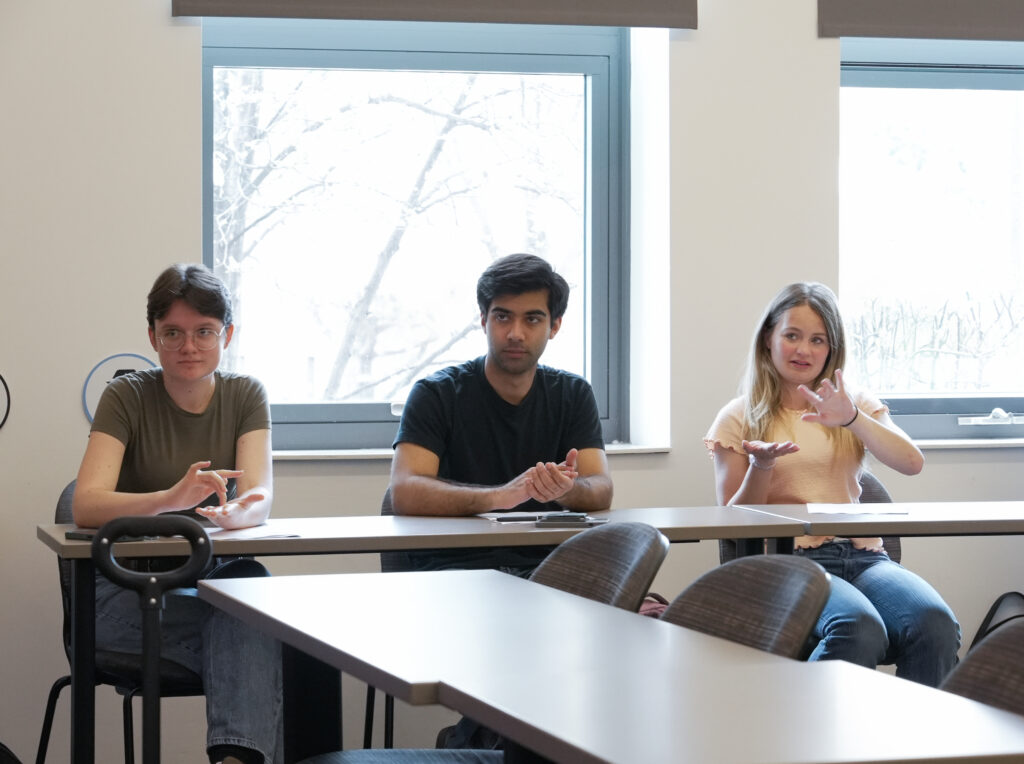
Tran’s role as a teacher serves as the bridge between communication and cultural understanding. Using ASL is often viewed as a disability, but in reality, it’s an independent way of communication , according to Tran.
“I think the benefit is that all students can communicate, regardless of if you’re hearing or deaf, it doesn’t really matter,” Tran said. “Communication is most important.”
Third-year social work and women’s and gender studies major Alyssa Suarez Tineo also mentioned how Tran’s dedication to students set her apart.
”I have struggled, it’s a really hard class, but I was like, ‘I gotta keep trying. I have to keep trying,’” Suarez Tineo said. “It’s a great class because she made it and perfected it.”
Within the letter to the Provost, students stated how Tran was nominated for the Edwin T. and Vivijeanne F. Sujack Award on three separate occasions within her first year of teaching.
“Even though Loyola has failed to understand these achievements — while deciding on the renewal of her contract — we students have not,” the letter stated.
Fourth-year biology major Jayne Bishop said she’s never met an instructor in her four years at Loyola who cares so much for the individual well-being of her students.
“She asks us every day at the beginning of class, ‘How are you?’” Bishop said. “Just that little bit of time just shows how much she acknowledges and cares about how we are doing in this very moment. It’s really special and extremely rare.”
Second-year public health major Jaiwei Chan said they’ve only met a few instructors who’ve believed in them and never given up on them.
“Malinda has been extremely kind to me and everyone else in this class, and she’s honestly changed the trajectory of my future for the better,” Chan said. “Even when I’m teaching as a [student instructor], I try to keep some of her teachings in mind so I can kind of relay that to my students.”
Last semester, fourth-year psychology major Abdullah Farrag said he was dealing with personal issues while balancing a double-time job, making it difficult for him to even open Sakai to complete assignments for his ASL course.
After class, he stayed to ask questions about class material. During this time, Tran checked in with him and asked how he was doing since he missed class that week.
“When I finally talked to her, she told me to focus on what was going on outside of class first,” Farrag said. “That genuine connection she’s building with students is something that we don’t see from other professors.”
Tran’s understanding and care for students is what defines the program for students like first-year communications major Cora Price.
“Malinda’s the type of teacher people make movies about,” Price said. “It’s just inspirational and clearly changed the entire classroom.”
Without Tran, the future within the ASL program is uncertain for students like Farrag and Chan.
“If they replace Malinda, I’m not taking ASL courses here, and I’m actively not going back to Loyola for grad school,” Farrag said. “I’m not doing anything with this university.”
Chan mentioned their previous frustrations with the university.
“If they take her away … I don’t know if I can last here anymore,” Chan said. “Genuinely, you can’t find someone like her anywhere else.”
Remedi said he acknowledges how universities and colleges are businesses, but he draws the line where its impacting education, the value and prestige of a university and when it contradicts the humanistic values of Loyola.
“I understand you want to make your money, but do it in the right way,” Remedi said. “Don’t do it this way.”
Students said they hope the university can offer them the transparency they’re looking for.
“When I leave this institution in 10 years, I’m not gonna remember the landscaping, what the hall looked like or how fast the elevators were — there’s pretty universities across the country,” Farrag said. “Im going to remember Malinda.”
Editor’s Note: Malinda Tran’s interview was interpreted by Joseph Martini.