Writer Stasia Holmes argues education centered around children should also involve education about mothers.



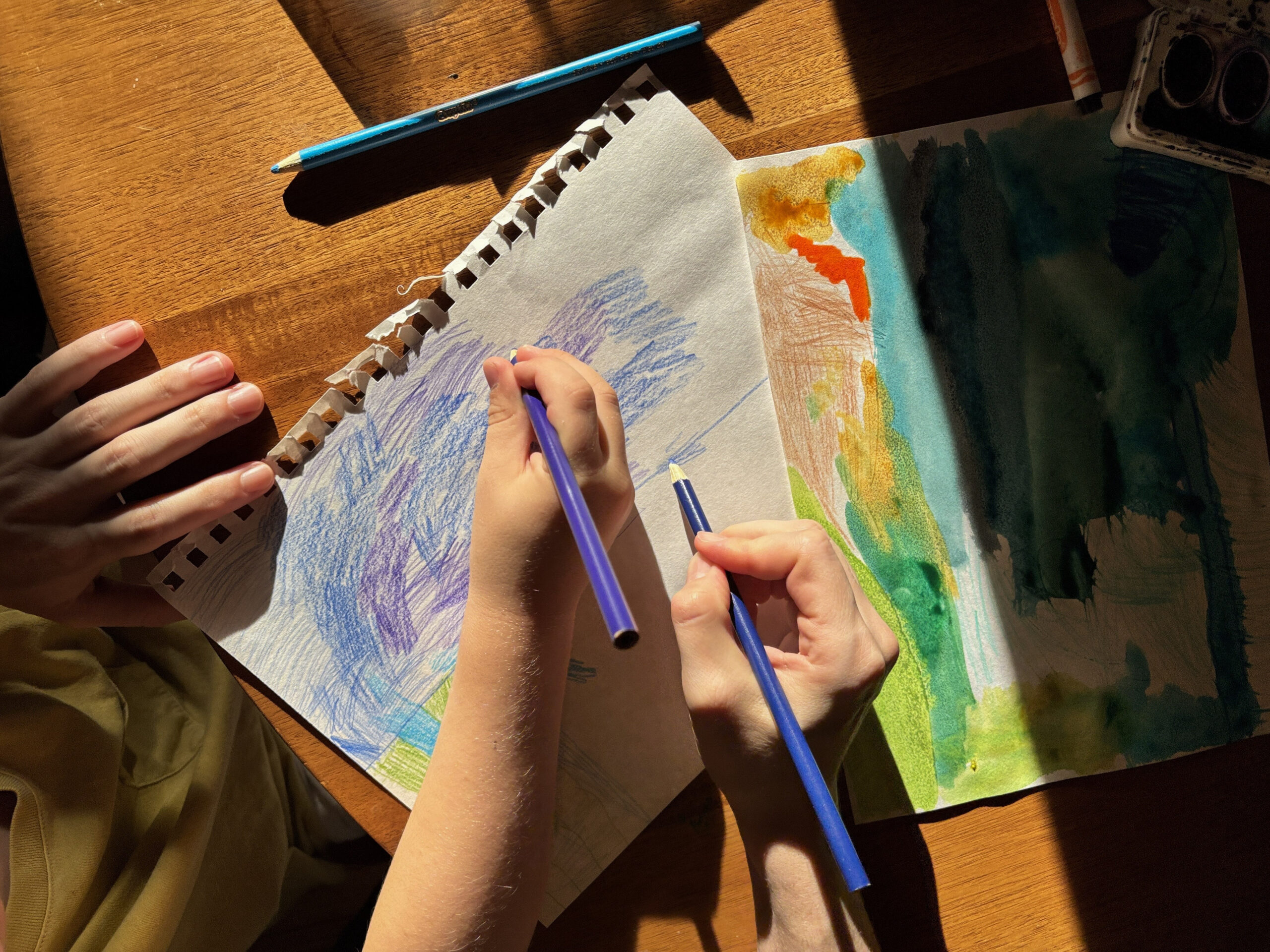
My son started kindergarten the very same day my classes started at Loyola this term.
He stuffed his feet into scuffed navy sneakers, securing the wide Velcro straps, while I slipped on black patent loafers. I myself know how to tie laces, but managing school mornings as a mother who is also a student means reclaiming a few minutes of time whenever I can.
The night before, to calm our nerves, we laid out our supplies — two backpacks, two baseball caps, two lunchboxes, two water bottles — smaller and larger versions of an entire back-to-school shopping list staged side by side in the already cramped entryway.
His CamelBak was cherry red with a black stripe at either end and a mouthpiece shaped like the tip of an enormous crayon. The Crayola Chug. Mine was a plain white cylinder that didn’t pretend to be anything other than what it was.
A new building, new teachers, new classmates. I didn’t hide I was nervous too. I was grateful to be able to point to these shared anxieties and offer presence positioned beside him, knowing it would be more easily felt than advice from above.
The position I hold within our bond carries particular directional weight. My way of being with him has the potential to shape his experience of an entire day, day after day, developing his sense of self. For him to be well, then, I need to be well.
With this recognition, treating mothers can be viewed as a pediatric intervention. A 2006 study published in the Journal of the American Medical Association followed children and adolescents whose mothers were being treated for depression. The kids whose mothers went into remission improved along with them; the kids whose mothers stayed depressed did not.
A recent meta-analysis pooling 47 randomized trials and more than 7,000 participants affirmed the same pattern: treating a mother’s depression was linked to modest but significant improvement in her child’s mental health, with even more positive effect on the relationship between them.
To be clear about what “modest” means, no single variable has been established as a direct cause of healthful or hindered development, because development unfolds over time through interrelated processes situated in the child’s environment.
What has been established is that treating mothers has significance as an intervention for children and is, in itself, a protective factor. This seems to make sense given mothers’ disproportionate influence within the dyad. The inverse is also true, with a range of risks to children when a mother’s illness is left untreated.
Understanding these relational consequences, the American Academy of Pediatrics (AAP) has since 2010 recommended pediatricians screen mothers for depression at well-child visits.
A national survey found 83% of pediatricians say they screen or watch in some form, but only 45% use a validated tool as specified in the guideline. Most pediatricians cite screening while failing to follow the formal directive. Those who don’t screen at all are five times more likely than those using a standardized method to say it isn’t their job.
The AAP’s own policy statement admits the failure extends beyond the initial assessment.
Even after a positive screen, most women are not evaluated further, and fewer than half who are diagnosed receive treatment — despite mental health conditions, including suicide, being the single leading cause of pregnancy-related deaths in the United States. The Centers for Disease Control and Prevention determined more than 4 in 5 of these deaths were preventable.
Neglecting to consider mothers in caring for their children continues across clinical and professional settings. When researchers trained early intervention staff — the therapists who treat infants and toddlers with developmental delays — to screen the mothers on their caseload, one office managed only 12 screenings out of 210 families.
When screening is a recommendation rather than a requirement, providers can’t be certain of their role or responsibility in facilitating the conversation.
Researchers who study infant and early childhood mental health name this problem explicitly: professionals who work with children and their caregivers commonly assume mental health concerns aren’t within their scope.
The pervasive dismissal of mothers’ mental health within professions focused on children’s care demands a shift in perspective and practice.
Students pursuing degrees in education, social work, psychology, nursing or medicine because they want to work with kids must see maternal health as an essential component of their education toward better outcomes for the children they plan to serve.
Professional training must treat children and mothers not as two distinct populations but as parts of a relational pair — an emphasis called the two-generational approach.
Earlier that morning, two generations approached the door of the apartment, leaving together.
On a break between classes, I ate an apple and a piece of string cheese. I tried to imagine my son sitting down to eat. I had packed us the exact same lunch, perhaps to help with this exercise.
Perhaps because I knew when we separated earlier I would spend the rest of the day trying to place him in my mind. But where? I didn’t know if he ate in his classroom, or in a cafeteria, whether anyone talked with him or he sat in silence.
I wondered if he’d noticed I’d already opened his string cheese a little, to save him the small embarrassment of having to ask a new teacher for help with the wrapper, and all on the first day of school.