Fly encounters are peaking as summer winds down, raising plenty of questions about why they’re suddenly everywhere.



As Labor Day weekend passed, and the beaches’ life guards wrapped up their official hours for the summer at 7 p.m. on Labor Day, people crowded the shore.
Beach days have become less appealing for third-year biology student Karoon Krikorian, whose encounters with biting flies have pushed her away from the shoreline and the outdoors altogether.
“My friends and I used to go on walks after class or at night when it was cooler, but now we don’t really do that anymore because we’re scared that we’re gonna get bit,” Krikorian said.
While Chicago has many species of biting flies, the stable fly’s a likely culprit, particularly as populations increase in late summer and early fall, according to the Illinois Department of Public Health (IDPH).
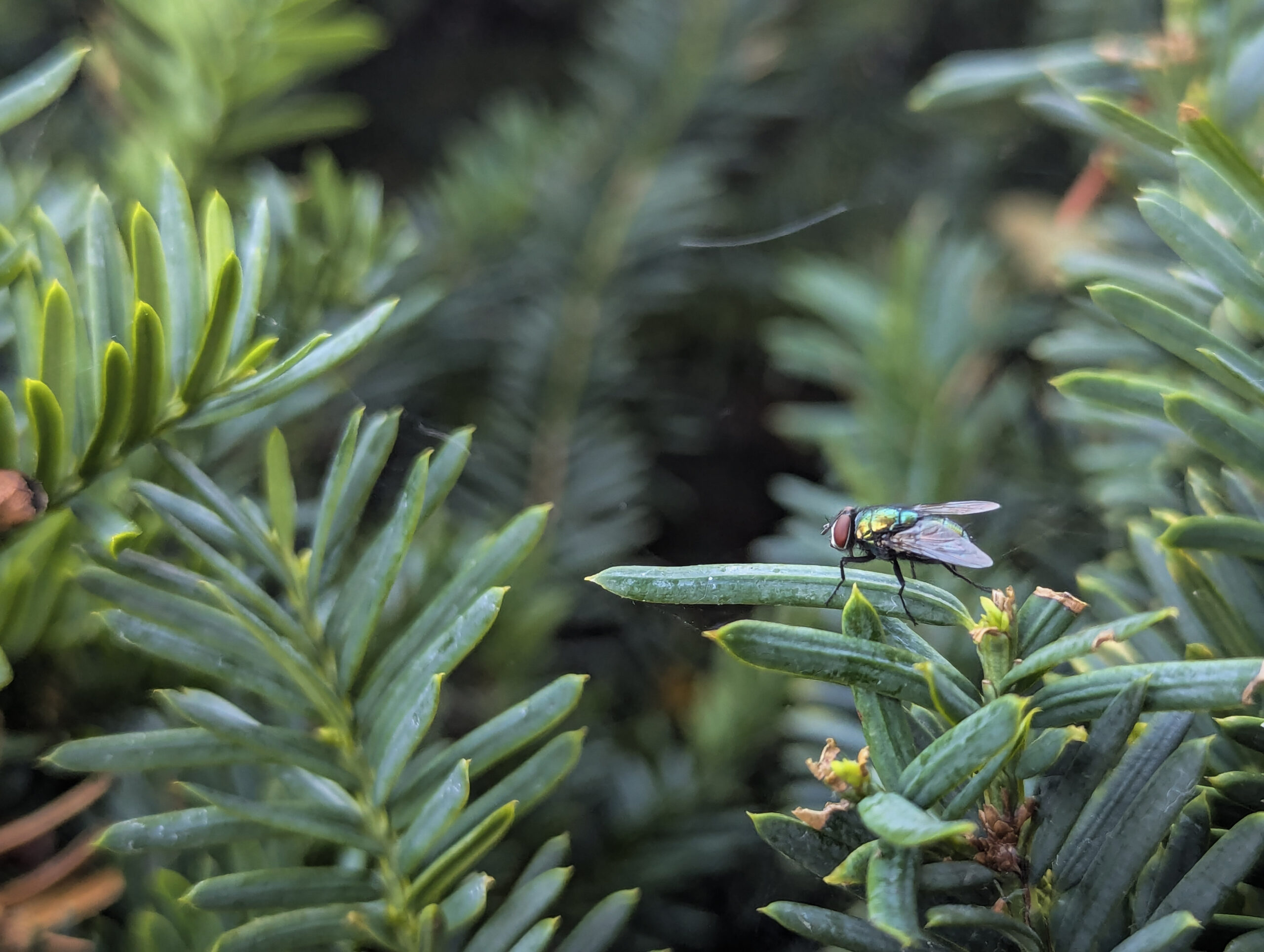
The stable fly resembles a common house fly, except for the elongated mouthpart beneath its head it uses to draw blood. Most bites occur in the early morning or late afternoon, typically targeting the lower legs and ankles, according to the IDPH.
The recent increase in stable flies may have less to do with Chicago itself than with what’s happening beyond the city.
Professor of Biology Martin Berg explained stable flies can be carried into Chicago by sporadic wind patterns.
“Most of the time around here, when we get stable flies, it’s when we get winds going east, because if you go inland, a lot of counties have a lot of agriculture, stables and rotting vegetation,” Berg said.
Unlike mosquitoes, where only females bite humans because they require blood for egg production, both male and female stable flies feed on blood. Berg said they need the protein simply to survive.
The flies also feed differently from mosquitoes, which may explain why their bites can be particularly painful.
“At the beach the other night, it was humid and buggy, so I thought it was a regular mosquito, but it hurt really bad,” Krikorian said.
Krikorian wasn’t the only student who acknowledged the different pain levels of a stable fly bite, as second-year public health student Sebastian Ruano recalled a fly biting him at Berger Park.
“I noticed a strangely large amount of flies, and then all of a sudden I felt a very painful bite,” Ruano said. “I was very confused by this until I saw another fly land on my leg and bite me again.”
Berg said stable flies use their mouthparts to pierce the skin and create a small wound, allowing blood to pool before they feed from it. This process can make their bites more painful than a typical mosquito bite.
The conditions this summer may have also helped stable fly populations thrive. Berg said the combination of high temperatures and frequent rain can create the warm, moist environments their young need to develop.
“Stable flies are not really aquatic, nor do they require water that much, other than for keeping the areas where they’re laying eggs and the eggs are hatching,” Berg said. “They need moist environments.”
Away from the lake, third-year nursing student and Chicago native Ruth Derbew has noticed a similar occurrence: more insects, and more of them in places she doesn’t usually expect.
“I have noticed so many bugs in the city, specifically wasps, and they’re always up in your face,” Derbew said. “I actually bought Off! spray for the first time in my entire life, and it was because of the bugs in Chicago.”
First-year political science student Olivia Tomasino said she’s noticed an unusual number of insects since arriving in Chicago.
“I didn’t get bit, but a ton of them landed on me while I was on my way to the chapel last week,” Tomasino said. “I’m not from the Midwest, so I assumed this was just a normal thing that happens here, and I’ve just been avoiding the lakefront until they go away.”
Despite concerns about biting insects, stable flies aren’t responsible for transmitting West Nile virus (WNV). The virus is primarily spread by mosquitoes, which become infected after feeding on infected birds and can then transmit the virus to people through subsequent bites, according to the Center for Disease Control and Prevention (CDC).
IDPH has observed WNV in 50 Illinois counties this year, and in 2025, WNV was found in 73 Illinois counties. There were a total of 150 human cases, with 10 deaths linked to the virus.
Stable flies can carry diseases, but Berg said their effects are generally more concerning for livestock than humans. Their bites can cause significant blood loss in cattle, horses and other farm animals, particularly when large numbers of flies are present.
“Stable flies do hold diseases,” Berg said. “Most of them don’t affect humans, but cattle, horses, cows and a lot of farm animals can have a pretty bad reaction to their bites. It’s not so much that stable flies are spreading disease, but the animals can actually bleed to death.”
The cooler temperatures may offer some relief. Berg said stable flies prefer warm conditions, which could explain why their numbers appeared to drop as temperatures began to cool.
Berg said the conditions that contributed to this year’s increase could become more significant in future years.
“If this is as bad of an El Niño as they think it’s going to be, next year could be pretty bad for a lot of biting insects, particularly once they’re associated with water or really moist areas,” Berg said.
Chicagoans may not have much more to do than wait for the weather to change.
In the meantime, Berg recommends covering up as much as possible when spending time outdoors. Stable flies are generally most active in the early morning and late afternoon, although he said this year he noticed them biting in the middle of the day too.
“Repellents will not really work, but they’ll some sort of make it less of a bother,” Berg said. “It’s basically light colored clothing and wearing clothes that cover everything.”
With stable flies preferring exposed skin, long pants and other protective clothing may be the most reliable defense.