Chicago was named the world’s most climate-resilient city, but ongoing local risks pose complications.



Chicago has faced a year of record breaking weather, including rainstorms, polar vortexes and wildfire smoke. Despite these challenges, research from a Singapore-based artificial intelligence company AlphaGeo named Chicago the most climate-resilient city in the world.
The study included 72 of the world’s largest cities and measured “resilience-adjusted risk,” which compares the physical climate risk a city faces with its adaptation and preparedness level. Chicago had the lowest residual risk among the cities studied.
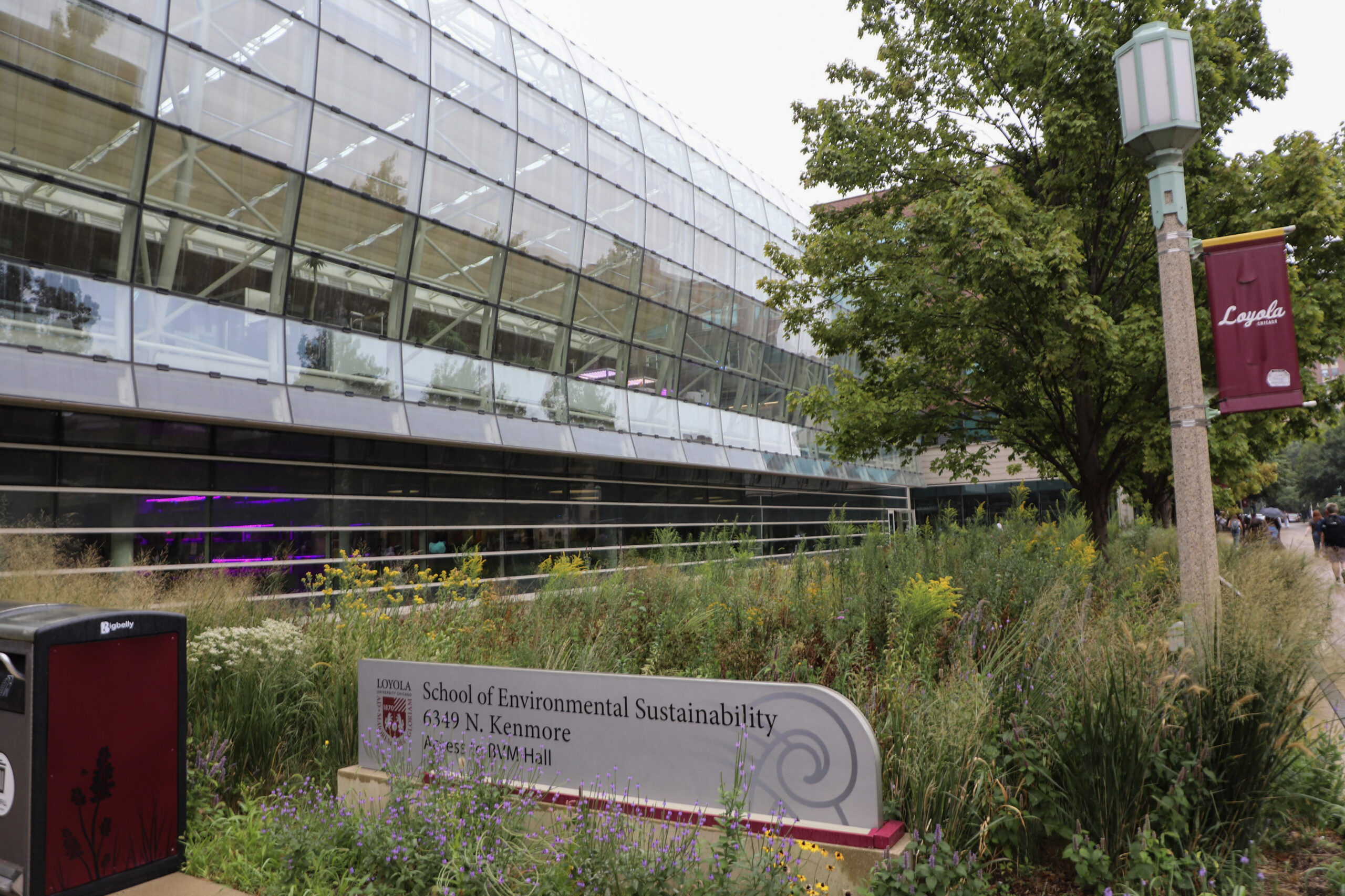
For some students at Loyola studying environmental science and related fields, Chicago’s recognition offers a closer look at how cities can prepare for a changing climate.
The Phoenix sent out a survey to professors in the School of Environmental Sustainability, who shared the form with their classes. Four questions were asked relating to concerns for the environment.
Eight students responded to the short answer questions. All students mentioned were environmental science majors.
Three students responded that Chicago being named the world’s most climate-resilient city inspired them and gave them more hope for the future.
“It’s awesome, I think this city can set an example for others for how to be environmentally conscious while also in an urban setting,” fourth-year environmental science major Will O’Brien wrote in the survey.
Climate resilience is pertinent in urban settings because cities concentrate high populations, critical economic activity and aging infrastructure on the front lines of extreme weather and climate risks, according to the World Economic Forum.
“This is very inspiring for the future as we can implement tactics Chicago has used in the rest of the world to encourage restoring the climate worldwide,” third-year Brenna Huff wrote.
The recognition puts Chicago on the radar for climate-conscious movers.
Second-year Thiran Padmalingam wrote this could be a factor in his decision to stay in Chicago after graduating from Loyola.
“It definitely means a lot to a young person who believes that property value will be at the mercy of climate change in the future, so I think that it would be a significant reason to stay in Chicago in my near future,” Padmalingam wrote.
Leaders will also need federal funding to build the next wave of climate protections, making current political races pivotal for future funding.
Fourth-year Ellerie Lusignan wrote she thinks data centers are the most important environmental issue that should be addressed during midterm elections.
“They are detrimentally affecting not only the environment, but the people around them,” Lusignan wrote. “It’s not just based on environmental conservation, but also environmental justice, and environmental racism. I don’t trust any politicians that don’t pledge against them.”
Teaching Associate Environmental Science Professor Laura Brentner wrote she believes the Illinois General Assembly has passed good state policies in the last few years.
“We have an action plan as part of the Climate and Equitable Jobs Act (CEJA) and last year they passed a big transit and transportation bill. Illinois is leading the way with equitable environmental policy among states,” Brentner wrote.
Chicago’s ranking was based on a combination of three different factors, including its geographic advantage, access to freshwater and investments in infrastructure.
Because the city is inland, its temperate location shields it from sea-level rise, coastal storms and hurricanes. Lake Michigan also provides the city with an abundant supply of freshwater.
Long term projects, such as the massive Deep Tunnel Project and expanded greenspaces, boosted the city’s adaptation score.
With the midterms coming up Nov. 3, Chicago’s new honor relates to environmental issues, which are a topic in the election.
In a 2026 poll conducted by the University of Chicago and the AP-NORC Center for Public Affairs Research found 63% of Americans are concerned about how data centers will impact their electricity prices, 57% are concerned with water supply issues, 53% are concerned about power outages and 39% are concerned with noise. Less than 30% of Americans see the benefits in them.
Adversely, residents still face local climate impacts, including intense rainstorms, basements flooding from overwhelmed sewers and rising summer heat.
While Chicago’s recognition has given some Loyola students hope for the future, the ranking doesn’t mean the city is free from climate risks. Labeling the city “climate resilient” can also stall urgent local climate action by making leaders and the public think the job is already done.