Members of Loyola’s Jesuit community share their perspectives on the rise of online religion.



It was a busy Sunday for Loyola campus chaplain and Jesuit Superior Father Michael Rossmann, S.J. There were the morning and night Masses to assist, students to minister to and local parishes to attend.
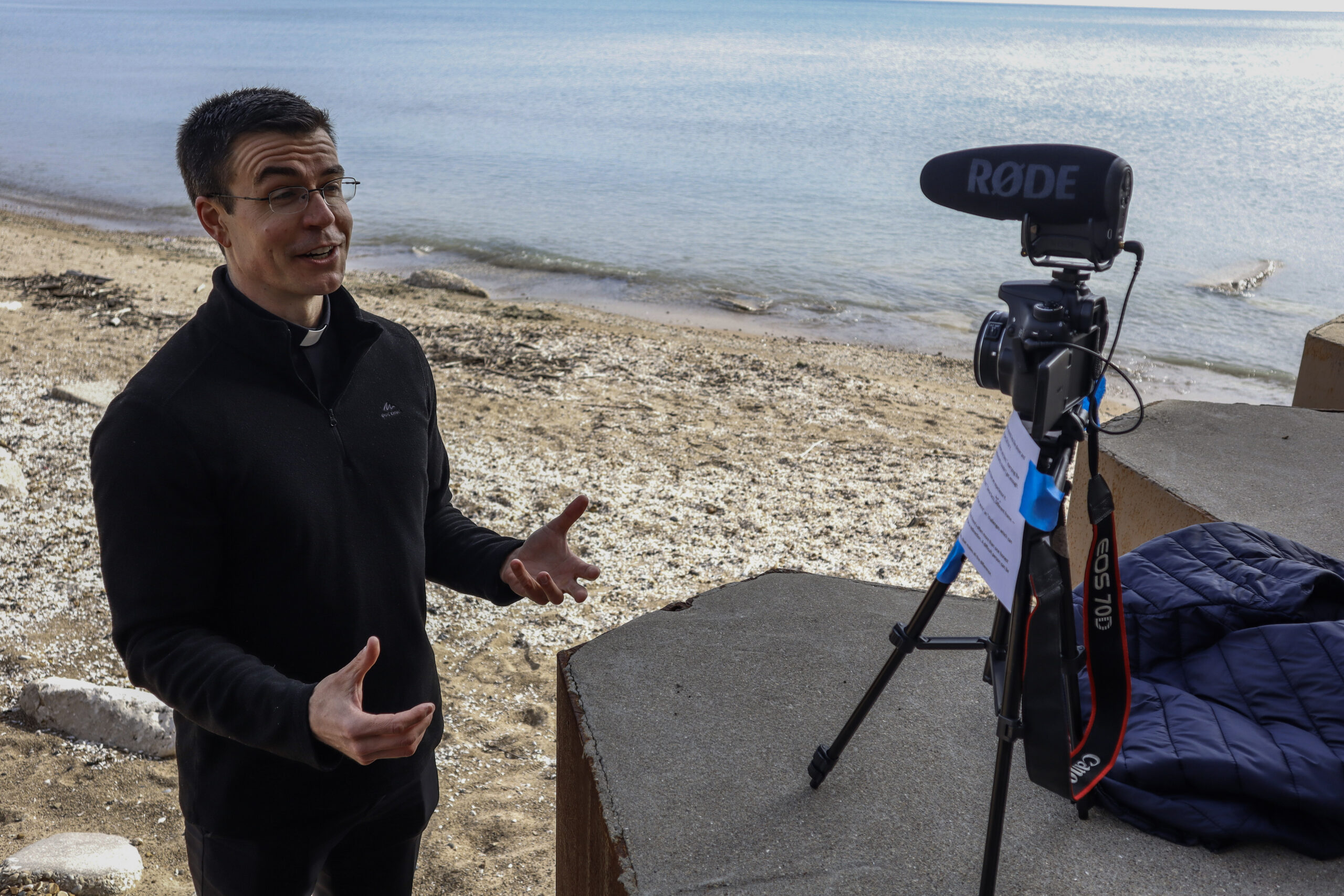
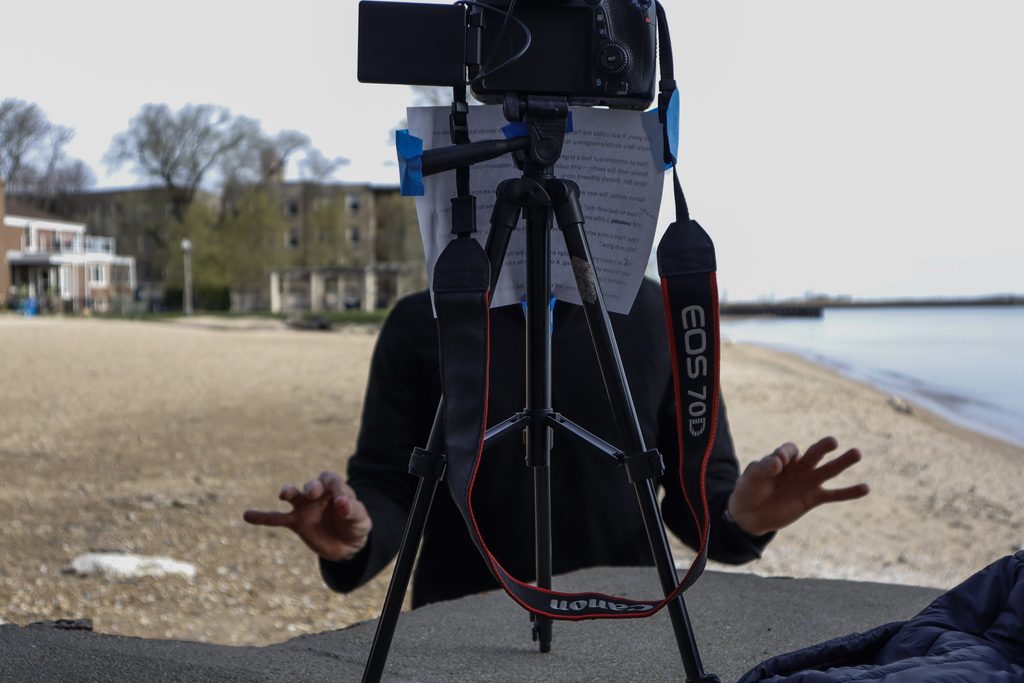
Before his Sunday got started, at a cool 9 a.m., Rossmann was at Hartigan Beach. Twenty years ago, he might’ve been there to take a long walk. But now, with a miniature tripod and Canon camera in hand, Rossmann was filming himself for his Instagram page, @rossmannsj.
There, he’s amassed more than 13,800 followers posting his weekly “One-Minute Jesuit” series where he delivers compact spiritual and life advice, which he also uploads to his Substack.
“If we fail to have a presence online, it perhaps limits the number of people who can encounter our church and the gospel message,” Rossmann said. “While there are many things we cannot do online or cannot do online very effectively, by having a presence there, it allows for the possibility that we can have more robust interaction offline as well.”
In July 2025, Pope Leo XIV became the first pope to deliver an address to “Catholic Digital Missionaries and Influencers.” That same year, Carlo Acutis, a computer programmer born in 1991 and dubbed “patron saint of the Internet,” was canonized, The Phoenix previously reported.
The message was clear: the ancient church is still living. It has adapted to the advent of history as we know it, printing, the internet and now, social media. But this message has been met with pushback — from research groups led by bishops and laypeople alike.
While social media might have more reach and accessibility, as well as being easier to navigate than going through a communal, embodied ritual, the question remains if religion can truly be expressed digitally.
“The reality is, people’s time on these things has real effects on them,” said Noah Banasiewicz, S.J., an adjunct professor in the School of Communication, said. “So, they have real psychological effects. They have real biological effects. So therefore, they have real spiritual effects on people.”
Banasiewicz, who studied at Loyola in 2019 before entering the Jesuits and then returning to teach in fall 2025, said his primary research lies in the intersection of religious and communication studies. Part of his interest in the Jesuit order came from their tradition of being a religious presence in non-religious spaces.
“While I was born and raised Catholic, I grew up in non-Catholic spaces, so I got very used to explaining this very deep part of myself to people who didn’t always have or share that experience,” Banasiewicz said. “I really enjoyed that process of trying to explain this thing that can feel so distant and unreachable at times to people in this very authentic, personal way.”
Rossmann said he agreed authentic religious experiences can happen online, but along with Banasiewicz, acknowledged caveats.
“I think religion can happen online, and it does happen in many forms,” Rossmann said. “At the same time, we would lose something if we were only doing religion online. But I think it can be actually a really valuable complement to what we are doing in person as well.”
Rossmann isn’t the only Jesuit at Loyola who’s expanded his ministry to social media. In August 2025, Brother Robert Nichols, S.J., came to the university to serve as a campus chaplain, although he has since been reassigned to Chicago Jesuit Academy.
After speaking with Rossmann and Banasiewicz about starting his own social media presence, he began posting to Instagram reels, TikTok videos and YouTube shorts, where he uploads weekly 1-3 minute long videos, usually connecting personal life lessons to the week’s Sunday gospel reading.
“There are people online who encounter Catholicism for the first time on their TikTok for you page, on their Reels — and that opens up something for them,” Nichols said. “I’m not arrogant enough to think that God does not work there. In fact, I’m arrogant enough to say that God does work there and can work there. Do I still think that our faith is embodied? Yeah. But we are embodied people who have been using technologies since the dawn of man.”
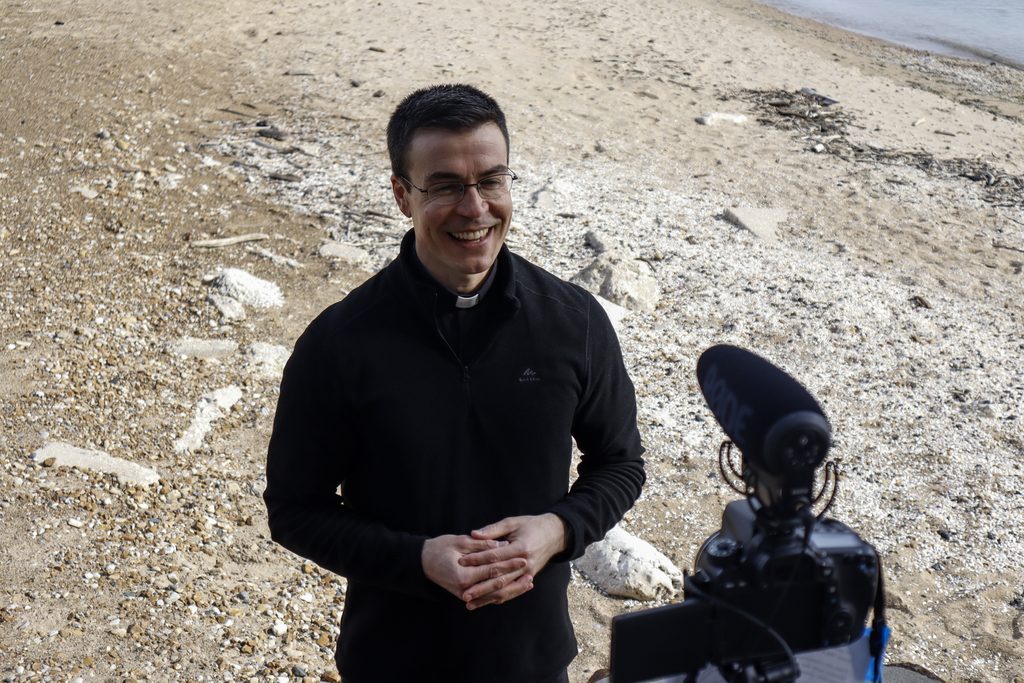
Nichols referenced a quote by St. Ignatius of Loyola, “go in their door and bring them out yours,” as a guiding idea driving his mission online, in the “Jesuit missionary spirit.” His goal was somewhat simple: introduce college students to the Jesuits and inform Loyola students of Campus Ministry resources.
This has been successful, he said, as students often recognize him from his online presence. But as a millennial who grew up with the internet and social media, Nichols said he personally understood the downsides of putting yourself online, like the attraction to conform, the desire for engagement and even hurtful comments.
“It’s tempting, wanting to have the most views possible, right?” Nichols said. “I think that’s the work of the evil spirit being like, ‘Bobby, you know, what if you said this thing or did this thing instead?’ I think that’s where the algorithm and the manipulation can become really dangerous. Am I not skinny or attractive enough? I get a thousand views and you get ten thousand views. I think that’s one of those things that we have to think about.”
Banasiewicz also spoke to the structural limitations of social media platforms, cautioning care and considering it a tool that should only be used to the extent it can be used for good.
“We’ve really adopted the measurements of success of the platform as our own,” Banasiewicz said. “That doesn’t translate to evangelization well because these platforms reward engagement. Oftentimes what drives engagement is content that is pejorative. If it’s not pejorative or hostile, it can at least be dramatic.”
Despite these disadvantages, Rossmann and Nichols both said their offline spiritual lives had been surprisingly enriched by their digital presence. Rossmann also noted more people would approach him in person because of his videos.

“It’s been amazing to connect with so many people around the world,” Rossmann said. “Having a digital footprint has opened up the door for lots of in-person ministry as well. Invitations to give talks and retreats and celebrate Masses and so forth. On a personal level, much of the most meaningful feedback I have received has come in person when those people online, in fact, are real people, some of whom I get to interact with offline as well.”
Nichols also said he noticed a more internal difference. He compared researching and delivering his weekly posts to the process of creating and sharing a homily. There, he found his reflections of weekly scripture and personal prayer life enriched by the video creation process.
Successful online evangelists, according to Banasiewicz, are those who create in community, from “the heart of the church,” to avoid creating a constrained image of the gospel or making the gospel a marketable product, though that may be what the platforms reward.
This humanizes the church, Banasiewicz said, introducing the religion not as a faceless, looming institution, but as people with vocations and missions.
“It gives people a fuller image of who the church actually is,” Banasiewicz said. “I think overprofessionalization is a huge issue with the idea of evangelization on digital platforms, where you think you have to be doing this regularly, and it has to look a certain way for it to be evangelization. And it’s like, be a holy witness to your faith. That is what evangelization fundamentally is.”