A new Cudahy Library exhibit explores Chicago’s role in America’s ongoing revolutions.



A small juror’s notebook filled with cursive notes on the Chicago Seven trial was just one of many primary artifacts a handful of graduate history students at Loyola got to peruse through to create a new historical exhibit in Cudahy Library.
The notebook, packed with jotted arguments on free speech and riots, represented Chicago’s presence in American history. As the 250th anniversary of the American Revolution took place this summer, a small team of Loyola history students played a part in honoring U.S. history.
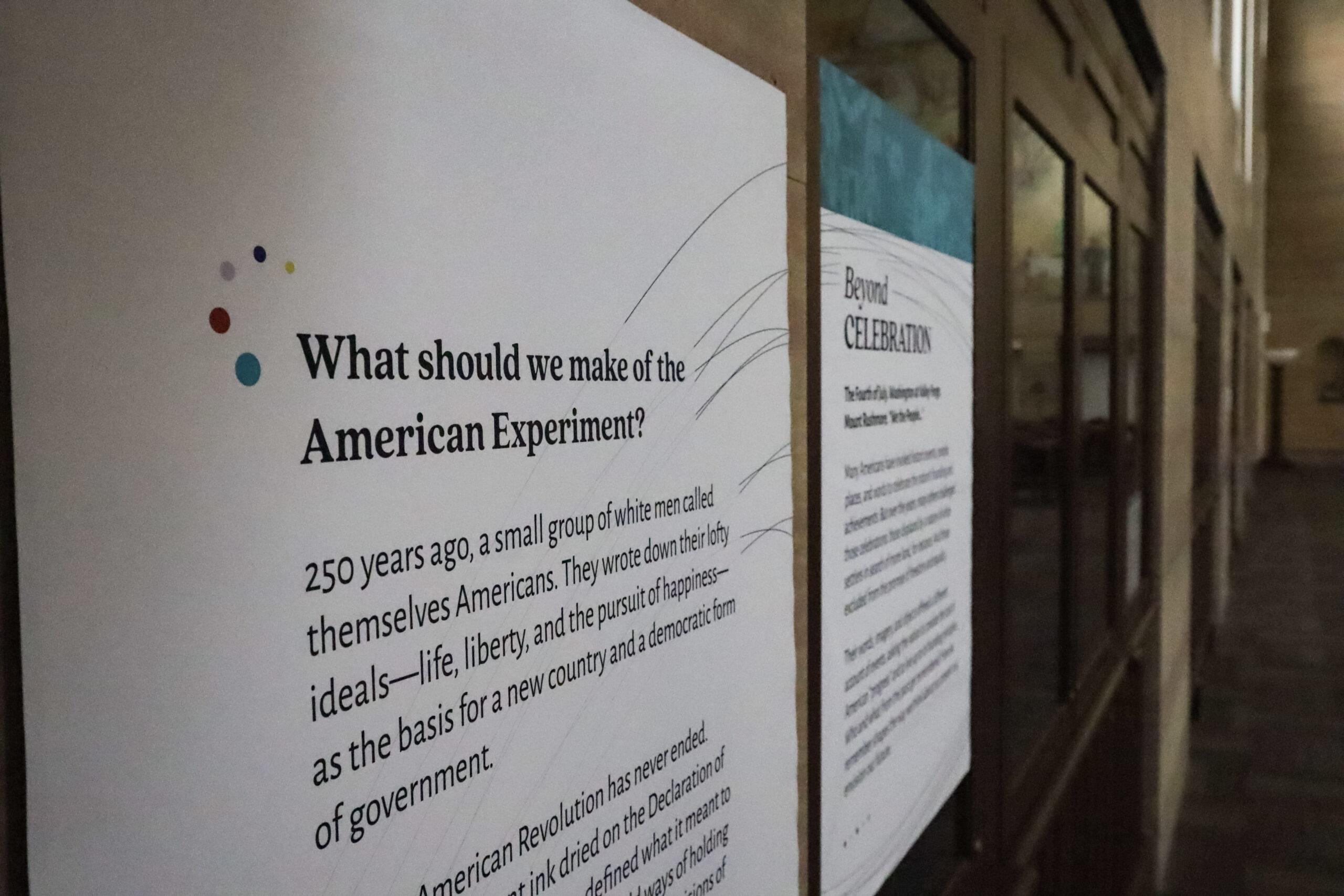
A group of six graduate history students in the joint U.S. history and public history doctoral program worked alongside archivists at Loyola on an exhibit honoring the semi-quensitennial anniversary of the American revolution. The exhibit, “Unfinished: America’s Ongoing Revolutions,” opened in August in the Donovan Reading Room in Cudahy Library.
The work behind the exhibit began back in spring 2025, with its closure set for December 2026, according to Noteworthy, the Loyola libraries official blog.
Associate Professor of History Elizabeth Fraterrigo said she was approached by the university libraries and archivists, who were interested in showcasing archival material. From there, Fraterrigo decided to create a public history practicum course in fall 2025.
The course, built around the exhibit, allowed the team of six students to conceptualize and plan what they wanted it to represent.
Fraterrigo said the exhibit allowed students to hone their skills and gain experience in public history, involving them in determining content and arranging materials and text.
Along with the students always bringing energy and enthusiasm to the process, Fraterrigo said the exhibit wouldn’t be possible without the work of the archivists. According to Fraterrigo, the archivists prepared and installed all the objects, working extremely hard to bring the exhibit to life.
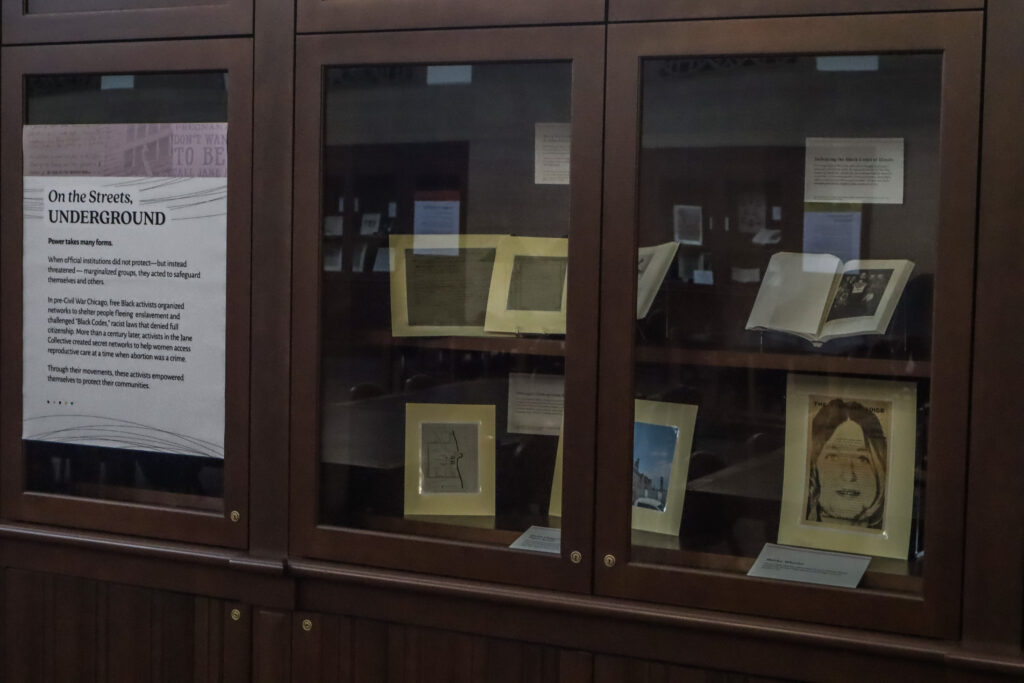
Fourth-year doctoral student and exhibit designer Eleanor Carter said students agreed the exhibit shouldn’t focus on the “usual” history topics, like the early years of America in 1776 or the founding fathers.
“We decided pretty early on that we would rather talk about all the questions that the revolution had brought that we were all still trying to answer today,” Carter said.
To help choose a topic, Fraterrigo said she surveyed students in her general history classes, and many suggested focusing on marginalized groups throughout history.
The early questions eventually crystallized into a thesis statement for the exhibit, Carter said. The team then went through the archives to figure out what stories would go well in conversation with each other. Students then did extensive research on the stories behind the artifacts, so they could feel fully immersed.
Fourth-year doctoral student Connor Barnes said being an exhibitor was his favorite part. In this process, Barnes said he and the other students spent time writing exhibit texts and understanding the practical implications of the stories researched.
“When you work on an exhibit, you have to think very visually,” Barnes said. “You have to use the object to tell a story.”
Barnes and Carter said the opportunity to work on an exhibit like this was unique and informational. Carter said she values the anniversary and believes it’s important to understand what 250 years of America means in today’s context. The importance of learning from mistakes in our history can truly shape the future, Barnes said.
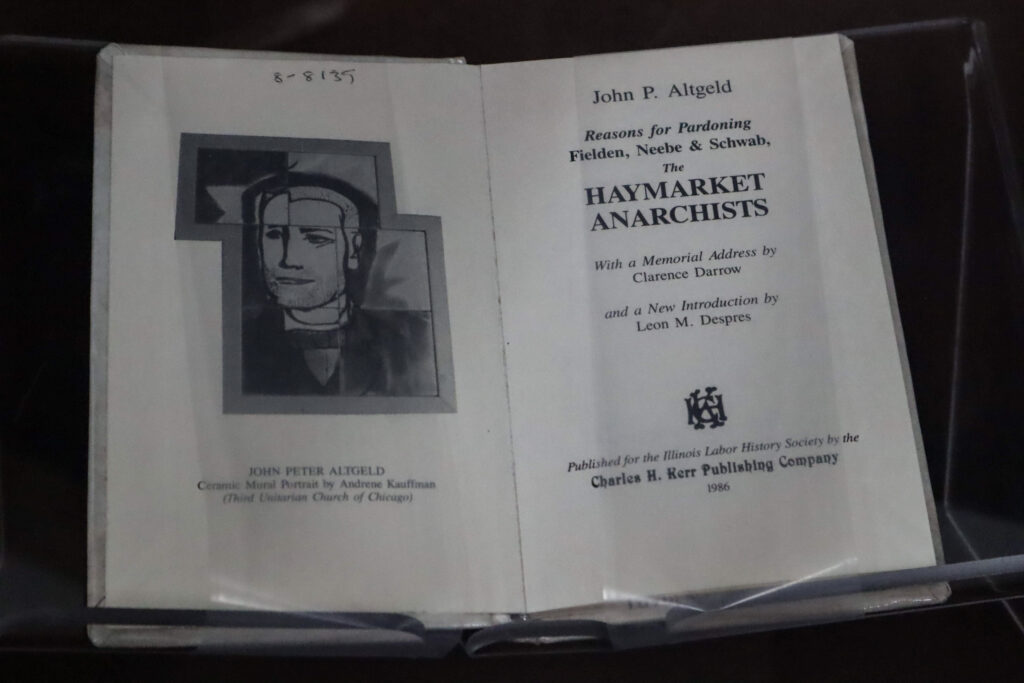
According to Barnes, working on the exhibit posed some challenges. He described the writing portion as potentially difficult. As a historian, he’s used to writing an essay containing thousands of words. These interpretive labels, however, only allow for 50-100 words.
“This obstacle was a really cool part of the process,” Barnes said.
With the audience in mind, Carter and Barnes said the team wanted the exhibit to focus specifically on the history of Loyola and Chicago. Carter said about two-thirds of the artifacts used in the exhibit were from the Loyola archives, emphasizing the school’s role within important events across American history.
Barnes pointed to artifacts from the sanctuary movement in the 1980s, when Loyola students advocated for the rights of Central American immigrants. These included materials about “Know Your Rights” training. Carter also saw posters and flyers from other social movements in Loyola’s history.
Barnes highlighted the importance of including current events in the exhibit. He said one item on display is a whistle handed out last year on campus to alert people of nearby ICE activity. The exhibit also includes a map, made by The Phoenix, showing reported ICE sightings around Loyola.
“Loyola students were active in the ‘80s doing the sorts of things we now see in the present,” Barnes said.
Fourth-year history major and President of Loyola’s History Club Anna Hanson said she began thinking about America’s 250th anniversary while studying abroad in London. She said she came across multiple exhibits and displays on America’s history, with some containing primary artifacts.
While Hanson said she believes it’s great to celebrate all of America’s accomplishments, it’s just as important to reflect and respect all different aspects of American history.
“You don’t want history to repeat,” Hanson said. “You have to learn from what has happened.”
Third-year political science major Amelia Randell said she views history as fuel to analyze today’s modern issues.
“We are not complacent in the position that we are in,” Randell said. “The more we look into history, we can enlighten ourselves and see the commonality between history and modern times.”
The exhibit is displayed in the Donovan Reading Room in Cudahy Library. It will be open through December 2026.