From victorian villains to airborne sharks, the film festival brings cinema from around the globe to the Windy City.




As the final tethers of summer weather blow to the past at 30 miles an hour, the 62nd Chicago International Film Fest (CIFF) prepares for its curtain call.
“Cinema in real life,” the tagline of this year’s festival, grounds viewers in the wake of ever-increasing online and artificial experiences. CIFF can rightly claim to embody real life, as thousands of Chicagoans and touring press members flock to sold-out screenings in theaters around the city, unified by a love of film.
‘I’ll Be Gone in June’ is a prolonged goodbye
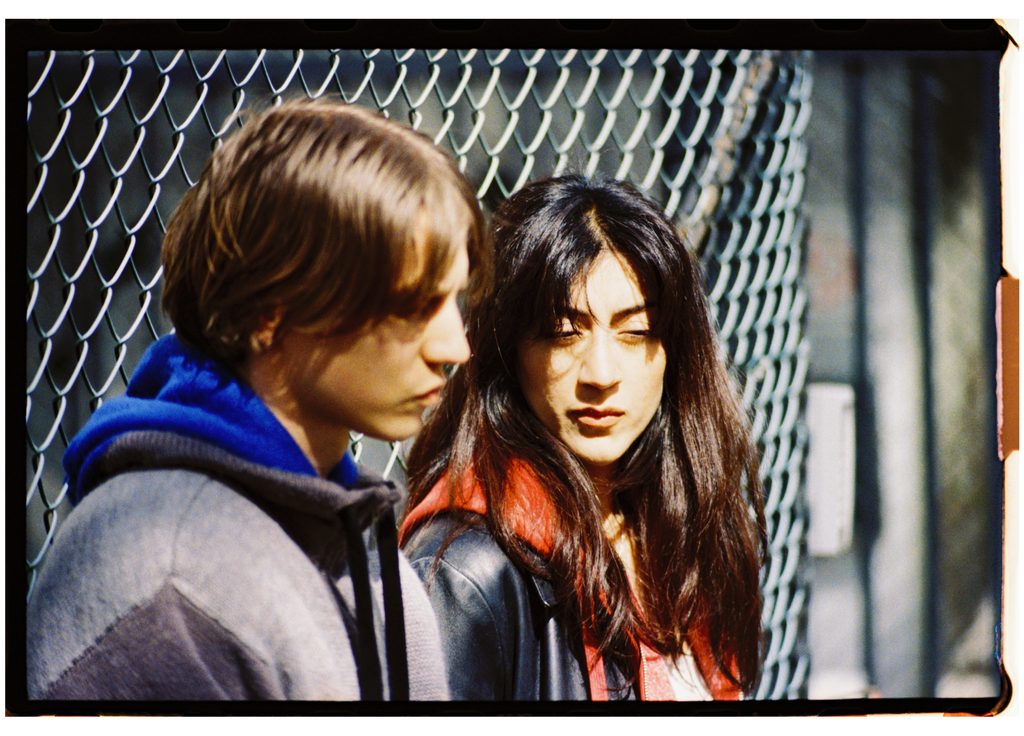
In the late summer of 2001, German exchange student Franny’s (Naomi Cosma) idyllic perception of the United States shatters when she lands in Las Cruces, N.M. — the barren small town where she must spend the next eight months.
Thrust into an authoritarian-esque household, Franny must navigate the complexities of American teenagedom as an outsider — all against the backdrop of the political and social aftermath of 9/11. But as Franny’s home life sours, her relationships with her peers begin to flourish.
An apprehensive sense of wonder is captured through the lens of Franny’s camcorder, allowing the audience a peek into her perspective. A standout scene at the film’s midpoint is a taped extended conversation between her and her classmates discussing the War on Terror, U.S. imperialism and the American dream.
With the movie inspired by first-time filmmaker Katharina Rivilis’ own experiences studying abroad in Las Cruces, the majority of the cast were first-time actors handpicked directly from the small town, providing their characters with an undeniably genuine air.
While “I’ll Be Gone in June” might be a narrative feature, its earnest charm supersedes any script or shot list, its overtly simple and honest performances make the film feel like an experience torn straight from one’s own scrapbook.
“I’ll Be Gone in June” has yet to receive a widespread release date.
Even the demons inside thou wouldn’t recommend ‘Victorian Psycho’
“Victorian Psycho” director Zachary Wigon’s third feature film, which premiered at Cannes Film Festival this May, is a satire/horror about a governess who serves a wealthy family in a Gothic manor. In doing so, she infiltrates and destabilizes life while passing by undetected.
The film leaves the audience questioning if what they saw was real or a product of the protagonist’s disenchantment. Maika Monroe stars as the perverse Winnifred Notty, following her similarly frightening breakout role in “Longlegs” two years prior.
Where the film falls flat is its depth. Though an effective social commentary about upper class indifference, it lacks the nuance to differentiate itself from other films of the same nature, like “Saltburn” or “Funny Games.”
The extent of the horror comes from cheap jump scares with low payoff. The power observed from the protagonist over the span of the movie comes to a screeching halt both in volume and grandeur towards the end, calling into question whether anything consequential was accomplished.
“Victorian Psycho” follows an episodic structure — complete with title cards — but as the film progresses, the chapter titles become decreasingly meaningful. Viewers may be better served reading a classic Victorian novel where they could anticipate the end by counting down the chapters.
“Victorian Psycho” is set to release in theaters Nov. 13.
Creating your own history with ‘The Watermelon Woman’
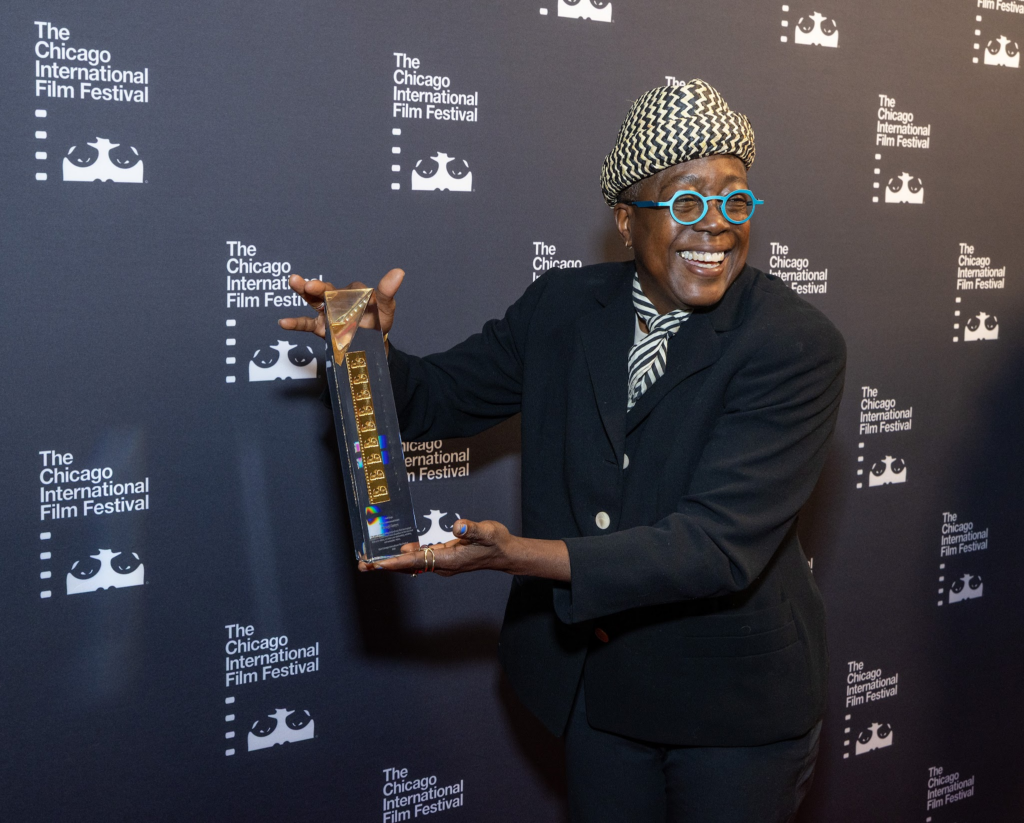
Cheryl Dunye’s 1996 film celebrated its 30th year at the Reva and David Logan Arts Center on Oct. 16. Dunye was presented with the CIFF Lifetime Achievement Award, a proper milestone to commemorate her place as a foundational member of Black lesbian cinema.
“The Watermelon Woman” stars Dunye herself as Cheryl in a film which blurs the lines between history and fiction. Cheryl works at a video store and conducts a project on a Black female film star from early cinema — the titular “Watermelon Woman.” In her research, she finds out this woman is quite similar to herself, leading to an unending pursuit of information.
In a post-film Q&A, Dunye explained the impetus for creating the picture. A self-described rampant film consumer, Dunye said her failure to find anyone like her represented in the movies she watched inspired her to make her own idols.
Not only did Dunye pioneer progressivism in identity and sexuality, she created a new medium entirely to do so.
In the mid-90s, video cameras became commonplace in independent cinema, and mixed with other film camera footage, created a desired patchwork effect, according to Dunye.
The message is unmistakable and powerful: real or fictitious, people want to feel seen. Underrepresented groups will stop at nothing — even the limitations of technology — to ensure future generations will have idols to look back on.
“Clementine Orange”: Love not quite at first sight
Director Lisa Forslund’s Swedish film was screened for only the second time ever this past weekend at CIFF, with the filmmaker herself in attendance.
“Clementine Orange” follows characters Angelica and John’s first instance of meeting after beginning an on-the-phone relationship amid John’s jail sentence. Upon seeing each other, Angelica immediately realizes John has catfished her with photographs, but the two spend the next 24 hours on John’s parole together questioning the love they felt mere minutes before meeting.
With the film, Forslund makes tactful commentary on modern dating life, particularly on dating apps’ capability for deception and idealized self-images. Both characters have very few people in their lives to support them which makes the relationship vital, even if it originates in duplicity.
Between each character’s contrastingly colored costumes and constant close-ups, “Clementine Orange” creates a suffocatingly stressful atmosphere. The film begins and ends in the course of a single day, and the audience can only guess the characters’ fates.
“Clementine Orange” has yet to receive a widespread release date.
Hiding from the sun in the dark fantasy of ‘Vampire Hunter D: Bloodlust’
“Bloodlust” is the second feature film adaptation of Hideyuki Kikuchi’s “Vampire Hunter D” novel series. Directed by Yoshiaki Kawajiri, the production was presented jointly with the Music Box Theatre’s “Music Box of Horrors” series in which the theater screened both of the “Vampire Hunter D” films.
Follow, but don’t get too close to D, the half-human-half-vampire protagonist seeking a bounty, and more importantly, revenge throughout the film. Seeing “Bloodlust” as a one-off, D’s personality is hard to figure out. In fact, D can’t even see himself in the mirror. Still, this complements his mysterious and unpredictable aura, one of the most gripping facets of the film.
Come for the allure of the vampire story, stay for the dazzling techno/classical/jazz soundtrack in superpowered combat scenes. The film hardly has a dull moment as action trickles out like blood from each character’s wounds, just to restore themselves and repeat until the epic and gravity-defying conclusion.
The CIFF screening marked the premiere of “Bloodlust” in the United States in Japanese with English subtitles. Visually, the film is a spectacle of animation, with magnificent, dramatic special effects and a palette of deep purples and pinks painting the dark fantasy.
“Vampire Hunter D: Bloodlust” compels viewers to both bat an eye and eye some bats.
The women of ‘32 Meters’ are its greatest shot
Confined by the monumental peaks of southern Turkey, a remote village seems to defy the odds. The majority of the townsfolk participate in the small community’s lucrative rifle market, with shooting competitions being a keystone of their culture. Despite the constant gunshots ringing out across the Anatolian landscape, the biggest disruption comes from those who are excluded — women.
After the town’s all-male leadership canceled an annual shooting competition because women expressed interest in participating, a group of the town’s women, led by shooting aficionado Halime, set out to organize their own female-only event.
Director Morteza Atabaki allows the documentary to be great as he largely steps away from the creative helm — the movie features no voice-overs, little to no score or fanciful camera work.
Instead, long shots of the women going about their daily activities and mischievous back-and-forth banter allow them to tell their own story, albeit with their own snarky remarks to one another.
“32 Meters” doesn’t set out to dismantle the centuries-long Turkish patriarchy. Instead, it takes aim at misogyny on a local level, documenting a determined group of women in their pursuit to shoot.
“32 Meters” has yet to receive a widespread release date.
There’s no-fin like ‘HotSpring SharkAttack 2: Great Kyushu Showdown’
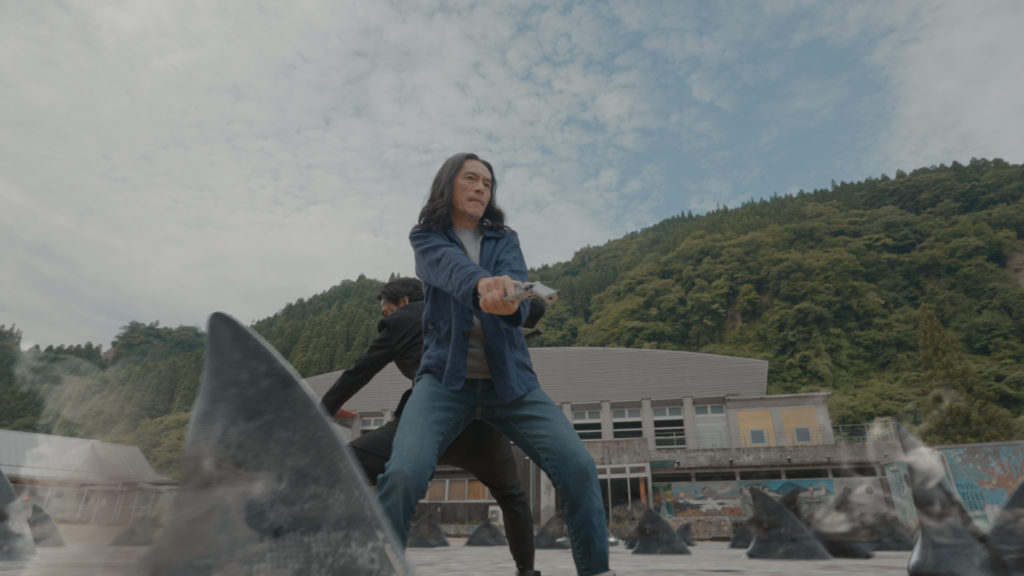
Quite literally exploding on screen, “HotSpring SharkAttack 2: Great Kyushu Showdown” is a cinematic collage, a hodgepodge of CGI, practical effects and handmade props. Just in a single fight scene, a shark could be portrayed as a poorly rendered 3D model, an uncanny hand puppet or even an imploding piñata — shot and spliced from multiple different angles, of course.
It blurs the lines between satirical spoof and a passion-filled ode to the Tokusatsu genre. One minute, a swerving camera could capture intricate choreographed combat between man and shark, while the next, a pec-popping superhuman takes down a robot with his “chest speakers.”
Honestly, “SharkAttack 2” is best enjoyed with as little context as possible going in — mere words fail to bring it any justice. No doubt, once audiences sink their teeth into the movie’s sheer absurdity, they’ll become clenched within its jaws.
“HotSpring SharkAttack 2: Great Kyushu Showdown” has yet to receive a widespread release date.