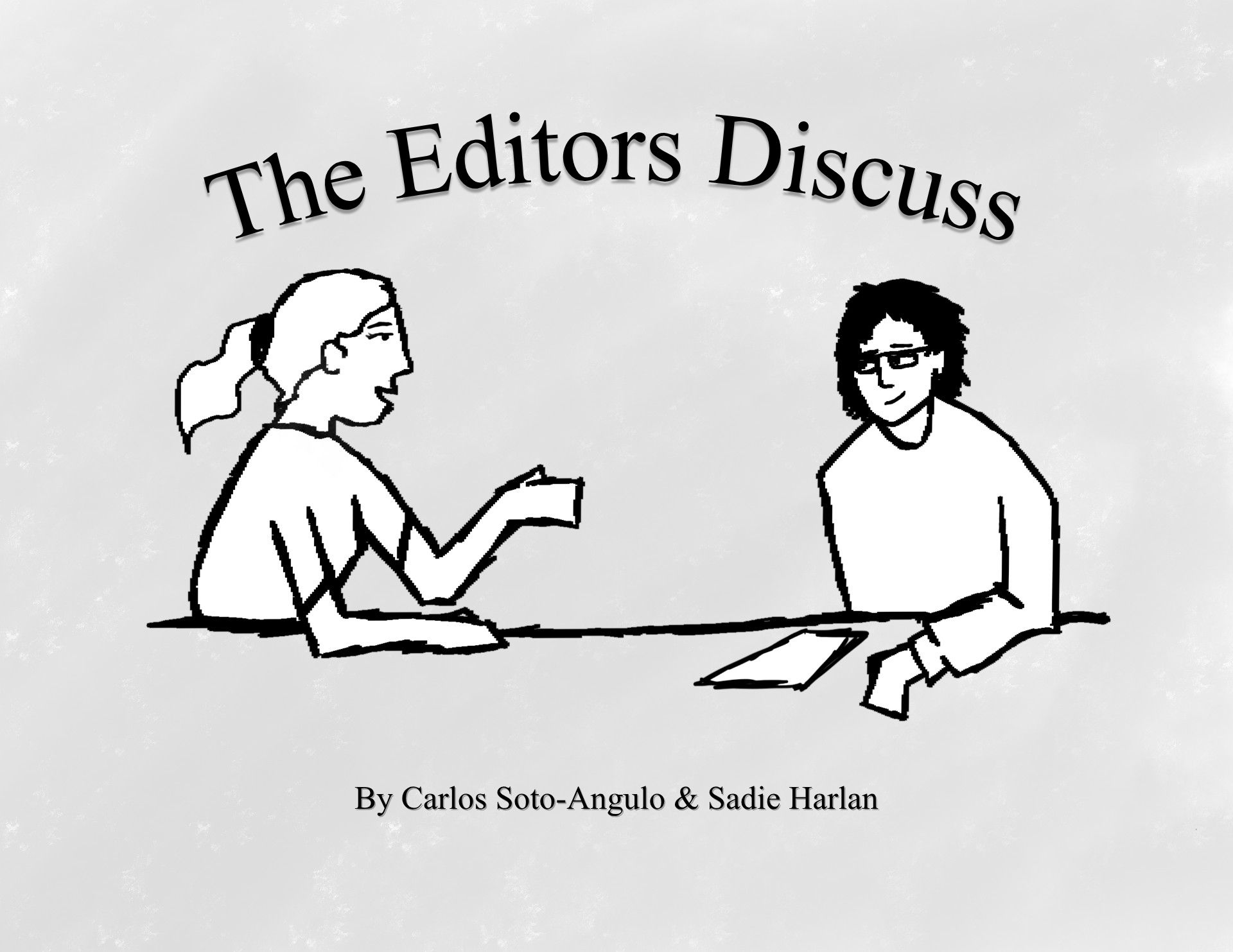
Deputy Opinion Editor Sadie Harlan and Opinion Editor Carlos Soto-Angulo debate whether the acoustic guitar’s timeless simplicity or the electric guitar’s creative versatility makes the instrument worth picking up.



Acoustic Guitars
By Sadie Harlan
It’s a late Wednesday evening, and I’m trying — for the third time that month — to get my dad to teach me how to play bar chords. He’s been in a band longer than I’ve been alive, playing the same Telecaster until the strings break.
I’m sitting criss-cross on the living room couch, the thrum from the Gibson B-25 buzzing through me with each flat note ringing out harshly. The old acoustic guitar seems to be a rite of passage. My dad taught himself with his father’s old guitar — now I am too, struggling through Neil Young’s “Heart of Gold” with aching fingertips and cheeks sore from smiling.
My dad doesn’t really play his acoustic often, but he always made a point to tell me how important it was to learn on one. I didn’t get it at the time, frustrated by the instrument’s high action and body that barely fit in my lap. I hated how the chords would buzz if I got too close to the frets, and how the acoustic songs weren’t anything cool like “Stairway to Heaven,” or “Freebird.”
Now, I’m grateful for the months I spent poring over acoustic guitar YouTube tutorials and meticulously noting down fingerpicking patterns. The bar chords, though I often still struggle, are now a welcome challenge and easy excuse to pick my father’s music-wired brain over FaceTime.
The value of an acoustic guitar isn’t only sentimental though — the instrument is a beneficial challenge for beginners looking to learn to play.
Without the pedals, amps or effects, the music played on an acoustic guitar is the product of hard work and painstaking practice. Any mistake, missed finger or string is immediately amplified as-is, with few ways to hide failure.
The simple nature also makes easier songs feel polished and clean. An electric guitar, with its sweeping solos and loud volume, often requires the player to be part of a band, or have an accompaniment. Many traditional acoustic songs only require the guitar and a willingness to play.
When it came time for me to get my own guitar — a relief to my dad, who’d probably gotten sick of me asking to borrow his so often — I didn’t hesitate to choose an acoustic one, knowing it would amplify my learning journey well.
The acoustic guitar, with its no-frills nature and enjoyable challenge, is a timeless instrument, well suited for any guitar player.
Electric Guitars
By Carlos Soto-Angulo
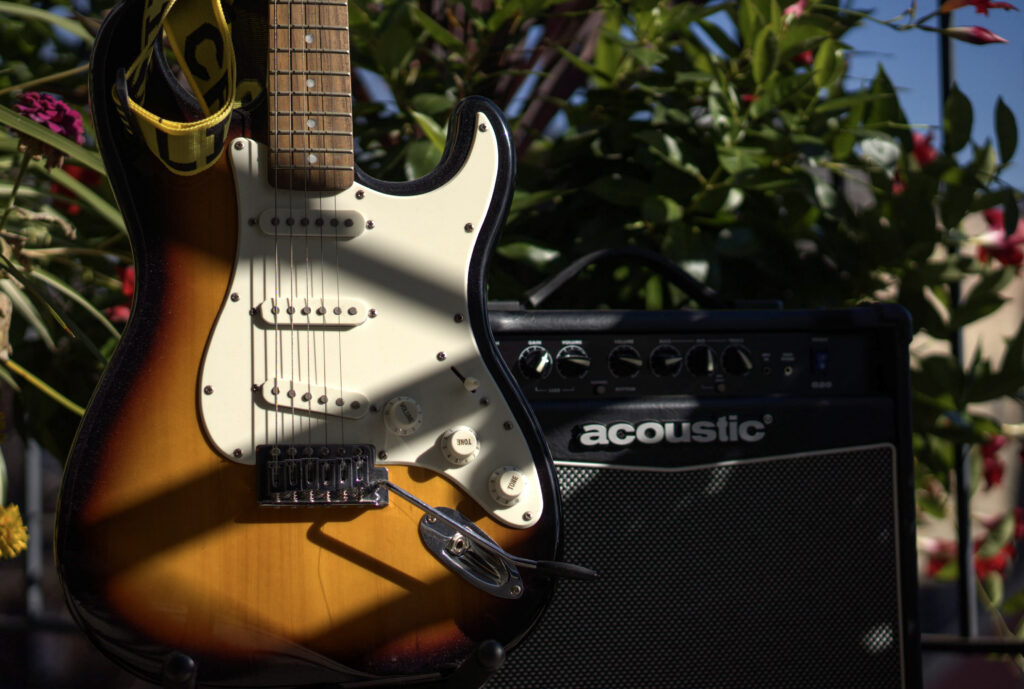
There’s nothing more satisfying than plugging in my Jazzmaster and Boss DS-1 distortion pedal, turning up my Twin Reverb and disturbing my neighbors’ peace. It doesn’t need to be plugged in to make a sound, but striking a chord on an electric guitar definitely shakes the walls, something my tinnitus-riddled ears love.
When I started playing guitar four years ago, I wanted something loud after playing piano for 13 years. The obvious choice was a black-and-white Stratocaster and a scraggly little 10-watt amp that made my mom immediately regret splitting the cost.
I’m grateful for my somewhat humble beginnings in guitar playing since it helped me learn around the limitations of my setup and pump the creative juices that had been sitting stagnant since I stopped playing piano.
Unlike its acoustic counterpart, an electric guitar isn’t limited to the sound produced by its strings. Through unique amplifiers, effects pedals or the dial controls on the guitar itself, a player is able to manipulate the sound in nearly endless ways. With my current set-up, I can play a jagged, distorted tone similar to the one heard on Hum’s “You’d Prefer an Astronaut” or mellow, atmospheric melodies like those heard on The Cure’s “Faith.”
While acoustic guitars are often recommended for beginners because they demand greater finger strength, their electric counterparts have lower action and looser strings, which make it easier to press down notes, turning the instrument into something new learners might be more inclined to pick up.
Beyond its technical advantages, the electric guitar can make learning music more exciting. There’s an immediate sense of satisfaction in recognizing a riff from your dad’s favorite Caifanes album and eventually being able to play it yourself.
At the end of the day, an instrument does little good sitting in its case. Whether plugged or not, the best guitar is the one that inspires someone to pick it up, make some noise and keep learning.
But sometimes, the best way to find your sound is to blow the roof off your dorm building — there’s a reason Bob Dylan went electric at the 1965 Newport Folk Festival.