Pets in public spaces pose can be harmful for those trying to enjoy them, and often overlook the comfort of many.



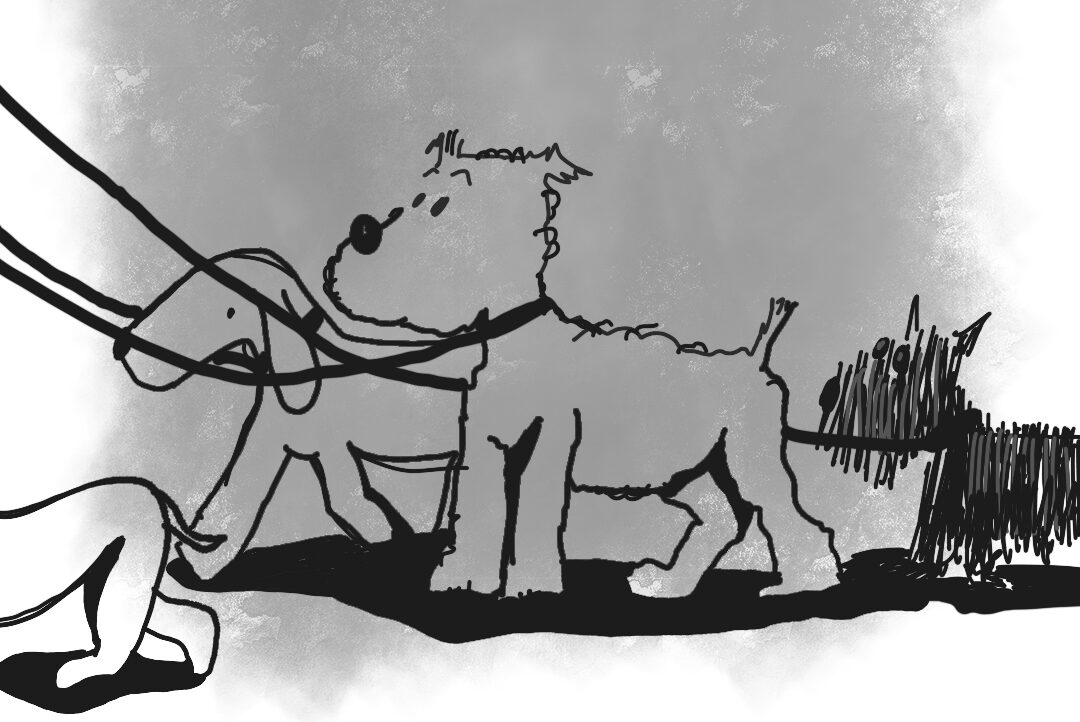
Living in a big city, there’s no shortage of dogs. On the way to work or school, someone is walking their dog. Getting on the train, there’s a dog. Going to your local coffee shop, there’s a dog and the barista is petting it.
It seems no one is concerned about the health hazards dogs pose in public. Or, at the very least, the fact some people would prefer not to run into a dog while shopping.
In 2020, a woman in Chicago called her local news station with concerns regarding the influx of dogs at the Jewel Osco in her neighborhood. She and other patrons of the grocery store reported seeing the dogs walking around the aisles or even seated in the shopping carts.
There’s an air of entitlement from dog owners who feel it’s appropriate to bring their pets into a space shared with strangers. While the argument of allergies and unpredictable behavior from the dog are valid concerns, it shouldn’t be absurd to ask that some spaces are just dog-free.
A 2014 New Yorker essay criticizing the accessibility of emotional support animal credentials triggered a response in The Washington Post which argued against the criticism, instead promoting establishments opening their doors to dogs.
The latter claimed that because most millennials and young adults substitute human connection for the emotional support of their pets, there should be more spaces for people to bring animals to cultivate a more enjoyable experience for the individual.
Further research by Psychology Today supports the notion of people often forming closer relationships with their dogs than family members. Lacking complex emotions, dogs’ unconditional and non-judgmental nature allows for full emotional expression from their human companion with little to no shame or guilt.
A question reflecting the current state of pet owners’ desire to integrate pets with day-to-day life in cities across the country is whether or not a person should save their dog over a stranger’s baby.
This hypothetical has circulated TikTok rant posts and think pieces for the past few months, sparking conversation around morality and the responsibility one holds to their community. While the vast majority agree saving the baby would be the moral choice, the love one holds for their furry friend seems to persist against the norm.
It’s not uncommon to hear young adults refer to their pet as their “fur baby” or see people include their dog in family activities. Dogs have become the secondary family member in many American homes.
A survey conducted by the Pew Research Center found that 97% of American households with pets viewed them as a part of their family, with nearly half believing they were equal in status to their human counterparts.
There’s nothing wrong with treating a pet like a part of the family, but it shouldn’t be a standard unwilling participants are also expected to uphold.
There are special circumstances which require an animal to be in undesirable places. People with physical and mental disabilities benefit greatly from the assistance of service animals.
The distinction here is service.
While individuals with service dogs build a bond with their animal, they’re far from the average household pet. A service dog’s responsibilities can extend from reminding an owner to take their medication to physical labor, like pushing a wheelchair, pressing elevator buttons and picking up dropped items.
In a study by the National Institutes of Health, data was collected on 154 participants, 97 of which were placed with medical or mobility service dogs and 57 of which were placed on a wait list to receive one. Participants with service animals reported an increase in daily function in areas pertaining to social life, emotional state and work and school productivity.
The conversation sparking The New Yorker article argued the standards for emotional support animals can be easily bypassed. Considering the only requirements are a note from a licensed professional, it’s hard to disagree.
Unfortunately, there are people who abuse the lenient registration requirements to get their pets approved as emotional support animals — some go as far as to lie about the certifications their animal has to get into pet-free spaces.
In a study conducted at Utah State University, researchers found that 60% of participants falsely identified their emotional support animal as a service animal at least once — 20% claimed to have done so frequently, 25% claimed to have never done so and 40% admitted they frequently took their pets into stores.
People hiding behind a false certificate to bring an animal they require no assistance from is frustrating for those who do require a service animal, but also for the people who’d simply enjoy a pet-free space. The entitlement many dog owners feel to bring their pets into public spaces doesn’t take into account the shared space their pet takes up.
Whether or not they receive comfort from the presence of the dog in question isn’t on the rest of the world to bear the consequences of.