The “first global album” still stands as a timeless testament to humanity.



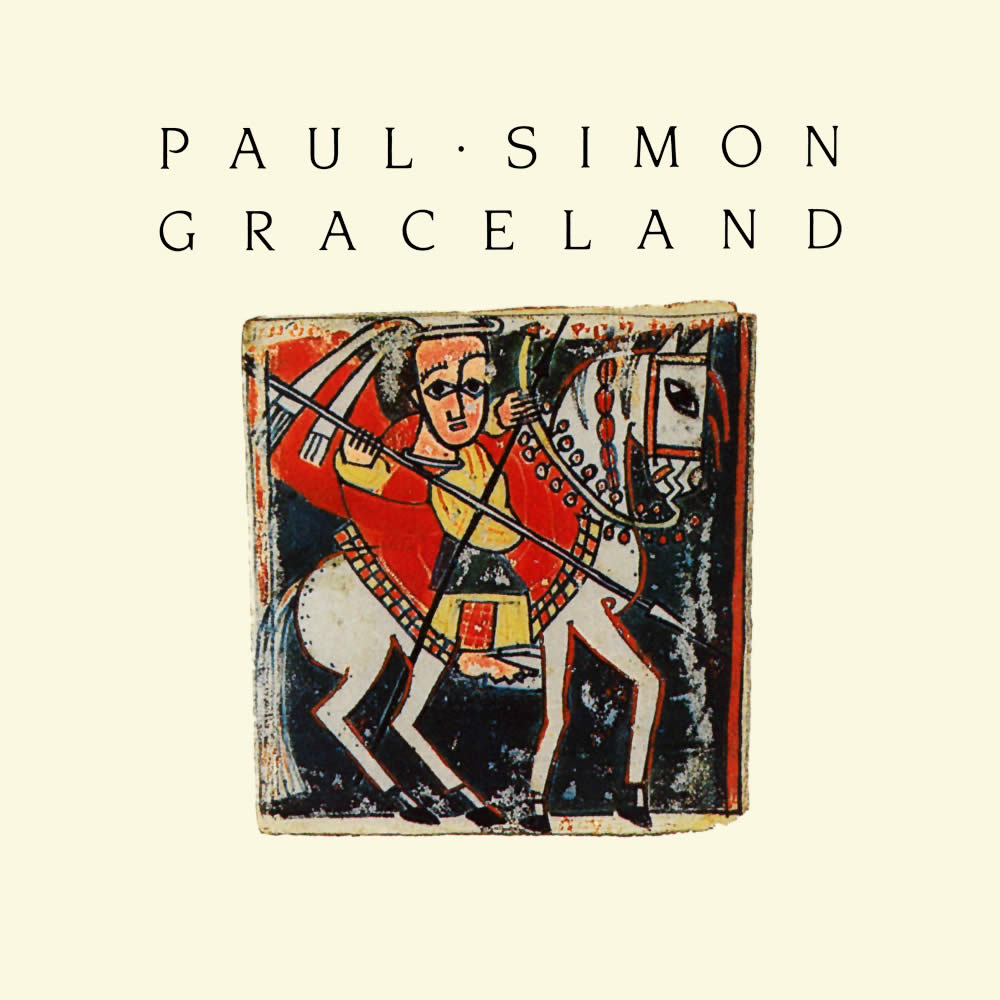
Rating: 10
“This is the story of how we begin to remember,” Paul Simon declared on “Under African Skies” 40 years ago. “These are the roots of rhythm, and the roots of rhythm remain.”
The lyric stands as the summary of a career dedicated to revealing human nature, and his magnum opus — 1986’s transcendent “Graceland.” A personal return to form achieved through a musical odyssey to the other side of the world — literally — that four decades later might still prove a roadmap to paradise.
The record, a journey in and of itself, is told through a series of pilgrimages, documenting Simon’s own peregrination to South Africa amid an early ‘80s personal and career tailspin.
Unlike most of his contemporaries, Simon would find his way out of this breakdown not by trying to nostalgia-bait or recreate what put him on the global stage, but by surrendering, and following his own musical desires.
These desires would lead him down a chaotic and still controversial path — one that took him through the heart of apartheid. Despite the country being under a United Nations-imposed cultural boycott, Simon, maintaining that art and politics should be separate, traveled to the country and recorded with musicians there over a period of two weeks.
Whether or not Simon had the right has been, and will be, endlessly debated. He maintains the album is a statement in itself.
“It’s the most powerful form of politics, more powerful than saying it right on the money, in which case you’re usually preaching to the converted,” Simon said in an interview with Rolling Stone. “People get attracted to the music, and once they hear what’s going on within it, they say, ‘What? They’re doing that to these people?'”
Critics maintain the musicians working with him had no real choice in the matter. The musicians say otherwise.
So, what does the album have to say?
It opens with the jarring “The Boy In The Bubble.” After an ominous yet undeniably groovy accordion riff by local artist Forere Motloheloa introduces the track, the first verse portrays a bomb going off in a baby carriage — “A bright light / A shattering of shop windows,” Simon deadpans.
This seems to set the stage for an album befitting of its politically tumultuous backdrop, until the chorus.
“These are days of miracle and wonder,” Simon sings reverently. “Don’t cry, baby / Don’t cry.”
The record follows this advice. One could hardly guess the life or death stakes of its creation. It is perhaps one of the grooviest, most dance-inducing pop albums ever created, seamlessly blending swaths of traditional South African genres, country, folk, rock, pop and more.
Simon has been critiqued for the record’s lack of political songs, which he has countered by saying he didn’t want to tell the musicians story for them. When he asked the African musicians what they were singing about, he found they were telling the same timeless stories American pop music had reiterated so many times — songs about falling in love, about dancing late into the night. Simon followed suit.
If people wanted to hear about death or hatred, they could read the news. “Graceland” is the other side of the story — the songs of the people who still dared to dance under a system that didn’t even approve of their living.
It is the South African musicians Simon collaborated with who define this album, with his lyrical contributions — what he’d always been most known for — taking a backseat to their infectious playing. Simon specifically cited bassist Bakithu Kumalo’s soulful performances as the spine of the record, which was built around the jam sessions the group shared in South Africa.
Inverse to his usual order of writing music around lyrics, Simon brought the tapes with him to New York, where he wrote the lyrics atop the instrumentals. This was aided by producer Roy Halee, whose delicate splicing of the tracks stands as a groundbreaking achievement in music.
The lyrics depict an uncontainable freedom, one Simon found by foregoing all conventions in the creation of the album. Hit single “You Can Call Me Al,” written around guitarist Ray Phiri’s unforgettably danceable riff, is an autobiographical track following a man as he traverses “a strange world / Maybe it’s the third world,” and experiences a change of perspective: “Maybe it’s his first time around.”
Despite all the gaudy saxophone and overly-reverbed drums, the song — through its sheer enjoyability and Simon’s trademark cutting lyricism — hits home into the listener’s own fixed views, maybe better than an overtly political song could.
The most personal song, however, is the title track, which appeared to Simon over a series of accidents. He wrote the hook, meaning to replace it, but found the words wouldn’t leave him.
Nothing captures this feeling of being lost to be found quite like it: a sprawling, expansive prayer that unveils itself like a marked-up map to paradise. The route is marked by waypoints of heartbreak, stunningly delivered in Simon’s diary-like prose.
“She comes back to tell me she’s gone,” he sings, voice warbling. “As if I didn’t know that / As if I didn’t know my own bed / As if I never noticed the way she brushed her hair from her forehead.”
Despite the track being about Simon’s recent divorce and subsequent journey to Graceland, Tenn., the most individual song on the album becomes the most relatable.
One can picture any of the South African musicians narrating “I am following the river / Down the highway / Through the cradle of the Civil War.” Who hasn’t felt the ache in their chest “For reasons I cannot explain / There’s some part of me wants to see Graceland,” or the tearing between “I may be obliged to defend / Every love, every ending / Or maybe there’s no obligations now.”
Ultimately, Simon would oblige to defend “Graceland,” perhaps even to a fault. His road to Graceland would continue, being invited by Nelson Mandela to perform in Johannesburg, South Africa after the lifting of apartheid, and later making personal amends with African National Congress leader Dali Tambo — small steps closer to his promised land.
We’re all still on that winding road to Graceland, our very own paradise, and it might be we always have been, and always will be. We have no more of a map than Simon, but he has gifted us a vision of what it could be: a picture of unrestrained joy and freedom amid the bleakest of backdrops.
This is Simon’s prayer, and his promise: that we all will be received in Graceland.